In the US, arriving at 10 a.m. with a suitcase is a small problem. Most hotels set check-in around 3 or 4 p.m., and if your room isn’t ready, “many hotels can hold your luggage,” so you can go out without your bags. You hand the bag over, you get on with the day.
As of October 2026, from WoodSpring Suites: check-in and check-out times explained.
Japan runs on the same afternoon clock. The surprises are around it: some hotels attach conditions to holding a bag, early check-in is often a paid add-on, and the check-out time on one booking page can be an hour different from the next.
The times on the page, and the line under them

Toyoko Inn says “The standard check-in time is from 15:00 and check-out is until 10:00.” The next sentence matters more: “Check-in and check-out times may differ based on your chosen plan so please check the information displayed on each accommodation plan details page and reservation page.”
So the default is 15:00 in, 10:00 out, and the real answer is on the plan details page, then the reservation page.
Dormy Inn’s FAQ says “基本的にチェックイン15:00・チェックアウト11:00となります”, basically check-in at 15:00 and check-out at 11:00, and adds that stay hours may differ by facility or plan. SEKITEI’s English site lists check-in 15:00 and check-out 11:00. At the three or four ryokan I’ve stayed at, check-in was generally from 3 p.m. or later.
As of October 2026: Dormy Inn FAQ (in Japanese), SEKITEI rates page.
Japanese pages use the 24-hour clock, so 15:00 is 3 p.m. A 10:00 check-out is an hour earlier than an 11:00 one, which matters on the way out. These three chains use 15:00 as the default, which doesn’t mean every hotel does.
Ask the front desk, but ask first
The cheapest fix is the one you expect from home: ask the front desk. Hotels answer it differently.
Dormy Inn’s FAQ answers both “チェックイン前に荷物を預かってもらえますか?” (can you hold my luggage before check-in?) and the same question for leaving bags after check-out to sightsee with: “当ホテルが事前に了解した物に限り、責任を持って荷物を保管致します” (the hotel stores luggage it has agreed to in advance and takes responsibility for it). The hotel isn’t responsible for loss or damage to luggage it didn’t know about, and it can’t hold fragile items or valuables. The hotel doesn’t say what “agreed in advance” means for a suitcase at the desk, so ask before you fly. A short message with your landing time and the number of bags is a reasonable form of asking.
Hotel Super Tomari’s FAQ answers a question about holding luggage with “お荷物はチェックイン前、チェックアウト後でもフロントにてお預りしております”, meaning bags are held at the front desk before check-in and after check-out. It states no time limit, fee or advance approval.
As of October 2026, from Dormy Inn and Hotel Super Tomari (in Japanese): Dormy Inn FAQ, Super Tomari FAQ.
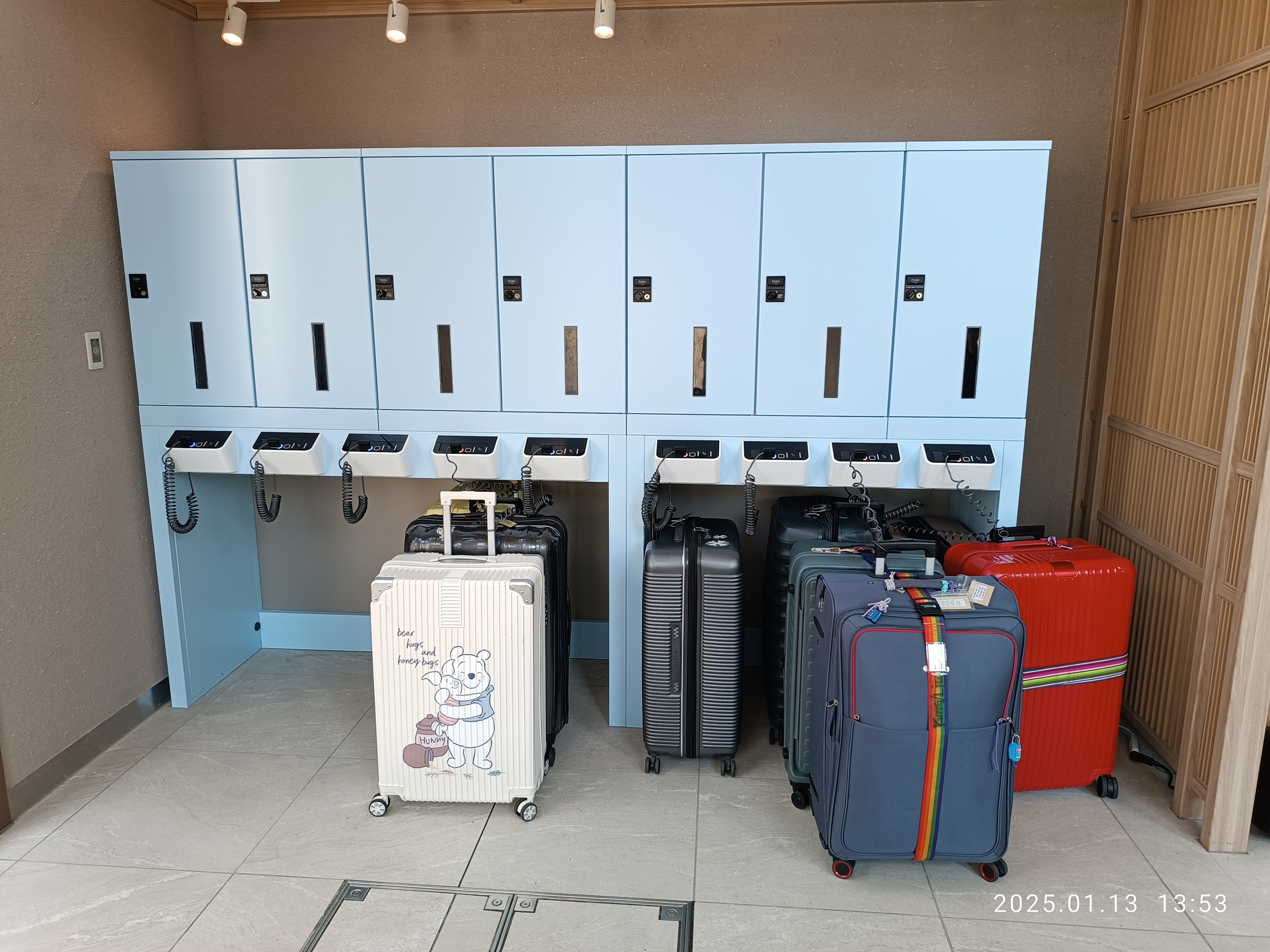
One chain asks for an agreement and the other states a plain yes, so which one you’re booked into decides what to do. When I’ve arrived early, the front desk has held my bags. At a Tokyo hotel I stayed at recently, the form was different: I put the bag in a luggage area myself and locked it, with no one taking it from my hands.

Paying to walk in early
Some hotels sell the hours. SEKITEI lists an early check-in option at 13:00 and a late check-out option at 13:00, against standard times of 15:00 and 11:00.
Dormy Inn does. An FAQ item titled “チェックイン・チェックアウトの早着・延長料金は?” (what are the fees for early arrival and extension?) answers: “原則、1時間につきお一人様1,000円いただいています。但し、最大延長14:00まで。” It adds an example, “1部屋2名なら1時間2,000円”, so two people in one room pay ¥2,000 per hour.
The item covers early arrival and extension together, and the hotel doesn’t say which direction the 14:00 cap applies to. If the same rate applies to early arrival, a couple arriving two hours early would pay ¥4,000. Whether the room is ready by then is a separate matter.
As of October 2026, from SEKITEI (English) and Dormy Inn (in Japanese): SEKITEI rates page, Dormy Inn FAQ.
A bag that gets there before you do
Yamato Transport runs the black-cat TA-Q-BIN parcel service, and its English FAQ covers sending parcels to a hotel or ryokan. Send them “before the cut-off time at least 2 days before your check-in date,” with “3 days may be necessary depending on the distance.” Delivery times can’t be specified, and hotels may restrict where and when they take parcels, so confirm with the accommodation.
From the airport itself, Yamato’s Airport TA-Q-BIN FAQ describes shipping luggage from airport counters to your home or hotel. It lists a ¥660 counter usage fee at Narita and Haneda, and says cash on delivery isn’t available when sending to a hotel. Confirm delivery timing and the shipping rate for that direction at the counter.
JAL ABC’s English site lists a hotel luggage delivery service that sends bags “from the airport to hotels (or vice versa) for delivery on the same day,” at Narita, the Haneda international terminal and Kansai. Check cut-off times and fees with JAL ABC before counting on a 3 p.m. check-in. I’ve used JAL ABC to send luggage from an airport to a hotel or home, and to an airport. What I paid depended on a credit-card perk, from free to about ¥500.
As of October 2026, from Yamato Transport and JAL ABC (English pages): parcels to a hotel FAQ, Airport TA-Q-BIN FAQ, JAL ABC hands-free travel page.
The same problem, backwards
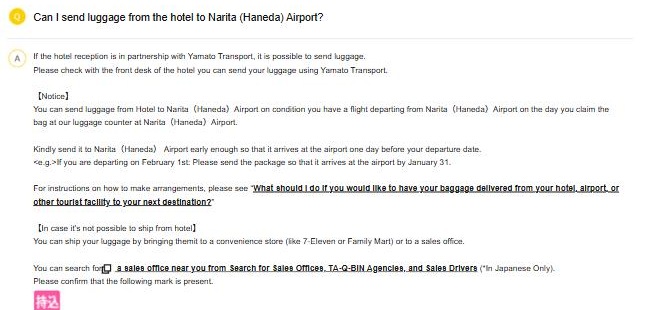
A 10:00 or 11:00 check-out against an evening flight leaves the same bag and the same gap. The answer starts “If the hotel reception is in partnership with Yamato Transport, it is possible to send luggage.” You also need a flight departing from that same airport on the day you collect the bag, and you must send the bag so that it “arrives at the airport one day before your departure date,” with a February 1 departure meaning arrival by January 31.
So this is not a way to drop a bag at noon and collect it at 6 p.m. The bag goes a day early, to the airport you leave from, through a partner hotel. If your hotel isn’t a partner, the hotel says you can take the bag to a convenience store (it names 7-Eleven and FamilyMart) or a Yamato sales office.
For the gap after check-out, the front desk hold is the simpler tool, and both FAQs above cover storage after check-out. The airport service suits a bag you’re willing to part with a day early. Ask at check-in whether your hotel is a partner.
Station lockers have a clock too
JR East’s locker operator lists sizes in its English FAQ. The largest, LL, is 13.5 to 18.1 inches wide (342 to 461 mm), 22.6 to 26.1 inches deep (575 to 663 mm) and 41.3 to 69.4 inches high (1,049 to 1,762 mm). These are ranges, not one fixed size. Measure your suitcase’s width against the 13.5 to 18.1 inch range before heading to the station. For how the bag then fits in the room, see how much luggage fits in a Japanese hotel room.
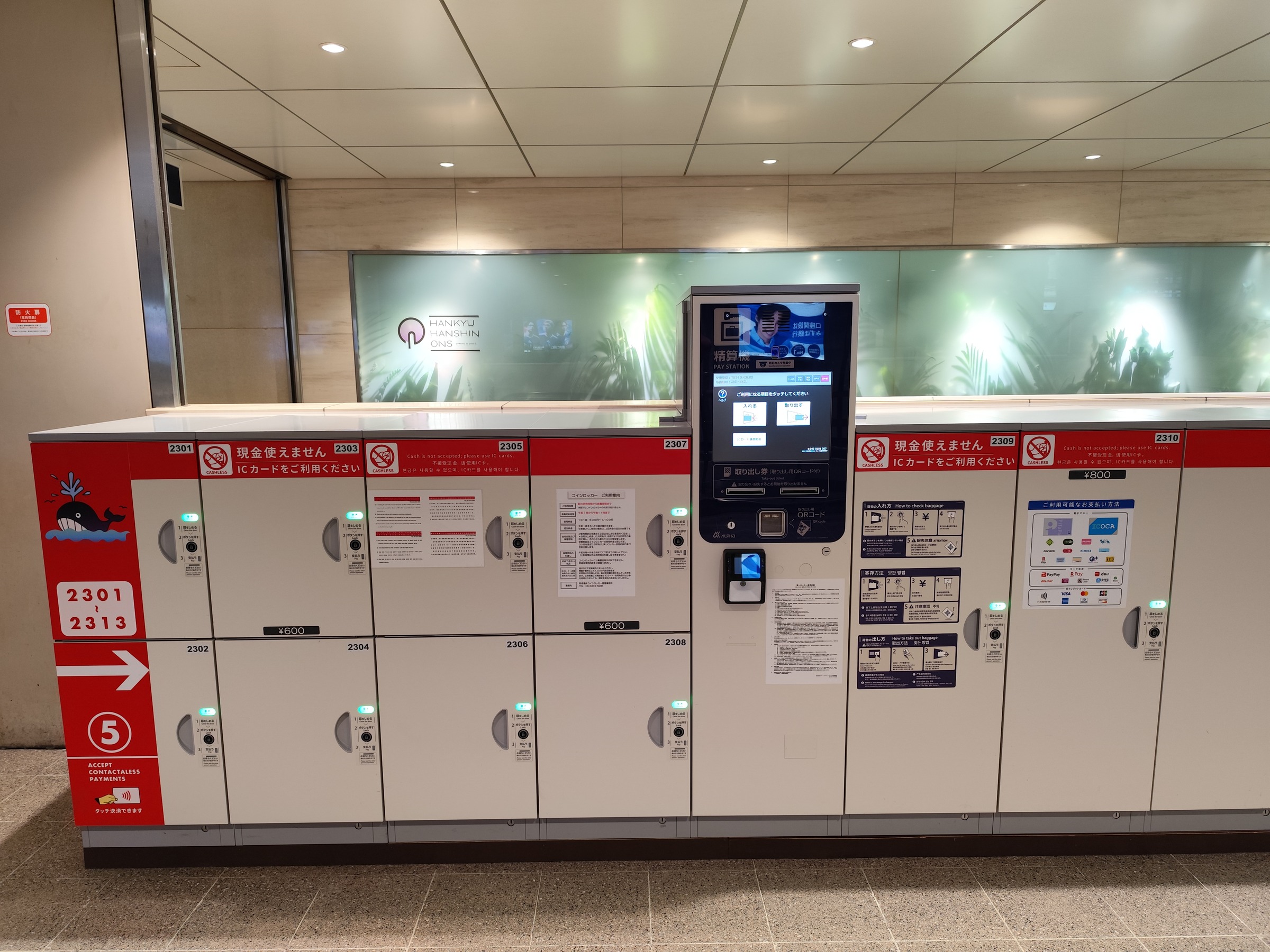

The rules matter more than the sizes. The FAQ says “The maximum rental period is three days from the start date,” that rates are calculated daily, and that the date changes at 2 a.m. After the limit, the operator “unlock[s] the locker, inspect[s] the luggage and transfer[s] it to our designated storage facility, where we will keep it for up to 30 days,” after which the luggage “is considered discarded.” Stored luggage is charged at the same daily rate.
As of October 2026, from JR East’s locker operator (English): Station Locker FAQ.
A locker suits a few hours between a train and a hotel that won’t take bags. It is a poor fit for a bag you want to forget for three days.
If neither the hotel nor a locker works, ask the hotel about a Yamato parcel.
The short version
- Standard check-in is 15:00 and check-out is 10:00 or 11:00, but each hotel adds a plan or facility caveat. Read the plan details page and the reservation page for your booking.
- Hotel Super Tomari’s FAQ says bags are held at the front desk, with no condition stated. Dormy Inn holds items it has agreed to in advance and won’t take fragile items or valuables. Ask before you fly.
- Dormy Inn lists, in principle, ¥1,000 per person per hour for early check-in, and SEKITEI lists a 13:00 option. Yamato parcels to a hotel go at least 2 days before check-in, sometimes 3.
- JR East lockers cap at three days, then the bag moves to storage. Hotel-to-airport shipping needs a partner hotel and arrival one day before departure.
- Arriving late instead of early has its own rules, covered in Checking In Late at a Japanese Hotel.
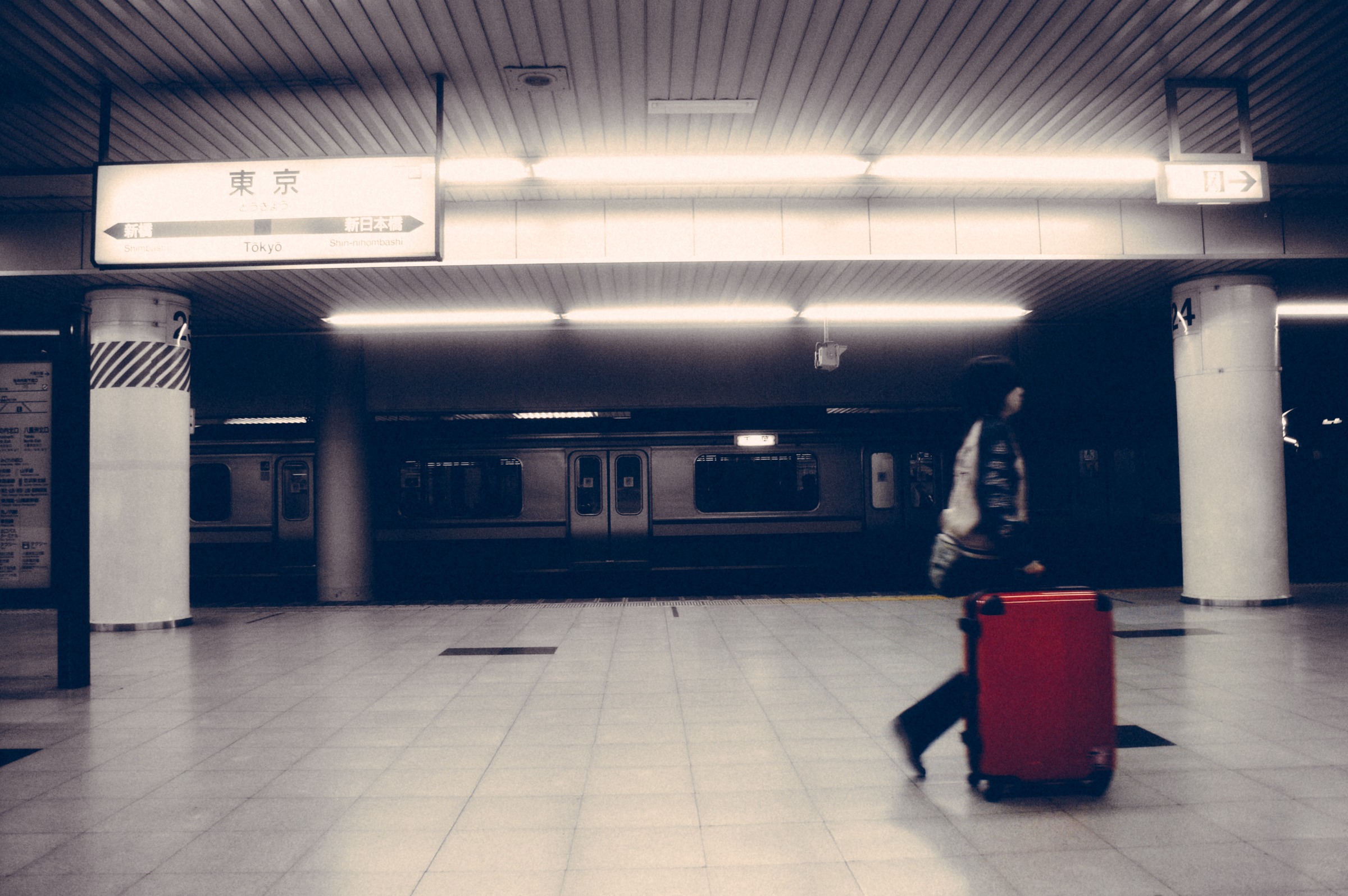
Cover photo: Suitcase in train station (Unsplash) by Israel Sundseth, CC0, via Wikimedia Commons. It shows a different place from the ones discussed here.
.jpg)