Category: Families

Booking, rooms and luggage when you travel with children.

  • How Much Luggage Fits in a Japanese Hotel Room?

    How Much Luggage Fits in a Japanese Hotel Room?

    In an American hotel, a big suitcase is a non-event. You drop it on the floor between the bed and the window, unzip it flat, and live out of it for a week. The airline decides how big the bag can be, and the room quietly assumes you brought one.

    Japanese business hotels assume something else. The room is built around a bed, a desk, and a unit bath (a prefabricated toilet, sink and tub in one pod), and the floor is whatever is left. A bag that is legal at the airline counter may have no place to lie open once you are inside.

    Where does a 29-inch checked bag go in a Japanese room, how do you open it, and what can you read on a booking page before you pay?

    Floor space a bag needs

    Delta says checked baggage “must not exceed 62 inches (157 cm)” when you total length, width and height. It puts the weight limit at 50 lbs (23 kg) for Main, Comfort and Premium Select.

    As of September 2026, from Delta: baggage page.

    The rest is arithmetic, not a product spec. A 29-inch body that is 20 inches wide and 12 deep totals 61 inches. Open it like a book and the two halves lie side by side, about 29 by 40 inches (74 by 102 cm). That is roughly 8 ft² (0.75 m²), plus somewhere to kneel. Two bags double it.

    My rough benchmark for opening a large bag comfortably is about 25 m² (269 ft²), and about 30 m² (323 ft²) for two.

    At least one hotel says otherwise. Richmond Hotel Kagoshima Tenmonkan says of its 23.02 m² (248 ft²) Deluxe Double: “大きなスーツケースも余裕を持って広げられる居住性の高さ”, roughly “living quality that lets you open even a large suitcase with room to spare”. Of its 19.54 m² (210 ft²) Double, with a 160 cm bed, it says “大きな荷物を広げるスペースも確保されており”, roughly “space is also secured to open large luggage”. Those are a hotel’s marketing lines, and both rooms sit below my benchmark. Layout likely matters as much as size.

    As of September 2026, from Richmond Hotel (in Japanese): Kagoshima Tenmonkan rooms page.

    What the chains publish

    The table covers six room pages from four business-hotel chains, plus one Imperial Hotel page for a higher-end room.

    Page Room Size Bed
    Super Hotel Anjo Station Front (in Japanese) Standard 12 m² / 129 ft² 120 or 140 x 200 cm
    same page Economy Twin 12 m² / 129 ft² two 90 x 200 cm
    same page Twin 15 m² / 161 ft² two 120 x 200 cm
    Dormy Inn Ikebukuro (in Japanese) Economy Single 12.0 m² / 129 ft² 120 x 195 cm
    same page Standard Double 13.9 to 14.5 m² / 150 to 156 ft² 140 x 195 cm
    same page Standard Twin 20.5 m² / 221 ft² two 110 x 195 cm
    Dormy Inn Hiroshima (in Japanese) Compact Single 14.25 m² / 153 ft² 120 x 195 cm
    same page Twin 18.8 m² / 202 ft² two 110 x 195 cm
    Tokyu Stay Suidobashi (in Japanese) Residential Double 18 m² / 194 ft² 160 cm
    same page Superior Twin (up to 3) 23 m² / 248 ft² 120 cm
    Richmond Hotel Tokyo Shiba (in Japanese) Single 16 m² / 172 ft² 140 cm
    same page Superior Twin 32 m² / 344 ft² two 122 cm
    Richmond Hotel Kagoshima Tenmonkan (in Japanese) Single / Standard Double 17.81 m² / 192 ft² 140 cm
    Imperial Hotel Tokyo Tower Standard 30 m² / 323 ft² twin 110 x 205 or king 170 x 205 cm

    As of September 2026, from the hotels’ own room pages linked in the table.

    The ranges below leave out deluxe rooms such as Richmond Shiba’s 25 m² king, and the Richmond Shiba Superior Twin at 32 m² (344 ft²) is the largest ordinary one. Sizes vary by property inside a chain, so read each row as one hotel’s number.

    A bed is a big share of a small room. A 140 x 200 cm bed covers 2.8 m², which is 23 percent of a 12 m² room. Two 90 x 200 cm beds in the Super Hotel Economy Twin cover 3.6 m², or 30 percent. Twin rooms lose floor faster than their square meters suggest.

    None of the hotels say whether the size includes the unit bath. If it does, the usable floor is smaller than it looks.

    Reading the photos

    The bed is what a listing photo shows off. Look at the floor.
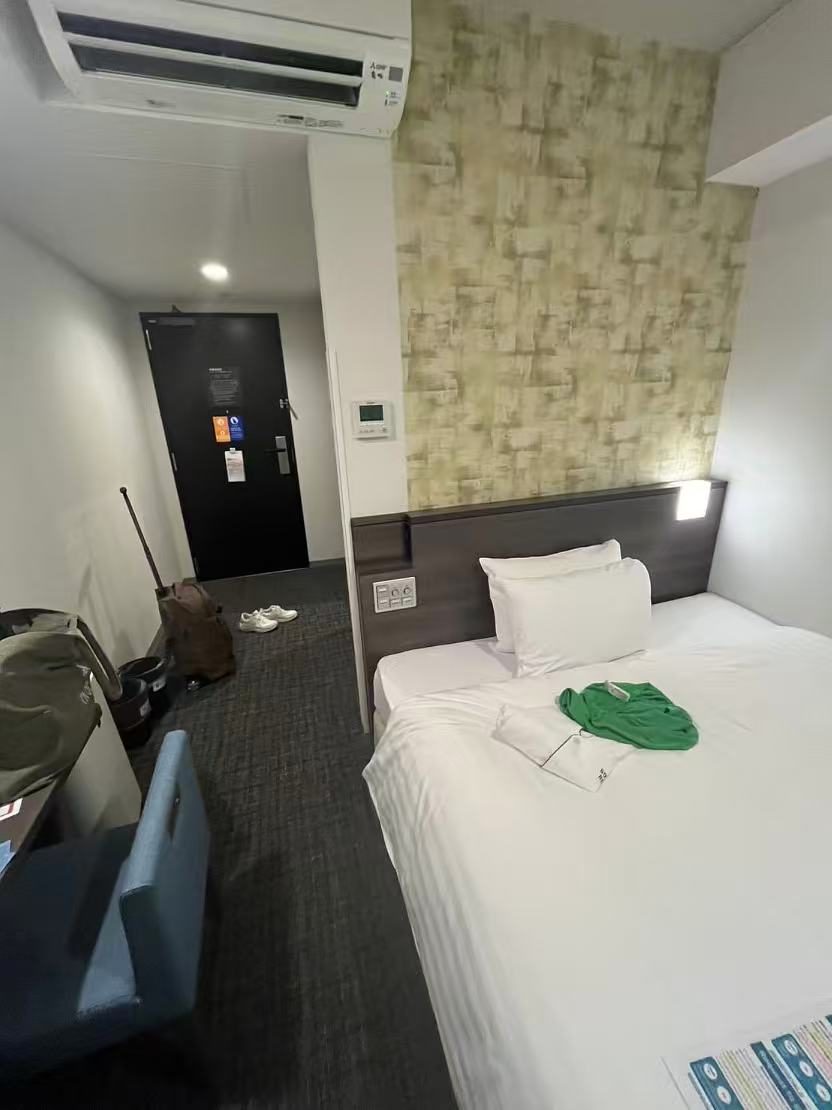
    A small business hotel room seen from the door, with a wheeled bag standing upright near the entrance, shoes beside it, and the bed filling the right half of the frame.
    A small room from the door, with the bag standing near the entrance.

    The bag stands upright just inside the door, and the bare floor around it is a narrow strip. A chair and a desk edge crowd the left. The only place in the frame to lay a bag flat is that strip, and a bag open there would sit across the path to the door. Most of the visible floor is the entrance.
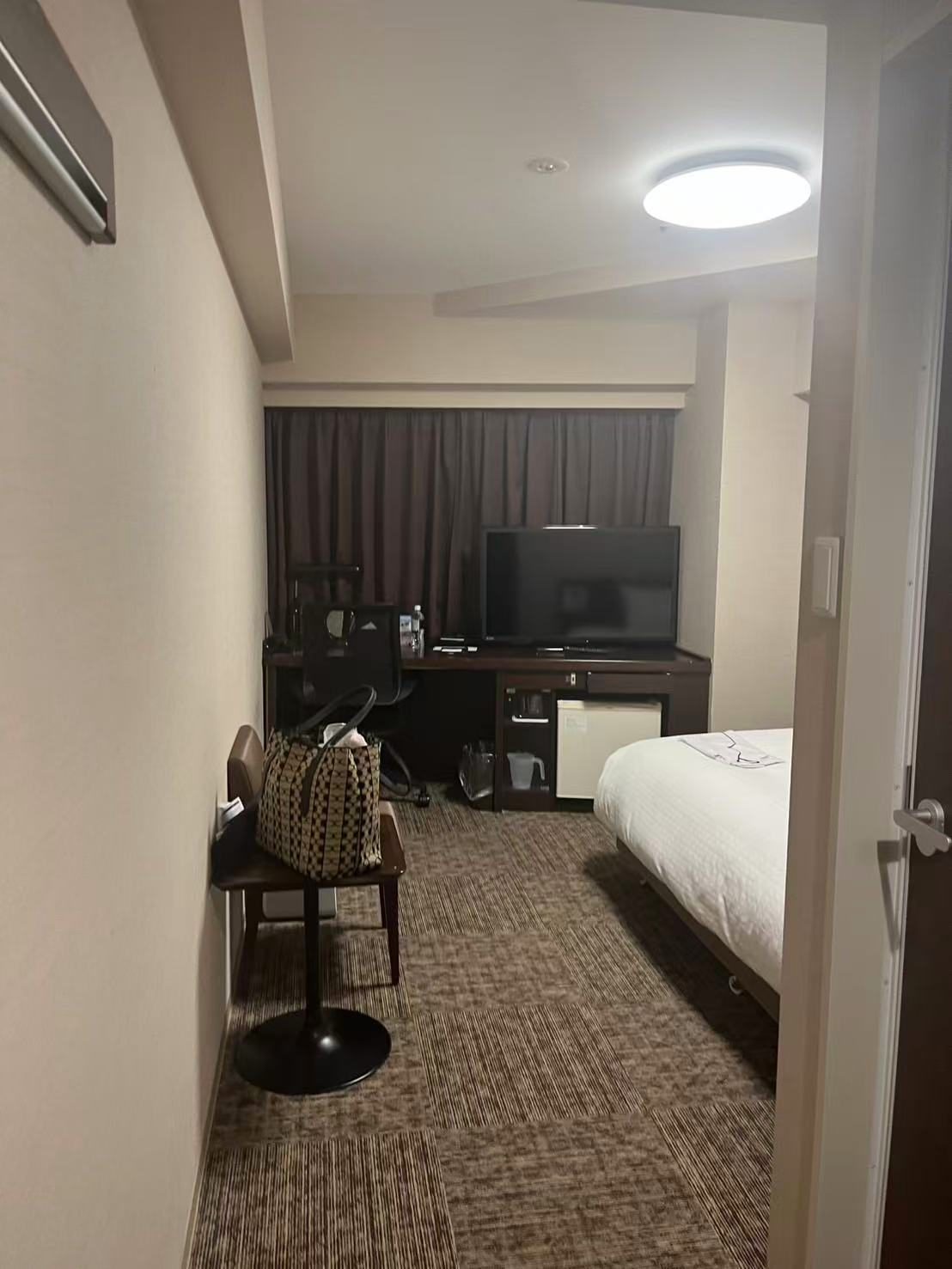
    A small business hotel room seen from the door, with a tote bag on a small chair beside the door and a desk with a monitor across the room.
    A small room from the door, with a tote on the chair.

    Here the bed is on the right and the desk runs across the far wall. A tote sits on a small chair by the door, and I don’t see a luggage rack. Between the chair and the bed is a carpet lane. Whatever else the room offers, a case has that lane or the chair.
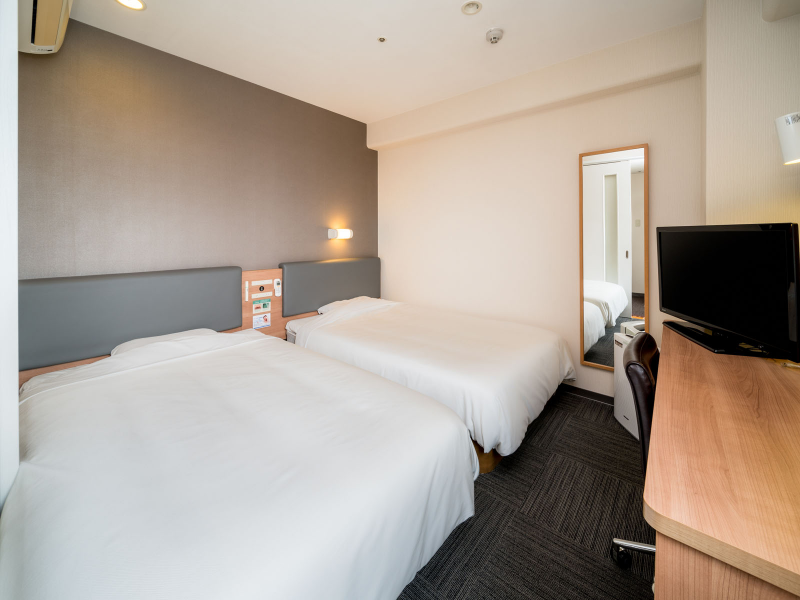
    The Twin room at Super Hotel Anjo Station Front: two beds side by side along the far wall, a mirror, a TV and a desk on the right.
    Super Hotel’s 15 m² Twin. Quoted from the official page (link), September 30, 2026. Copyright belongs to the owner.

    Super Hotel’s own picture of the 15 m² twin has two beds side by side along the far wall and a desk on the right. The bare carpet is the lane between the near bed and the desk. Two people with two bags would be opening one on a bed or in the entrance.
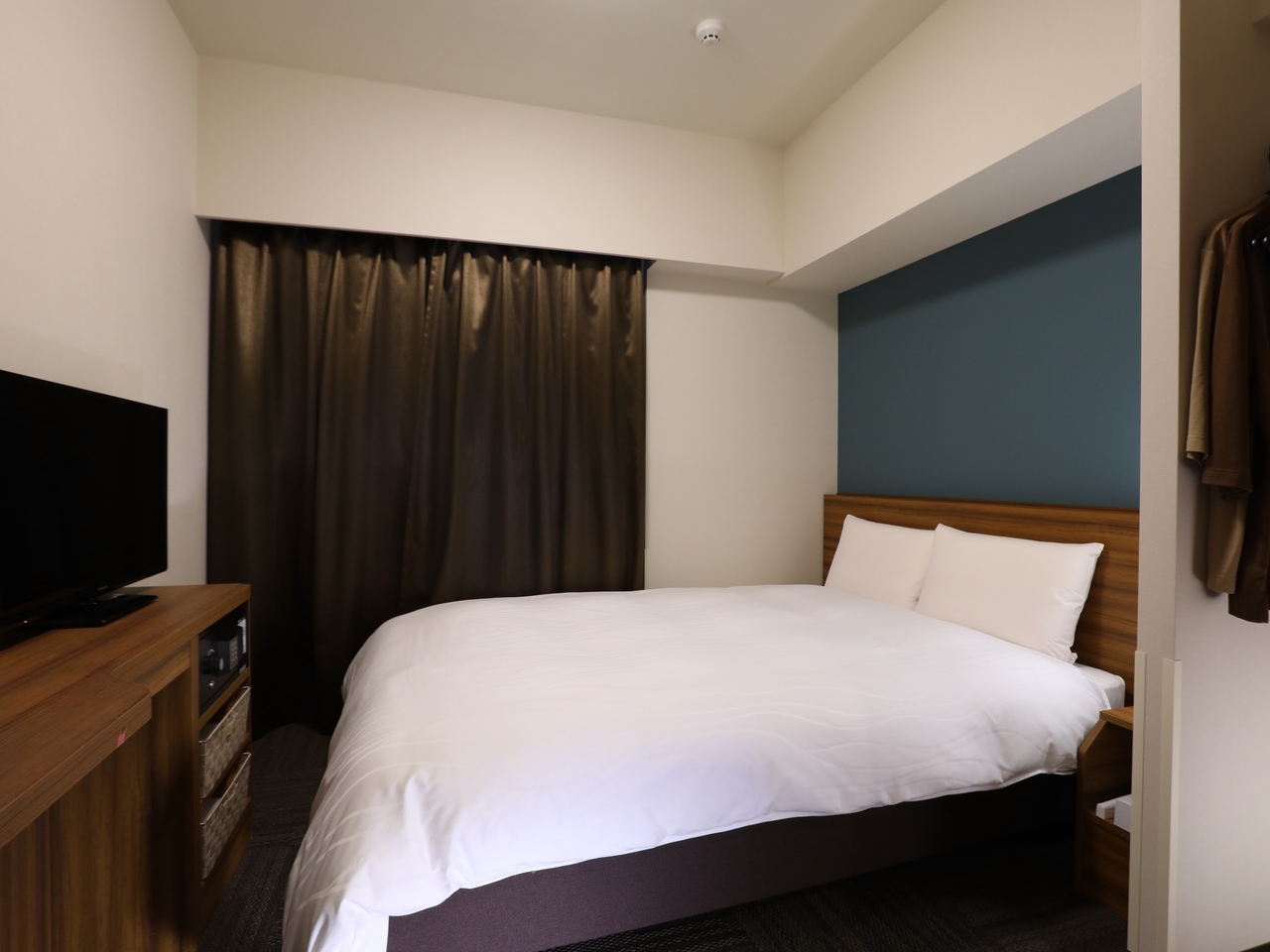
    The Standard Double at Dormy Inn Ikebukuro: a double bed between a TV unit and a closet, with a dark curtain behind it.
    Dormy Inn’s Standard Double. Quoted from the official page (link), September 30, 2026. Copyright belongs to the owner.

    In Dormy Inn’s picture the bed fills the width between the TV unit and the closet. The floor left is the strip at its foot, which is also how you get in and out. I wouldn’t count on more than one open bag fitting in a room laid out like this.

    The first two photos are mine (sizes unknown). The last two are the chains’ own photos, with the sizes the chains list.

    A floor plan shows what a photo can’t. This one is the Express Single at Sotetsu Fresa Inn Tokyo-Kyobashi, which it gives as 12.7 m² (137 ft²) with a 120 cm (47 in) bed. The labels are in Japanese: 窓 is the window, ベッド the bed, シャワールーム the shower room, バスルーム the bath room, テレビ the TV and 机 the desk.
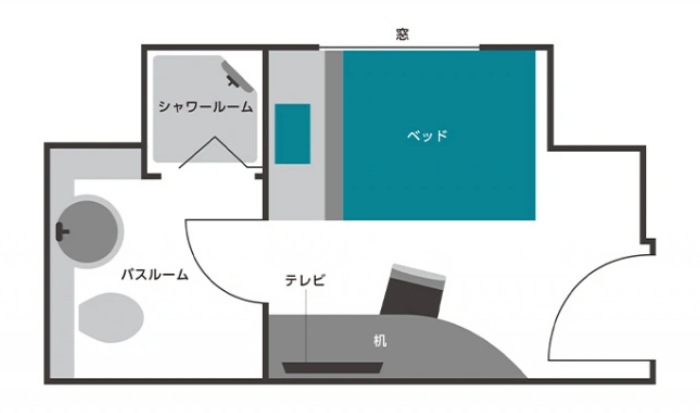
    Screenshot of a floor plan of the Express Single room at Sotetsu Fresa Inn Tokyo-Kyobashi. The bed runs along the window wall at the top right, the shower room and the bath room take the left side, and the desk sits along the bottom beside the entrance door.
    The Express Single floor plan on Sotetsu Fresa Inn Tokyo-Kyobashi’s rooms page (in Japanese). Screenshot.

    The bed sits against the window wall and the shower room and bath room take the left side. What is left is the white floor between the foot of the bed, the desk and the entrance door, and the bath room door swings into it. The plan carries no measurements, so it can’t tell you whether a bag opens there. It does show where the floor is.

    As of October 2026, from Sotetsu Hotels (in Japanese): the Fresa Inn Tokyo-Kyobashi rooms page.

    What I do

    I open my bag on the floor. When there are two of us, one bag goes on the rack and one on the floor. In a small room I often open it in the entrance corridor.

    Racks in these rooms tend to be small, and a small rack is why a second big bag ends up on the floor.

    Single, double, twin

    Single rooms, 12 to 17.81 m² (129 to 192 ft²). One bag, opened at the entrance or on the floor beside the bed. A second full-size bag stays closed, and a closed 29-inch bag stands on about 20 by 12 inches (51 by 30 cm) of floor. That is far less than an open bag needs, and most rooms have a corner for it.

    Standard double rooms, 12 to 19.54 m² (129 to 210 ft²). The beds on these pages are 140 to 160 cm (55 to 63 in) wide, so a bigger bed can mean a smaller floor. The Super Hotel Double is 12 m² with a 140 cm bed, and the Tokyu Stay Residential Double is 18 m² with a 160 cm bed. Compare the m² and the bed width together.

    Twin rooms, 12 to 27.32 m² (129 to 294 ft²). Two beds take the floor, and each bed is also a surface to open a bag on. In a twin, two people can each open a bag on their own bed, though the floor may still be short.

    Upper rooms. The Imperial Hotel’s Tower Standard is 30 m² (323 ft²), with a twin or king bed. That is the size where two bags start to be a floor problem you can solve, and it is priced like a different kind of hotel.

    Living out of a closed second bag is the compromise for most rooms. You take out what you need, set it on the desk, and close the lid.

    With kids, a stroller or four bags

    Two adults and two kids can easily mean three or four bags, say 29-inch ones, plus a stroller. Most rooms in the table above are listed for one or two guests, so the first check is the capacity line, not the floor.

    • Super Hotel Anjo: the Standard, Economy Twin, Super and Double rooms (all 12 m², 129 ft²) say 1 to 2 guests, and the 15 m² (161 ft²) Twin says 1 to 3.
    • Tokyu Stay Suidobashi: the 23 m² (248 ft²) Superior Twin is the only room on its page listed for three.
    • Richmond Shiba: the 32 m² (344 ft²) Superior Twin is listed for two.

    A third guest uses an extra bed, for a fee, arranged by phone before arrival. For four people, look at a family room or book two rooms.

    As of October 2026, from the hotels’ own pages (in Japanese): Super Hotel Anjo, Tokyu Stay Suidobashi and Richmond Shiba.

    Page Room Size Listed capacity
    Tokyu Stay Yotsuya Residential Family 37 m² / 398 ft² 4
    MIMARU Ueno Inaricho Apartment (Sofa-Bed) 38 m² / 409 ft² Adults 4 / Children 2 (6 people with children)
    same page Japanese Apartment 40 m² / 431 ft² Adults 4 / Children 2 (6 people with children), two futons

    MIMARU’s FAQ says up to two children aged 6 or under at check-in “will not be counted towards adult capacity and can share a bed with an adult.” Ask how your own hotel counts children before you pick a room.

    Now the bags. A closed 29-inch bag stands on about 20 by 12 inches (51 by 30 cm), so four take about 6.7 ft² (0.6 m²), against 8 ft² (0.75 m²) for one open bag (see floor space). In a 37 to 40 m² family room that is easy. In a small twin, the question is where closed bags sit once the beds, the bath door and the desk have their share, and the listed m² may include the unit bath. If the bags still won’t fit, you can ship some ahead from the airport. If you land before check-in, Arriving Before Check-In in Japan covers where the bags can wait.

    Babies change the math. Cribs:

    • Dormy Inn: no baby cribs, though some hotels have bed guards.
    • Tokyu Stay: baby beds at some hotels, so contact the hotel.
    • MIMARU: “we only provide free baby crib services for infants ages 2 below,” in limited numbers, so contact the hotel in advance.
    • The Tokyo Station Hotel (a city hotel): a crib for 0 to 12 months in rooms of 34 m² (366 ft²) or more.
    • Miyakojima Tokyu Hotel & Resorts (a resort): a crib of about 120 x 70 cm (47 x 28 in) for infants up to 24 months.

    As of October 2026, from Dormy Inn FAQ (in Japanese), Tokyu Stay FAQ (in Japanese), MIMARU FAQ, Tokyo Station Hotel and Miyakojima Tokyu.

    That last crib covers about 9 ft² (0.84 m²), slightly more than an open 29-inch bag.

    Strollers are easier to rent than to store. The Tokyo Station Hotel lists a baby stroller among its baby equipment and recommends reserving ahead. Miyakojima Tokyu lists strollers as free rental items that must be reserved. MIMARU says nine of its hotels rent strollers through a service called Babycal. The notice gives no price, so the Babycal rates below may not apply there.

    Babycal requires member sign-up and a reservation, and prices “may differ by location and item”. The first hour costs ¥250 to ¥500 (about $1.70 to $3.30), then ¥150 per 30 minutes (about $1), capped at ¥2,000 per 12 hours (about $13), for up to 7 days. Late returns cost ¥500 per 15 minutes (about $3.30), and the cap does not apply to them. Dollar figures use a round ¥150, so check the day’s rate. You return the stroller to the place you rented it. Most models stop at 48 months and 18 kg (40 lb), some at 36 months and 15 kg (33 lb), and the THE S ISOFIX model at 19 kg (42 lb). Match the model to your child’s age and weight.

    As of October 2026, from MIMARU’s news page and Babycal (in Japanese): rental page.

    When you reserve, ask whether the stroller stays at the front desk or comes up to the room.

    Before you book

    Four things on the booking page decide it.

    1. The floor in the photos. Find the shot from the door and look at the floor, not the bed.
    2. The bed count and width, not the room name. “Double” runs 140 to 160 cm (55 to 63 in) across these chains, and “twin” means two beds taking more floor than one wide one.
    3. The size in m², converted. Set it against 8 ft² (0.75 m²) per open bag, plus the bed and the desk. Where the hotel doesn’t say what the number includes, take the lower estimate.
    4. The desk. A laptop-size desk gives you a surface once the bag is closed.

    The short version

    A 29-inch bag opened flat needs about 8 ft² (0.75 m²) of clear floor, and most small Japanese rooms have that only at the entrance or along one side of the bed. Read the floor in the photo, count the beds, and convert the m². Plan on one open bag and one closed bag in a single. With kids, check the capacity line first, and ask about cribs and strollers before you book.

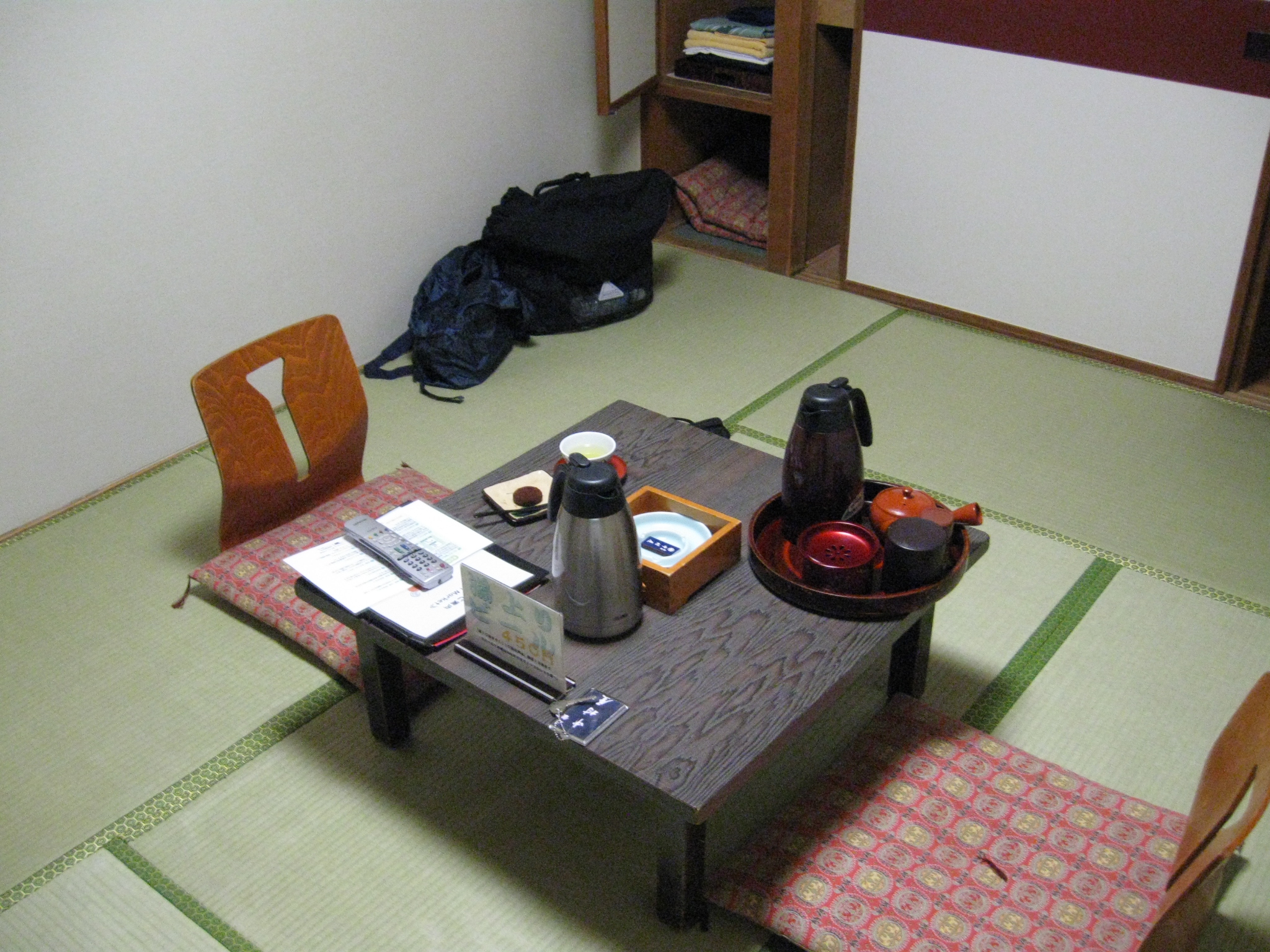
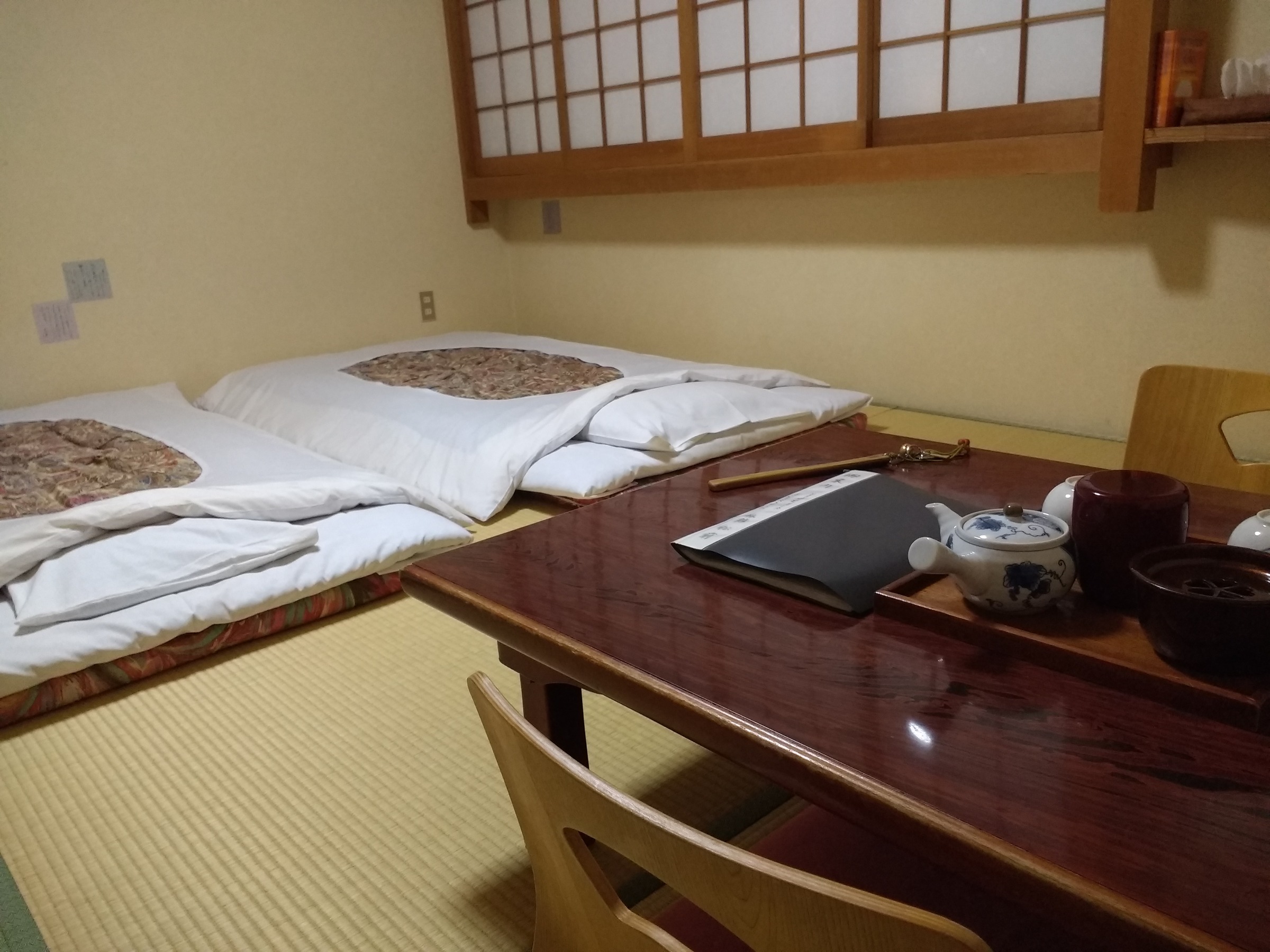
    Cover photo: lic-1-ryokan-room-backpack by ㇹヮィㇳ, CC BY 2.0, via Wikimedia Commons. It shows a different property from the ones discussed here.
  • Booking a Japanese Hotel for Three, or With Kids: What to Put in the Headcount Box

    Booking a Japanese Hotel for Three, or With Kids: What to Put in the Headcount Box

    1. The headcount that quietly removes the bed

    Type two adults and one child into a Japanese booking form and the child is easy to lose. On the Rakuten Travel search in section 3, a child declared with no meal and no bedding told the site to show rooms for two. The third guest then has no bed in the room you are shown, and the child’s meal, bedding or room arrives later as its own line at its own price.

    Dollar figures here use a round ¥150 to the dollar, so check the day’s rate before you budget.

    2. The headcount box is part of the price, not a cap you stay under

    You’re probably used to a room having a price, with the number of people as a cap you stay under. Japanese rate pages build the number up the other way, person by person and service by service.

    The clearest version is on an inn’s own rate page. Sukawa Kogen Onsen publishes child rates as a share of the adult rate: 70% for a child who gets the same meal as the adults plus a set of bedding, 50% for a child’s meal plus bedding, 30% for bedding and no meal, and ¥4,400 (about $29) for a child’s meal and no bedding. The page has no age brackets at all. The price is attached to what the child is handed.

    As of September 2026, from Sukawa Kogen Onsen’s rate page (in Japanese).

    So the number you enter describes your party, and the site shows only rooms that fit that party. Why Japanese rates are built per person in the first place is a longer story: Why Japanese Hotels Price Per Person.

    3. What each child category does to your results

    On Rakuten Travel, a Japanese-language booking site used inside Japan, children don’t go into a box labeled children. They go into categories built from two questions: does the child get a meal, and does the child get a set of bedding. Bedding here means the Japanese futon, a mattress pad and quilt laid on the floor, not the fold-down sofa frame the word means in the US.

    Search: within 0.6 miles (1 km) of Shinjuku Station, one room, one night (October 14 to 15, 2026), run three times with only the guests changed.

    What I entered Properties with availability How often each room type came back
    3 adults 44 Twin 38, triple 19, double 15, quad 7, Japanese-Western 3
    2 adults + 1 elementary-school child, with meal and bedding 43 Twin 37, triple 14, double 18, quad 7, Japanese-Western 3
    2 adults + 1 preschool child, no meal, no bedding 49 Double 49, semi-double 13, twin 13, triple 1, single 3

    Put the first two rows side by side and the child is almost invisible. Declared with a meal and bedding, a nine- or ten-year-old barely moves the result: triples 14 against 19 for three adults, twins 37 against 38. Declaring a child doesn’t blow up your search.

    The third row, measured against the second, is a different picture. Triples fell from 14 to 1 and twins from 37 to 13. Doubles appeared 49 times, and semi-doubles, a room type sold for one or two people, appeared 13 times. The site had been told your third person needs no bedding, so it offered rooms built for two. The property count went up, from 43 to 49, which looks like more choice.

    It is easy to choose the no-meal-no-bedding option: “she’s four, she’ll sleep with us, and she shouldn’t cost anything.” That reasoning produces a booking for two beds with three people in the room.

    This is one site and one neighborhood, and Rakuten splits children more finely than the two cases tested. Watch for it on your own screen, which takes about two minutes.

    Rakuten’s bands follow school status, 幼児 (preschool) and 小学生 (elementary school). Elementary school starts on the April 1 after a child turns six, so a child who turns six in February sits in the preschool band until April. One forum traveler pricing Tokyo hotels found that entering a child’s age as six made a room vanish and entering five put it back.

    As of September 2026, from e-Gov (in Japanese): the School Education Act, article 17, and its enforcement regulation, article 59.

    4. What “children stay free” actually means

    The table covers four business hotel operators, meaning the domestic category of small, cheap, station-adjacent rooms that the pillar article describes: Route Inn, Dormy Inn, Super Hotel and Richmond. The Richmond figures come from a single property’s page and speak for that hotel only.

    As of September 2026, from the child-rate pages (in Japanese): Route Inn FAQ, Dormy Inn FAQ, Super Hotel family page and Richmond Hamamatsu page.

    Operator Free up to What the next band costs
    Route Inn Preschool age Elementary school, ¥2,000 (about $13)
    Dormy Inn Age 2 and under Ages 3 through elementary school, ¥3,000 (about $20). Junior high and up pays the adult rate
    Super Hotel Preschool age No figure on the page
    Richmond (one property) Elementary school and under Extra bed, ¥3,000 (about $20) a night

    Four pages, three different lines for when a child stops being free. An elementary-school child is free at one and ¥3,000 at another. Dormy Inn says its child rates are identical at every property in the chain, while Route Inn’s and Super Hotel’s say conditions differ by property.

    Route Inn’s FAQ says the co-sleeping child rate applies only where the party goes over the room’s stated capacity, and that a room with a capacity of two, used by one adult and one child, is charged as two adults. The child is occupying a slot, and the slot carries an adult’s price.

    Super Hotel puts the same idea from the other direction: book a room whose capacity already includes the child, because a co-sleeping child counts toward capacity. Route Inn asks you to book its dedicated co-sleeping plan, with some properties excepted. Both want the child in the reservation when you make it.

    That matters because of a trick that circulates on the forums: book for two adults, then email the property to declare the child. None of the operators’ pages describes email as the way to do it. Dormy Inn’s FAQ does allow adding a co-sleeping child to an adults-only booking, with the ¥3,000 paid at check-in. At Route Inn and Super Hotel, you’d be booking a room you have been told not to book. Dormy Inn and the Richmond property also cap co-sleeping at one child per bed.

    Breakfast is its own line item, with its own child price. Two Dormy Inn properties, Aomori and Morioka, both list ¥2,500 (about $17) for an adult, ¥1,200 (about $8) for ages 3 through elementary school, and free for 2 and under. Treat these as a guide, since they come from two properties at one chain. The structure matters more: a rate plan that includes breakfast for two adults has not bought breakfast for a third person.

    As of September 2026, from Dormy Inn’s breakfast pages (in Japanese): Aomori and Morioka.

    5. What the law asks, and what the desk asks

    English-language forums are firm: Japanese properties are strict about how many people are in a room because of fire regulations, so declare every child. On the same threads, travelers report a property telling them an infant didn’t need declaring. The advice splits, and neither half explains itself.

    The guest register. The Inns and Hotels Act, article 6, requires the operator to keep a guest register with each guest’s name, address and contact information, and requires you to give those details when asked. The ministerial regulation, article 4-2, sets three years of retention and, for a guest with no address in Japan, which includes you, adds nationality and passport number.

    The fire side. The Fire Service Act enforcement regulation, article 1-3, calculates a building’s occupancy figure. A Western-style guest room counts as its number of beds. A tatami-style guest room counts as its floor area divided by 65 ft² (6 m²) per person, or 32 ft² (3 m²) for simple lodging houses and properties that mainly take groups. That figure is for the building. The capacity printed on a booking page is the property’s own, and it’s the one that governs your reservation. Leave the formula out of any conversation at a front desk.

    As of September 2026, from e-Gov (in Japanese): the Inns and Hotels Act, its ministerial regulation and the Fire Service Act enforcement regulation.

    The desk. At the check-ins I’ve been through in Japan, the lead guest’s details have usually been enough. Some cards have a line for the other people in the party, which I usually haven’t had to fill in. Those were adult check-ins.

    So declare everyone, but not for the forum’s reason. The room allocation is made from the number you type. The reservation carries it to the front desk, the bedding follows it, and by the time you’re standing in the room with your bag, the cheap option you clicked weeks ago has already decided that there are two of you.

    6. Count the floor, not the beds

    The number that settles capacity for you at home is probably how many beds are in the room.

    A tatami guest room with a low table, floor cushions and a wide window, and no bed anywhere in it.
    A tatami room with no bed in it.

    A Japanese tatami room doesn’t work that way, and the fire code in section 5 draws the same line: beds for a Western-style room, floor area for a tatami one.

    I’ve stayed at three or four Japanese inns, as an adult, with no children in the party. The bedding went down on the floor with the mattresses mostly pushed together, and the table and chairs were moved to the edge of the room to clear the space. There was usually a bit more floor left over, though I wouldn’t read a capacity off that. Nobody ever asked me how many sets to lay out. Bedding generally follows the headcount in the reservation, so the number you typed arrives in the room while you’re at dinner.

    For a family, I’d start with a tatami room or a Japanese-Western room before counting beds. A room counted by its floor is a room where an extra set of bedding is something the property can sell you, and the inn rate page in section 2 sells exactly that, at 30% of the adult rate for bedding with no meal. A room with two beds has two beds. The search terms are 和室 for a tatami room and 和洋室 for a room with both beds and a tatami area, both standard filters on Japanese booking sites.

    A caveat about city centers. In the Shinjuku search in section 3, the Japanese-Western type came back 3 times across 44 properties, the thinnest line in that table. Don’t plan on tatami being the easy option in central Tokyo.

    A related trap is covered in Japanese Hotel Rooms Decoded: a room that comes back from a search for two people isn’t necessarily built for two. Don’t plan around a sofa bed appearing, either.

    7. The order I’d do this in

    Seven steps, and the first one is just a look.

    1. Search as three adults first, to see the field. On Booking.com, the same neighborhood and dates returned 377 properties for three adults and 331 for two adults plus an eight-year-old, with rooms for three in both. You’re not booking this search. You’re finding out what exists.
    2. Then search with your real party, and give every child a set of bedding. Even if you fully intend to sleep three in a row on the floor. The bedding option is what keeps rooms for three in your results.
    3. Open the property’s own page and find its capacity for the room you want. That number decides everything downstream.
    4. Read that operator’s child-rate page before you assume free means free. Look for three things: the age at which the child stops being free, whether the free offer depends on staying inside the room’s capacity, and how many co-sleeping children one bed is allowed. These pages are in Japanese, and the page translation in your phone’s browser handles them.
    5. Check what breakfast costs for a child, separately from the rate plan. A plan that includes breakfast for two adults has not bought a third breakfast.
    6. Write to the property and get the total party, the ages, and what the child is getting, in writing. A short email in English is usually workable. This is also where you ask about an extra set of bedding, or an extra bed, if you want one.
    7. Put the child in the reservation itself. Book the plan or room type that already has the child in it, on the day you book. Dormy Inn’s FAQ does allow adding a co-sleeping child to an adults-only booking, paid at check-in, but Route Inn and Super Hotel both tell you to include the child when you book, so declaring later is a bad default.

    The short version

    1

    The headcount box is part of the price. In a Rakuten Travel search, a child declared with a meal and bedding returned almost the same rooms as three adults (triples 14 against 19). With no meal and no bedding, triples dropped to 1 and doubles came back 49 times, while the property count went up.
    2

    “Children stay free” is tied to room capacity at two of the four business hotel operators. Route Inn’s FAQ charges a two-capacity room used by one adult and one child as two adults, and Super Hotel asks you to book a room whose capacity already includes the child.
    3

    Declare everyone, but not for the forums’ reason. At the check-ins I’ve been through, the lead guest’s details were usually enough. The room allocation is made from the number you typed.
    4

    For a family, start with a room whose capacity comes from floor area. The capacity printed on the property’s page is the one that governs your booking, and an extra set of bedding is a line item: 30% of the adult rate for bedding with no meal on one inn’s rate page.

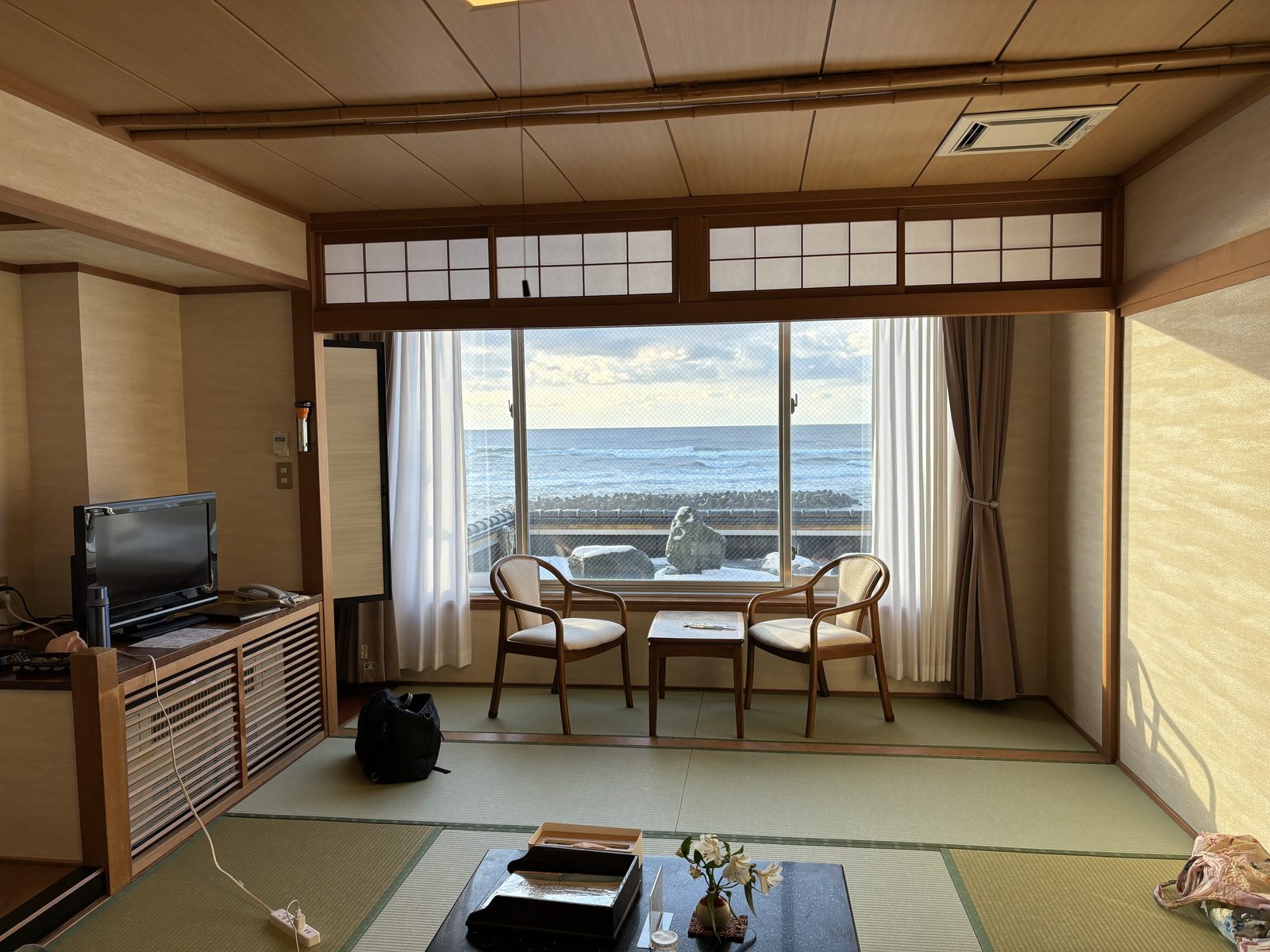
    Cover photo: lic-5-tatami-futon-pair by Mx. Granger, CC0 1.0, via Wikimedia Commons. It shows a different property from the ones discussed here.