1. The cheap room that came back from a search for two
Booking for two of us, I once ran the search and took a price that looked too good to walk past. A single, or a semi-double. I don’t remember which. The name didn’t carry enough information to be worth remembering. The bed was too tight for the two of us.
Twenty years in Japan, and I still got that booking wrong. If a search for two returns a room called a single, look twice.
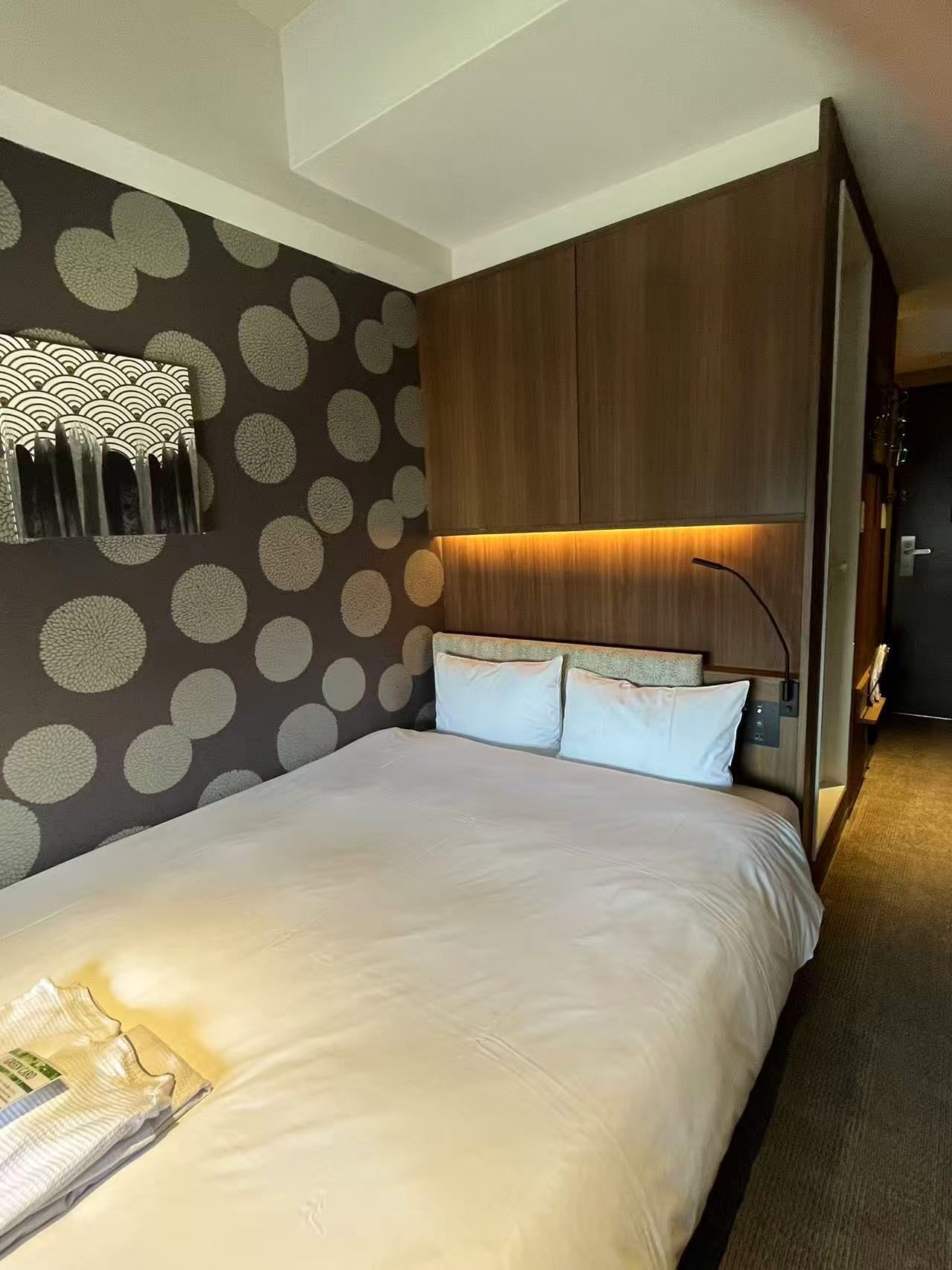
A room that comes back from a search for two is not, on that evidence alone, a room built for two. One APA property sells its standard room at 118 ft² (11 m²) with a 55-inch (140 cm) bed for one guest, and the same 118 ft² with the same 55-inch bed for two. The guest count moves and the room doesn’t.
If your fix at home for a too-small room is the sofa bed, plan without it. Of twelve properties at five chains, exactly one listed a sofa bed, and it was in a room sold for three people.
2. One word, two bed widths in one building
The same word, twice, in one building
APA’s Keikyu Kamata property in Tokyo lists eight room types on one page. Here are four of them.
| Room type on the page | Floor area | Bed width |
|---|---|---|
| Single | 129 ft² (12 m²) | 43 in (110 cm) |
| Deluxe single | 161 ft² (15 m²) | 55 in (140 cm) |
| Double | 161 ft² (15 m²) | 55 in (140 cm) |
| Deluxe double | 194 ft² (18 m²) | 63 in (160 cm) |
As of August 2026, from APA’s room pages (in Japanese): Keikyu Kamata and Akihabara.
The word “single” does two jobs in one building. It means 43 inches and it means 55 inches, twelve inches apart, on one rate page. The deluxe single publishes the same width as the double, so book it thinking “single, so narrow,” and you get the double’s number.
The same width, different chains
Route Inn’s Ishinomaki property calls 55 inches (140 cm) a semi-double, and its double is 63 inches (160 cm). APA’s Keikyu Kamata property calls 55 inches a double. Across the twelve properties, rooms sold as a single ran 39 to 63 inches (100 to 160 cm). The bottom of that range is a US twin. The top is three inches over a US queen, in a room the chain calls a single.
As of August 2026, from Route Inn’s Ishinomaki price page (in Japanese).
The booking site adds a third name
The English Booking.com listing for Sotetsu Fresa Inn Tokyo-Kyobashi named one room Economy Double Room with Small Double Bed. The line directly under that name said 1 twin bed.
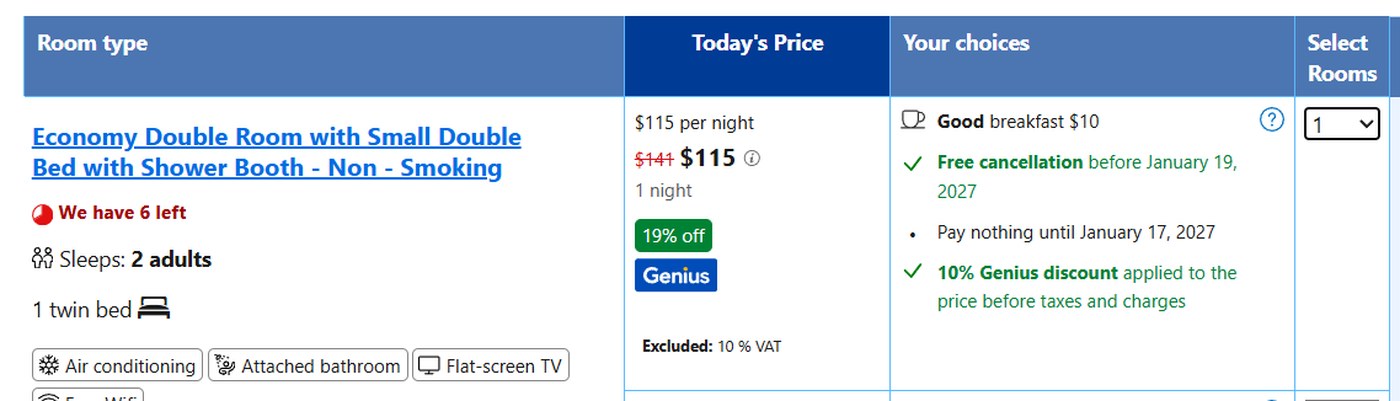
A double is around 54 inches at home and a twin is 38, so the listing offers both readings at once. The hotel’s own Japanese site calls the room a semi-double with a single bed 120 cm wide. That is 47 inches, and both English labels miss it, in opposite directions, by about the same amount.
As of September 2026, from the Booking.com listing and the hotel’s room page (in Japanese).
So the semi-double is 47 inches here and 55 inches at the Route Inn property above. Same word, eight inches apart, and the booking site’s translation adds a third reading.
The same room, sold twice, under two names
On several of these pages, a single and a room for two are separate listings for the same room.
At Richmond’s Fukuyama property, the high-grade single and the high-grade double are both 198 ft² (18.4 m²) with a 63-inch (160 cm) bed. At Richmond’s Hakata property, the single and the standard double are both 194 ft² (18 m²) with a 55-inch (140 cm) bed. At Route Inn’s Yokohama property, the single and the semi-double are both 129 ft² (12 m²) with a 55-inch bed. That is how a 63-inch bed ends up inside the single range.
As of August 2026, from the room pages (in Japanese): Richmond Fukuyama and Hakata, Route Inn Yokohama.
The room name and the bed name, one step apart
Toyoko Inn says that single rooms get a double-size bed and double rooms get a queen-size bed. The room name sits one rung below the bed name, and the chain publishes that as a feature. The chain gives no centimeters, so carry none of this article’s numbers over to Toyoko.
As of August 2026, from Toyoko Inn’s room page (in Japanese).
3. What the words mean in Japanese
Words that are slippery in Japanese too
Three kinds of word give me trouble even in Japanese.
Grade names (deluxe, superior, moderate, standard, economy). These belong to a chain, and they move between properties of the same chain. In Richmond’s pages, a “deluxe double” was 67 inches (170 cm) at the Hakata property and 71 inches (180 cm) at Fukuyama and Tokyo Shiba.
Hollywood twin. One Dormy Inn property lists it as two 35-inch (90 cm) beds. Read the bed line and look at the photo.
Wide-something, comfort-something. House coinages. Where the chains put a width on them, it’s the plain room’s width: Route Inn lists a single and a comfort single as separate types, both at 55 inches (140 cm).
As of August 2026, from Dormy Inn’s Kawasaki room page (in Japanese).
Words that are obvious in Japan and not to you
Semi-double. It’s ordinary vocabulary to me, and it isn’t a word you’ll have met on a US booking page. You’d read it as “a bit smaller than a double, so snug for two but fine.” On the pages it ran 47 to 55 inches (120 to 140 cm), against a US full’s 54.
How many people is one for? It depends. Two Japanese builds probably manage it and two American builds probably don’t, but that is an inference from the widths, not a measurement.
Twin. The word survives the trip and the measurement changes underneath it. Beds in rooms called twin ran 35 to 48 inches (90 to 123 cm) each, against a US twin’s 38, so they’re often wider than the twins you’re picturing.
Queen. At all four Dormy Inn properties in the sample, the rooms called queen carried a 63-inch (160 cm) bed, three inches over a US queen’s 60.
4. The widths, next to the sizes you know
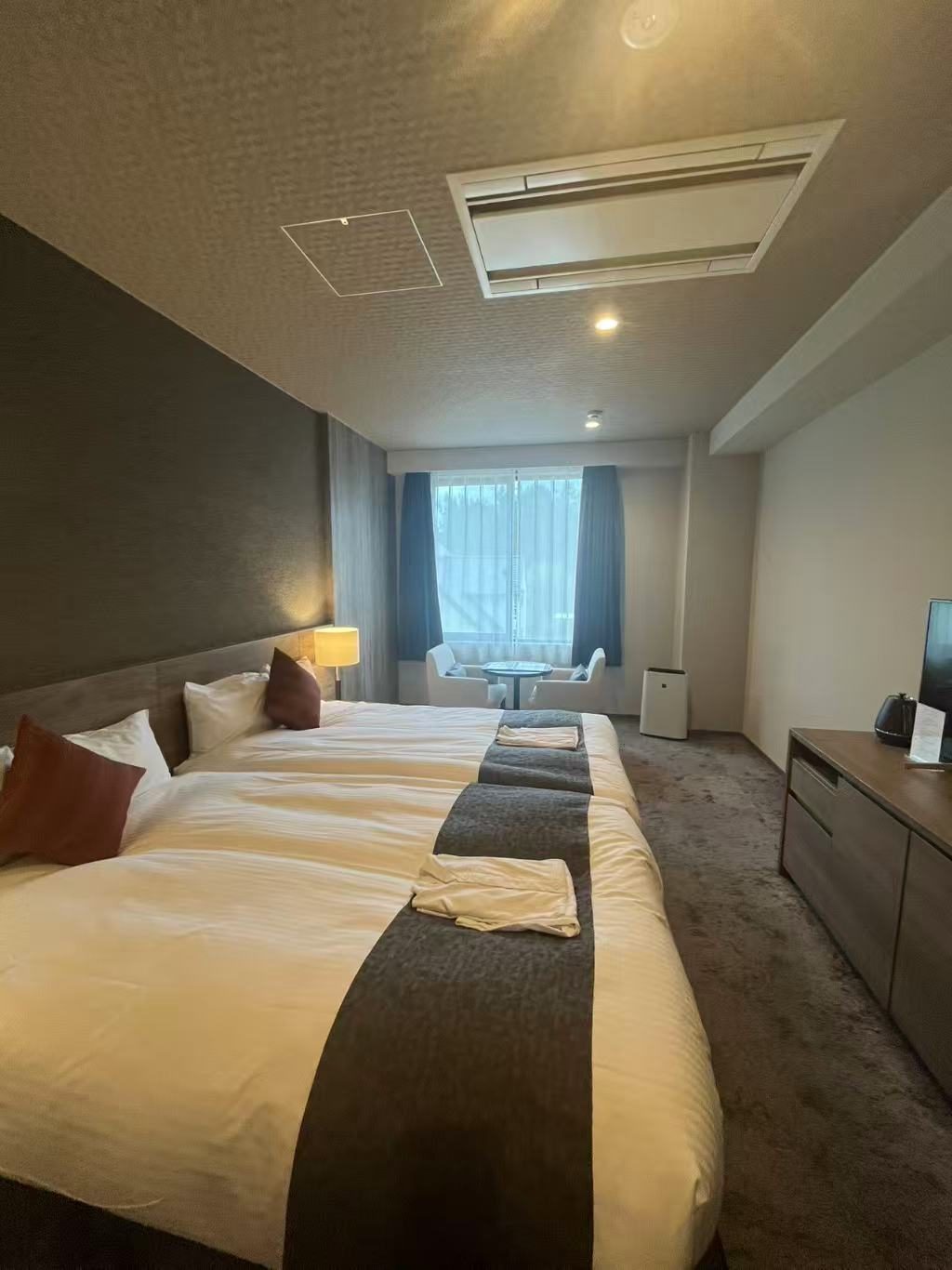
The table covers twelve properties (four Dormy Inn, three Richmond, two Route Inn, two APA and one Super Hotel), ten of them in big cities. It is a snapshot of August 2026, not the whole country. Rooms sold for families get their own lines, and a room whose page gives a name and no width, as at Toyoko Inn, isn’t in the table.
| The word on the page | What the pages published | The US size you’re comparing it to |
|---|---|---|
| Single (シングル) | 39 to 63 in (100 to 160 cm) | Twin 38, full 54, queen 60 |
| Semi-double (セミダブル) | 47 to 55 in (120 to 140 cm) | Full, 54 in |
| Double (ダブル) | 55 to 71 in (140 to 180 cm) | Full 54, queen 60, king 76 |
| Twin (ツイン), per bed | 35 to 48 in (90 to 123 cm) each | Twin, 38 in |
| Family twin (ファミリーツイン) | 47 in and 55 in (120 and 140 cm) in one room, one property | Two different sizes side by side |
| Queen (クイーン) | 63 in (160 cm), four properties at one chain | Queen, 60 in |
| Family double (ファミリーダブル) | Two 45-in (115 cm) beds pushed together, 91 in (230 cm) across, at one property | Two beds, not one. Each is 9 in under a US full |
US mattress sizes are from Mattress Insider.
sizes
One width, 55 inches (140 cm), sits in all three of those ranges at once. Because the ranges overlap, the words can’t tell you whether two adults fit. The widest bed outside the family rooms was 71 inches (180 cm), five inches under a US king’s 76.
5. What 55 inches means with two of you in it
Fifty-five inches (140 cm) is the number you’ll meet most often once you start opening these pages. Eleven of the twelve properties had one somewhere in their lineup.
Whether it works for two adults depends on who you’re sharing with and your build. The firmer part is the numbers: an inch over a US full, five inches under a US queen, in a room that may be 118 ft² (11 m²).
In a narrow room, one long side of the bed can be against the wall. When it is, and there are two of you, the inside spot has a wall on one side and a person on the other. I climb over the other person.
How many people a room will legally and practically sleep, including what happens when you put a third person or a child into the search box, is covered in Booking for Three, or With Kids.
6. Booking one grade up sometimes grows the bed and sometimes doesn’t
The obvious move, once you know the names don’t carry widths, is to book one grade up and assume the bed grows. Sometimes it does. At APA Keikyu Kamata, walking up the grades walked the bed up too, from 43 inches at the plain single to 63 at the deluxe double (110 to 160 cm). Those are the four rows in section 2. At Super Hotel’s Shimbashi property, three room grades all had the same 129 ft² (12 m²) and the same 55-inch (140 cm) bed. What a higher grade buys at the same hotel varies by hotel.
Floor area doesn’t predict the width either. At Dormy Inn’s Korakuen property, the single is 210 ft² (19.5 m²) with a 39-inch (100 cm) bed. The double at the same hotel is 155 to 192 ft² (14.4 to 17.8 m²) with a 55-inch (140 cm) bed. The larger room has the narrower bed.
As of August 2026, from the room pages (in Japanese): Super Hotel Shimbashi and Dormy Inn Korakuen.
Before you pay for the grade above, open both room types and put the two dimension lines side by side. If the width is identical, you’re buying floor space or a view, which may well be what you want. If the width jumps eight inches, or twelve, now you know what the money is for.
7. Bed length and firmness
Length. Most published lengths were 195 or 196 cm, which is 77 inches. A handful ran to 200 cm and two room types to 205 cm (79 and 81 inches). A US queen or king is usually 80 inches (203 cm), so most rooms are about three inches shorter. If anyone in your party is tall, read the length line on the specific room.
A slot by the door that powers the lights only while your key card is in it usually ties the room’s power to the card, so a phone left plugged in may not charge while you’re at dinner. Pull the card on your way out and see what stays lit.
Firmness. Japanese hotel mattresses feel firmer than what you’re used to at home. That’s my impression, not a measurement. If a soft mattress is a medical matter for you, it’s worth an email to the property.
At a traditional inn, the bedding goes on the floor, on tatami. The Japanese word for that bedding is futon, and in the US the same word names a sofa frame that folds down flat. Different object, and firmer again. What else is in the room is in the pillar article.
8. What I do before I book
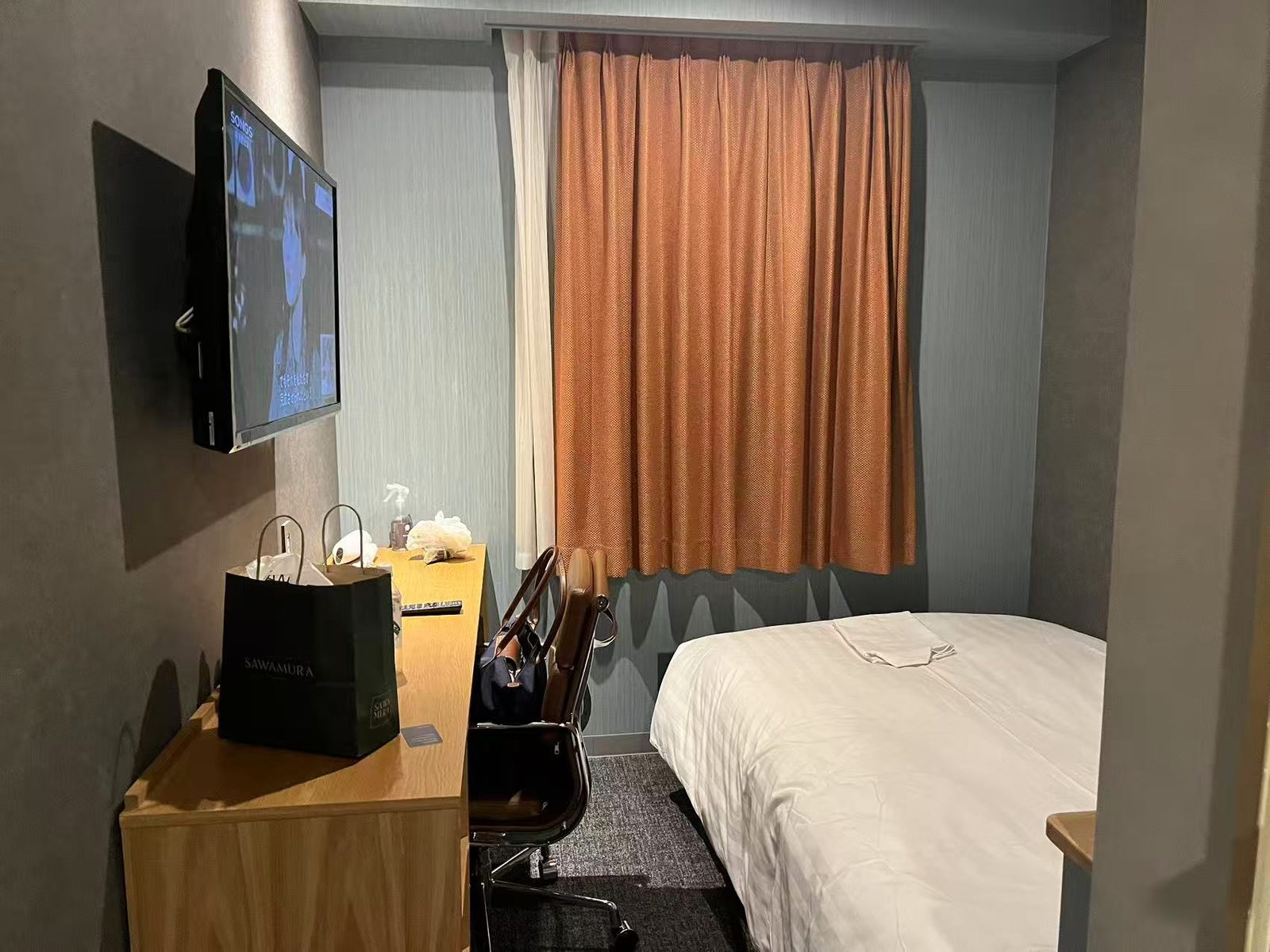
I only check the width when two of us are going. Booking for myself, I don’t open the dimension line at all. With two of you in one bed, it’s the whole game.
I look at four things: the room photos, the floor area, the bed dimension line and the reviews. The floor area won’t predict the width, as the Dormy Inn example in section 6 shows, and the photos are where you run the check in section 5. At the same price, I take the floor space over the wider bed. Yours may run the other way, particularly if width is what went wrong on a previous trip.
On the chain sites, the width sits in plain text on the property’s own pages, in no fixed format. Some pages give millimeters and some centimeters, some width by length and some the width alone. If a page gives a size name and no centimeters, you don’t have the number.
For a night when two of you share one bed, in order:
- Open the property’s own room page, not just the booking site summary.
- Find the bed width in centimeters. If it isn’t published, ask the property or pick a room that publishes it.
- Convert it. 140 cm is 55 inches, an inch over a US full. 152 cm is 60 inches, a queen. 160 cm is 63 inches, three over a queen. 180 cm is 71 inches, five under a king.
- Read the length too if anyone is tall.
- Look at the room photos for floor on both long sides of the bed.
- If you’re considering the grade above, open both pages and compare the two dimension lines before you pay the difference.
The short version
If you read nothing else on this page.
The numbers are printed on the property’s own Japanese-language page.
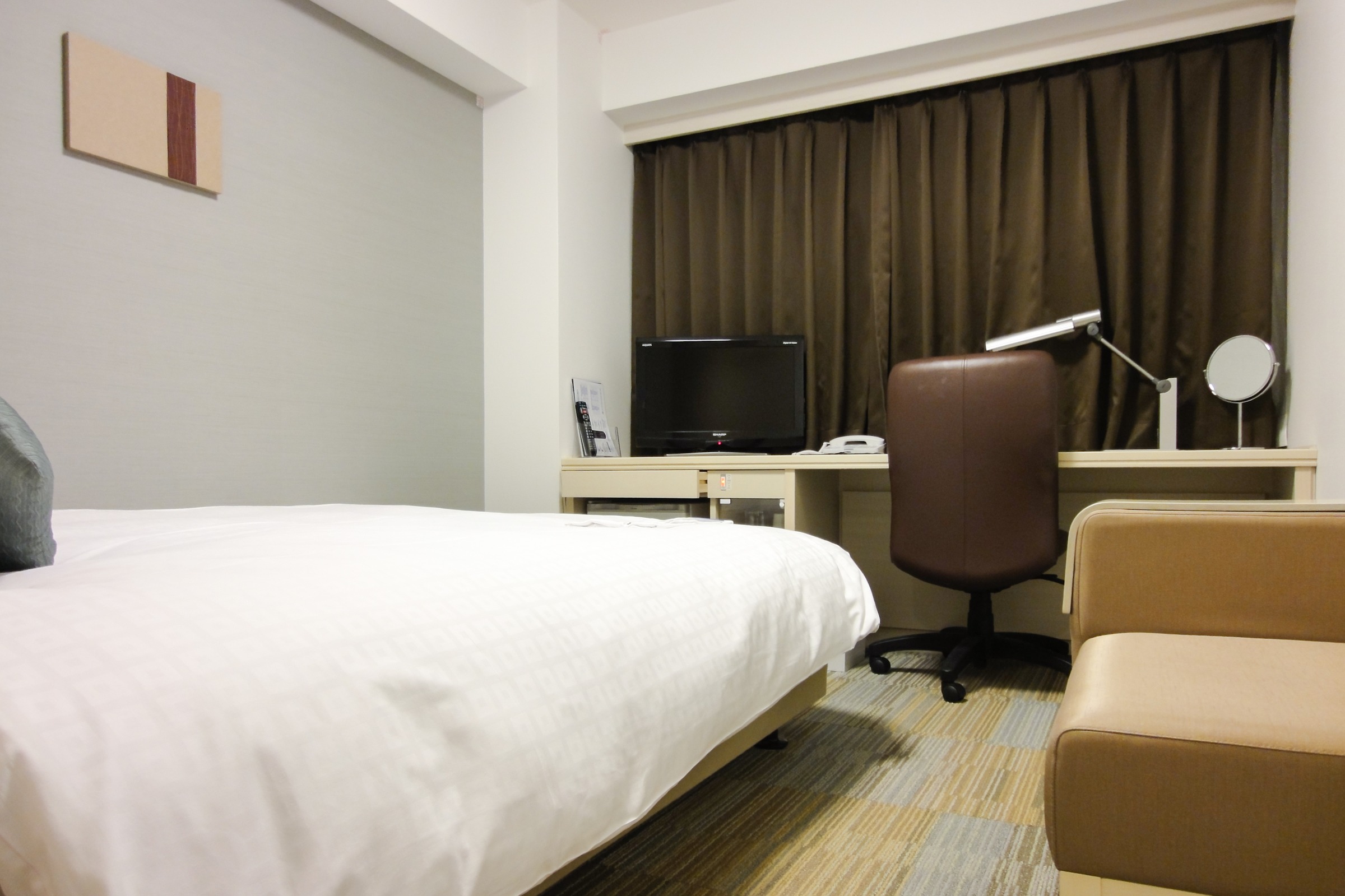
Cover photo: lic-7-business-room-overview by J o, CC BY-SA 3.0, via Wikimedia Commons. It shows a different property from the ones discussed here.
