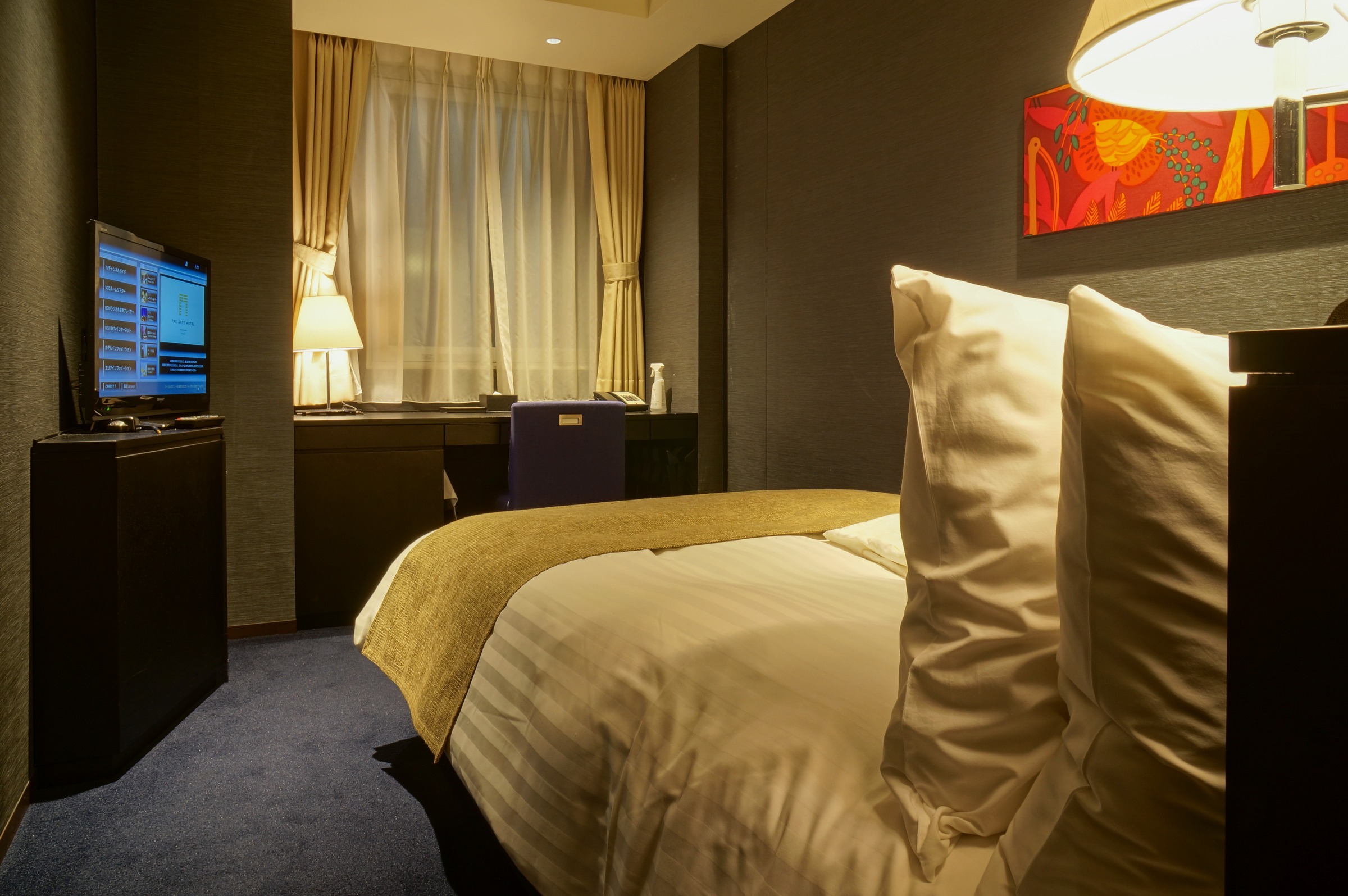
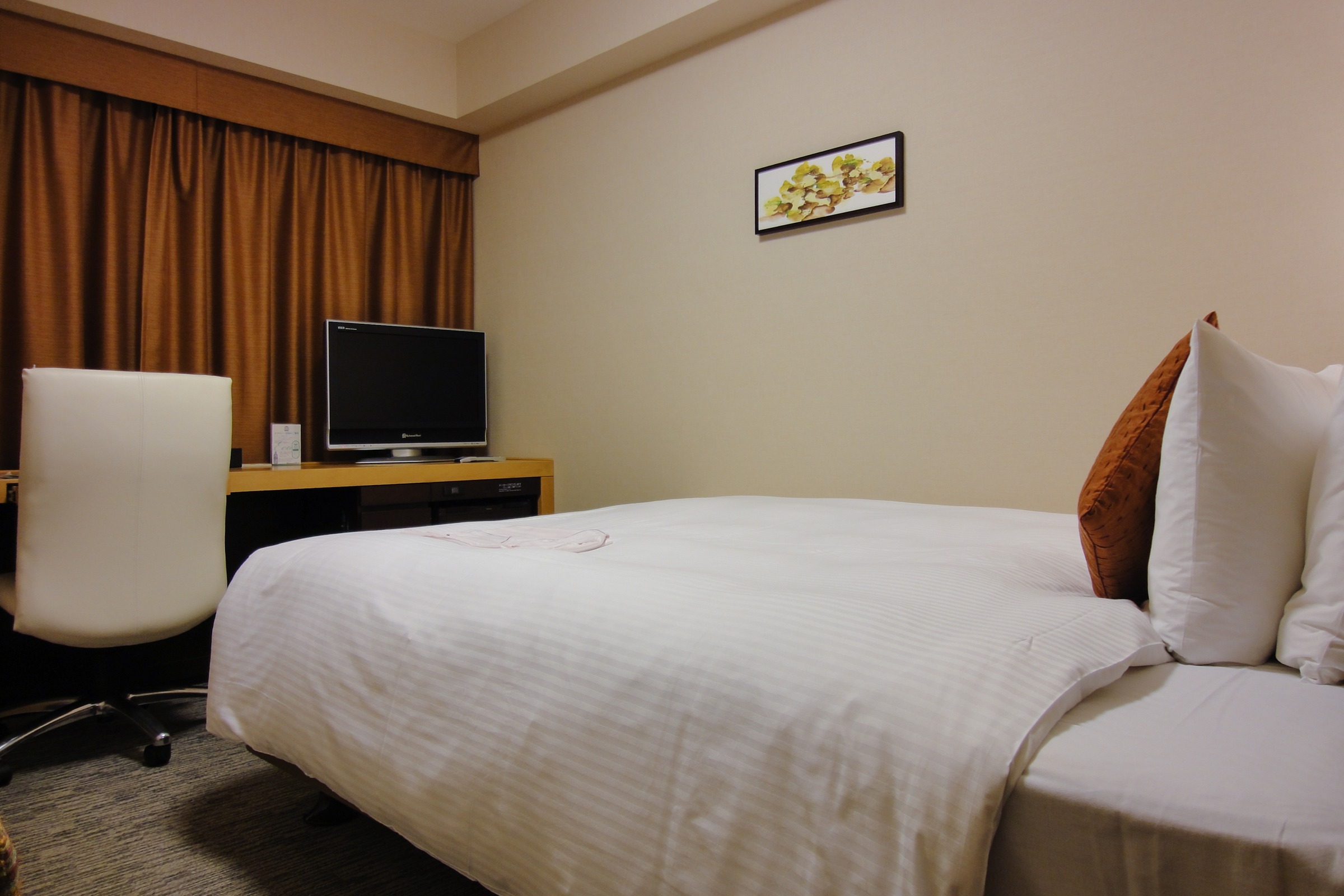
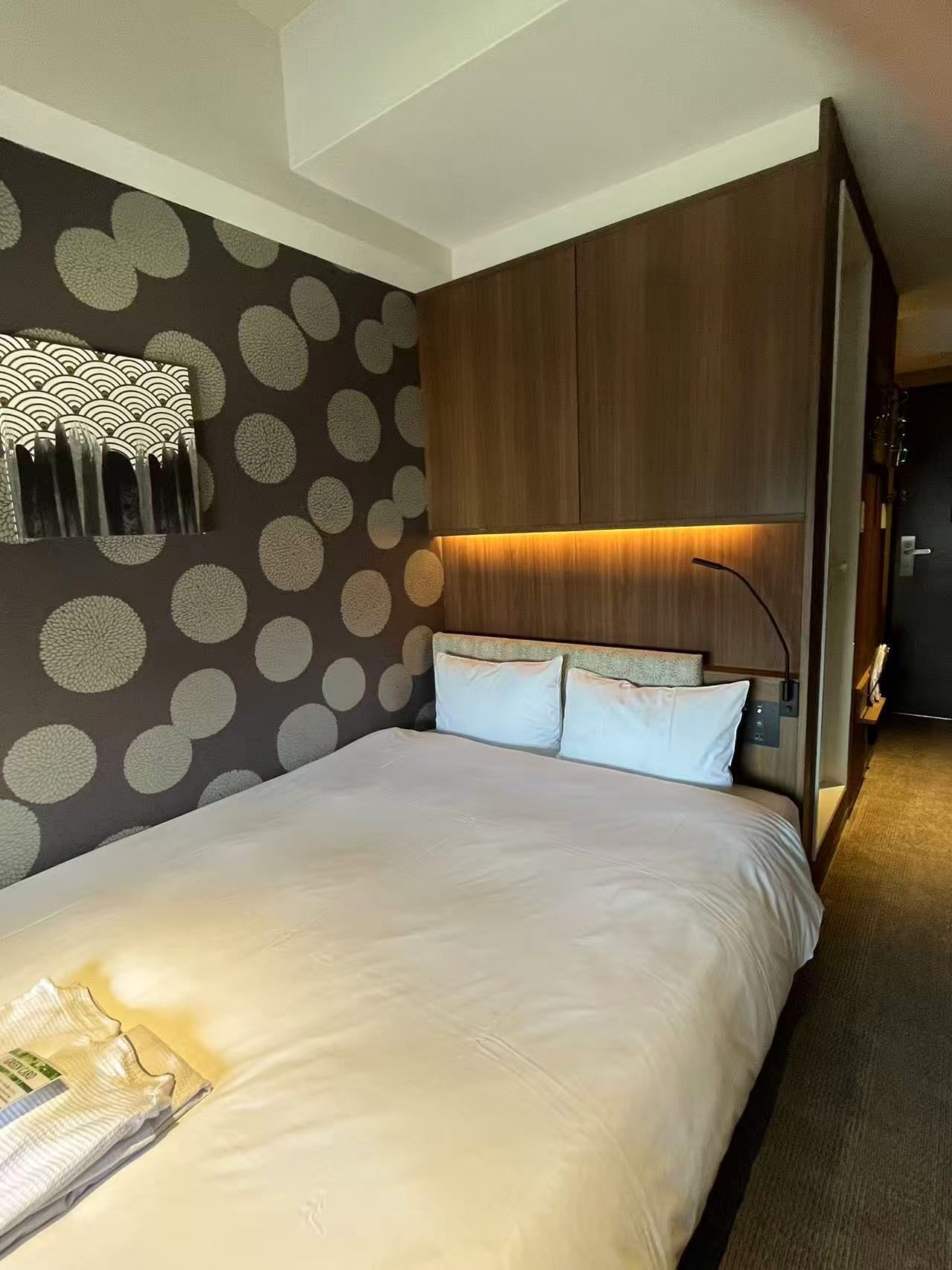
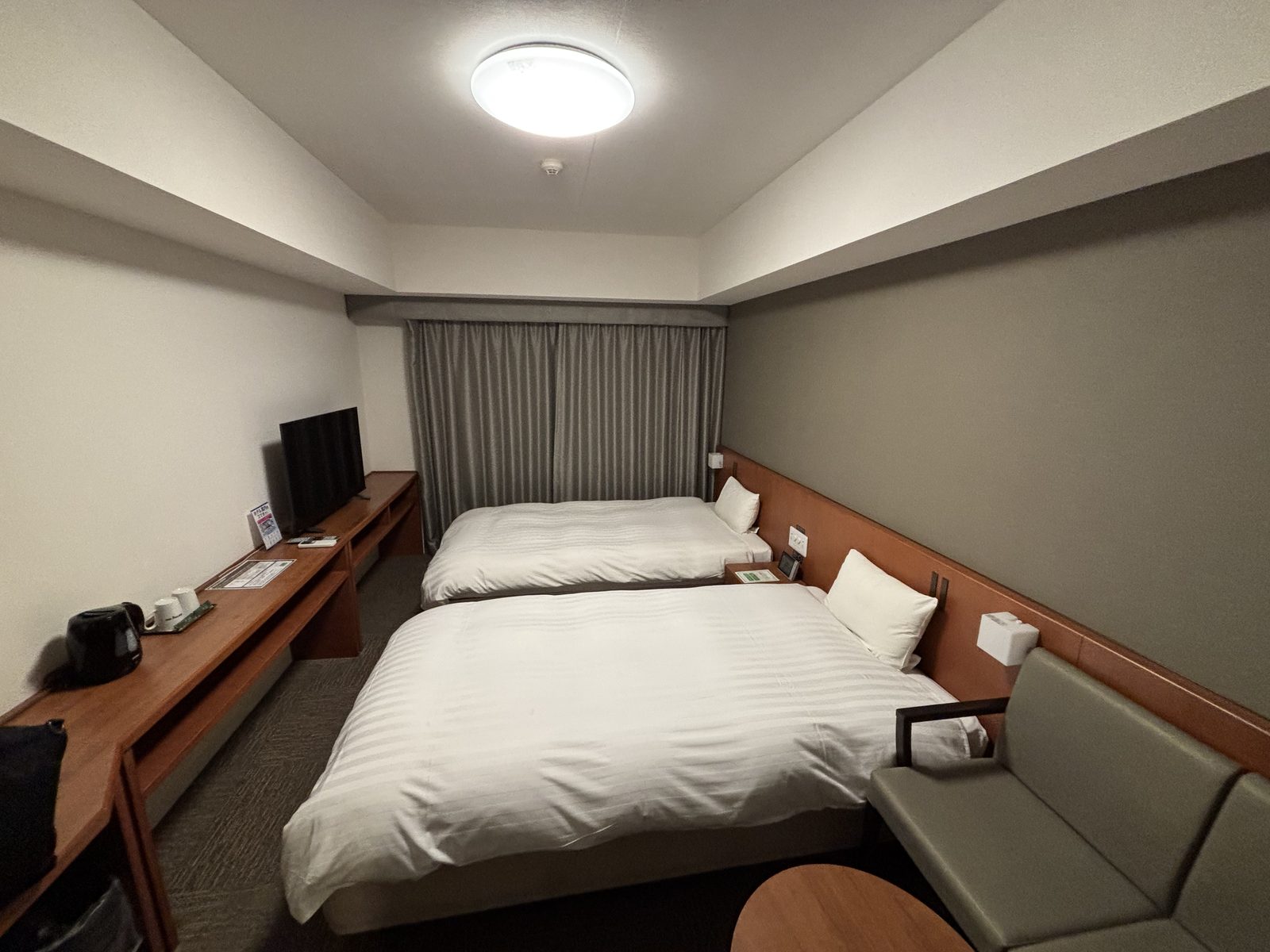
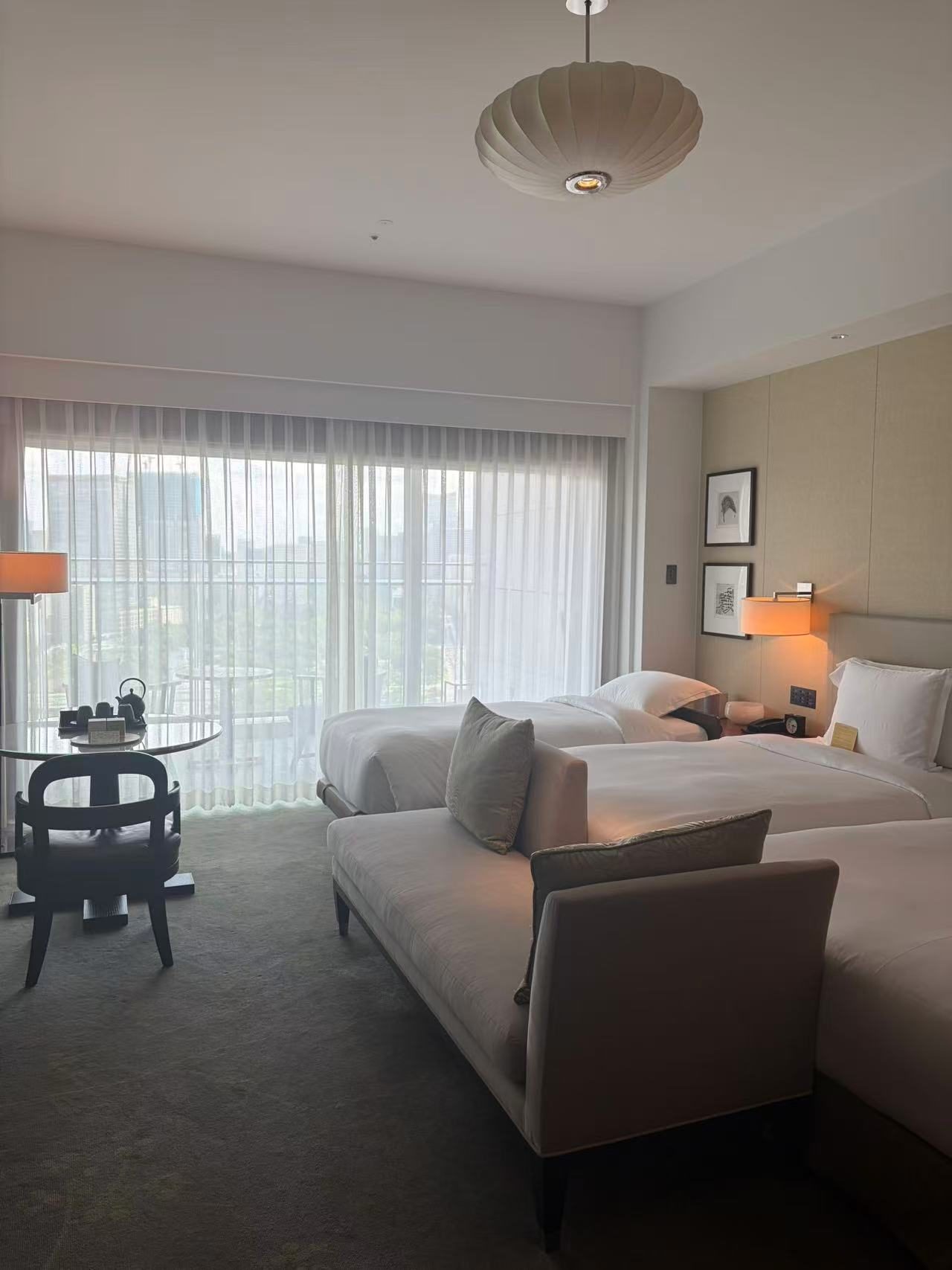
At home, “double” means a bed for two. A full is a double. So a semi-double sounds like a small double, a bit snug, fine for a couple who like each other.
In Japan the word works the other way around. It is a step above the single bed, and it is sold first as a bed for one person who wants room to move. The “double” part describes how much wider it is than a single. It does not describe who sleeps in it.
This article covers one word. For how a whole room name (single, twin, double, deluxe) fails to carry a bed width, see the rooms article.
What the word names
Start with how Japanese bedding companies use it. Nihonbashi Nishikawa, a long-established Japanese bedding company, publishes a size table. Its table runs single 97 to 100 cm, semi-double 120 cm, double 140 cm and queen 160 cm, all 195 to 200 cm long. The same article labels the semi-double a bed for one person with room to spare, and the double a bed for one or two. The 120 cm figure is 47 inches.
That is one retailer’s table, so read it as the usual retail picture and not a rule.
As of September 2026, from Nihonbashi Nishikawa (in Japanese): size table article. For the national bed standard, see kikakurui.com (in Japanese): JIS S 1102:2017 page.
A person living in Japan, asked whether a semi-double is for one person or two, said it depends: someone with a Japanese build can probably manage two, and someone with an American build basically can’t. That is one person’s reading, not a measurement, but it points the same way as the retailer’s table: a semi-double is a one-person bed.
One hotel, two photographs
The 120 cm bed is the textbook figure. Hotel pages are looser. Richmond Hotel Tokyo Shiba lists six room types on its rooms page.
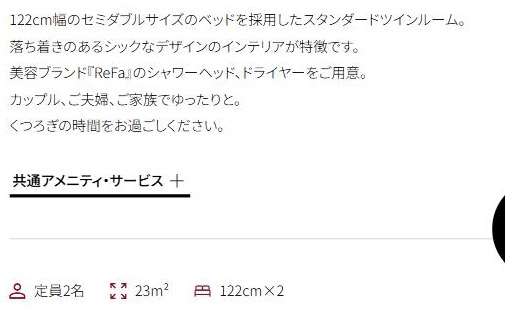
Richmond Hotel Tokyo Shiba, Standard Twin Room (in Japanese).
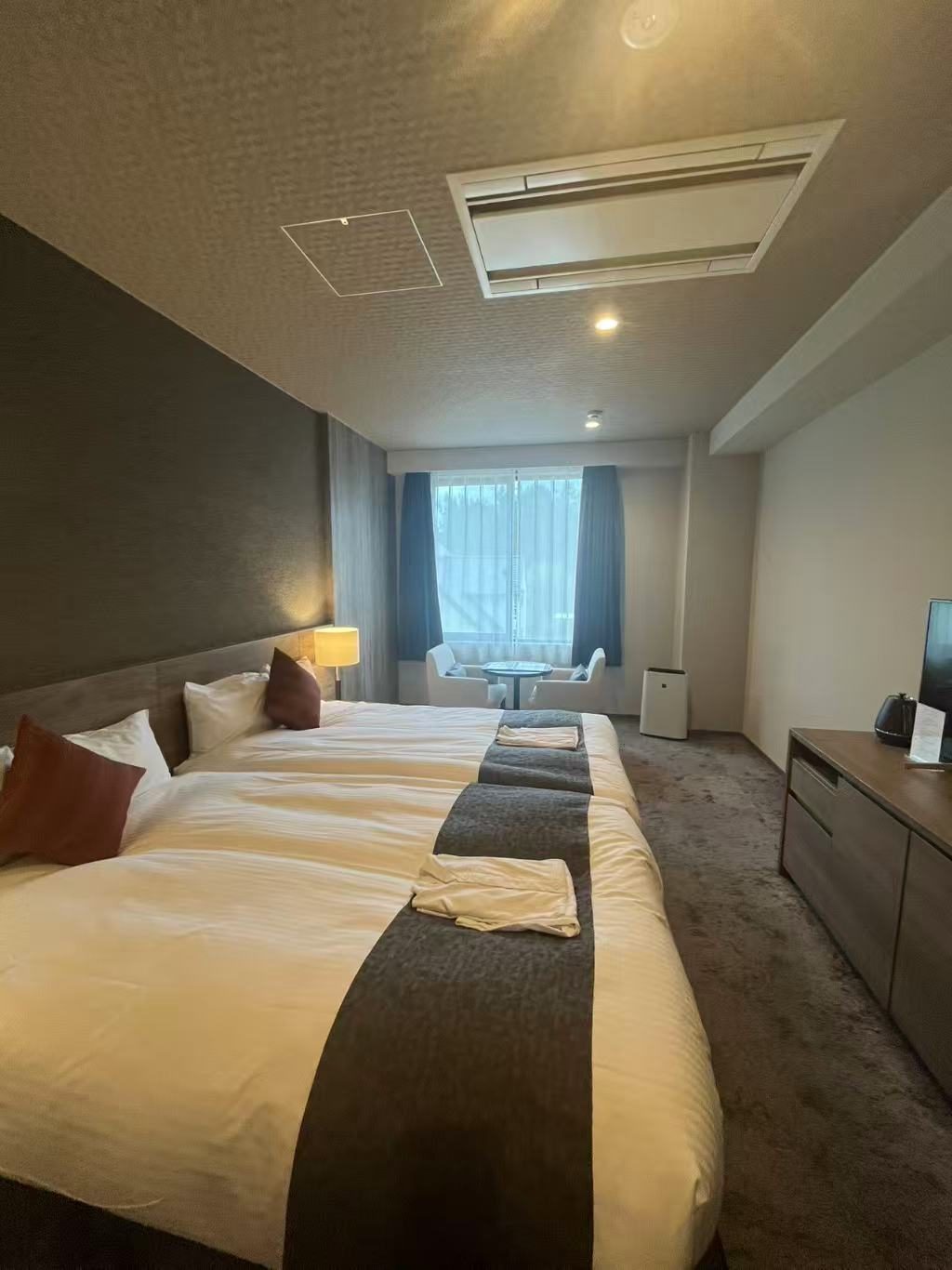
The Standard Twin Room’s text reads 「122cm幅のセミダブルサイズのベッドを採用したスタンダードツインルーム」, a standard twin room with 122 cm wide semi-double size beds. The icons under it say capacity 2, 23 m² (248 ft²), and 122 cm x 2.
Here the semi-double is each bed in a twin room: two people, two beds, 48 inches each.
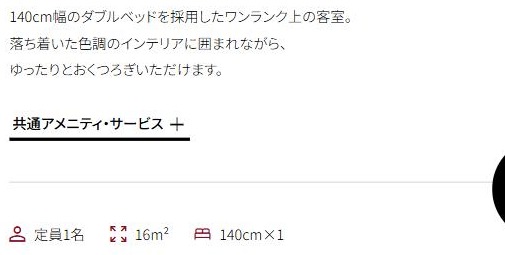
Richmond Hotel Tokyo Shiba, Single Room (in Japanese).
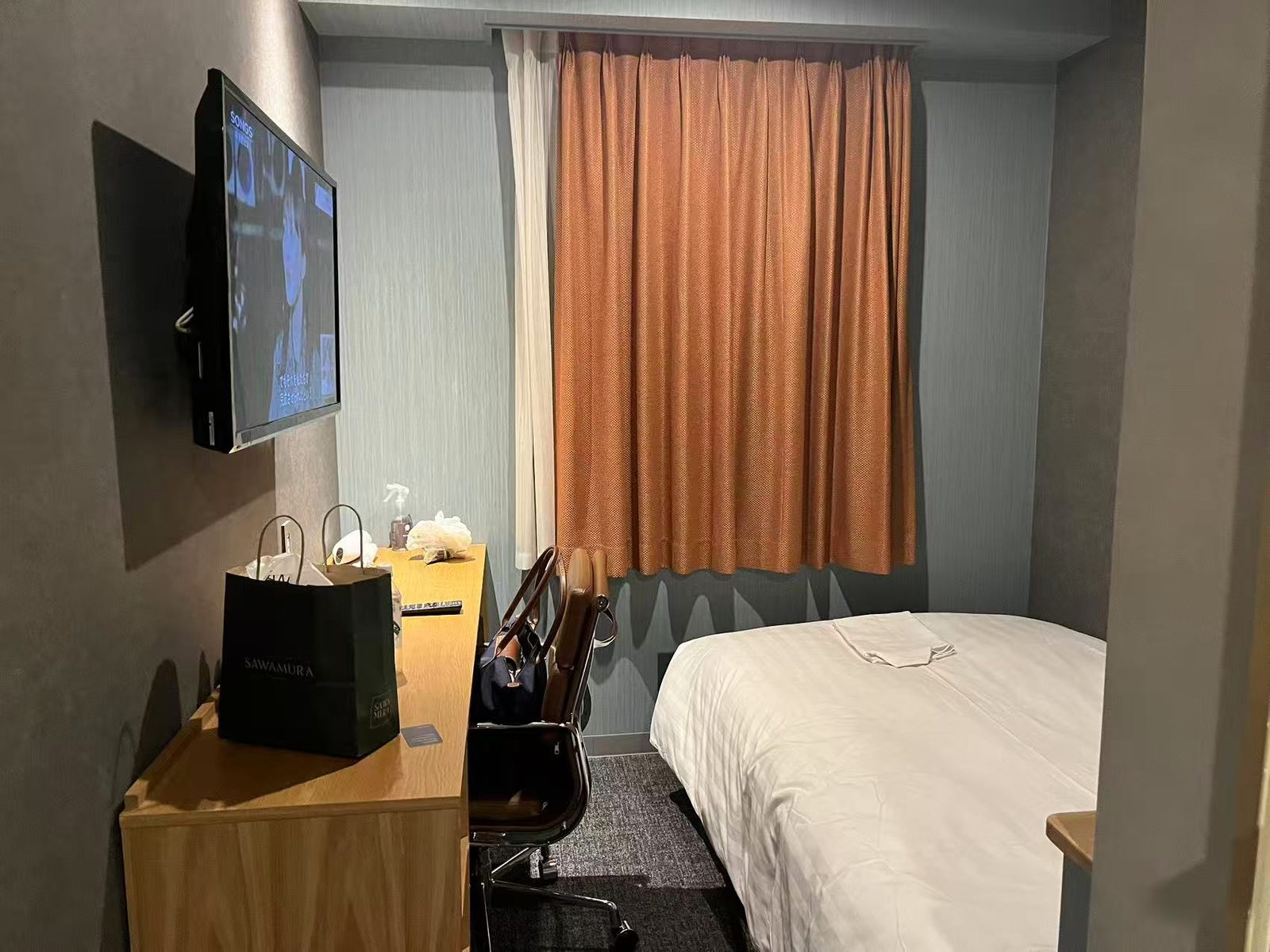
Now the Single Room on the same page: 「140cm幅のダブルベッドを採用したワンランク上の客室」, a room one rank up with a 140 cm wide double bed. Capacity 1, 16 m² (172 ft²), 140 cm x 1.
The hotel calls the 122 cm bed a semi-double and the 140 cm bed a double. The room sold as a “single” holds the wider bed, 55 inches against 48, a difference of about 7 inches (18 cm). So the room name told you nothing here, and the bed word is the only part that sorts the two. Only two of the six room types use the word “semi-double,” both of them twins at 122 cm.
A semi-double is closer to a full than to a twin, but it is a full with 7 inches shaved off. One adult will be comfortable. Two adults share about 23 inches each, against 38 on a US twin.
One person or two
Don’t expect the room page to settle it with the word. Dormy Inn Ikebukuro’s rooms page has no room called semi-double. Its single rooms have a 120 cm bed, the semi-double width, and a capacity of 1. Its double rooms have a 140 cm bed and a capacity of 2. Here, width and guest count line up.
Super Hotel Anjo’s gallery page does not line up. Its Standard Room is listed as 120 cm x 200 cm or 140 cm x 200 cm, 12 m² (129 ft²), capacity 1 to 2 people. The hotel gives two widths for one room name, so you need to know which bed you are getting. 120 cm is the semi-double width.
The rooms article covers other hotels where a 140 cm bed is called a semi-double (Route Inn) and where a 120 cm single bed is the semi-double room (Sotetsu Fresa Inn). In a twin room, a semi-double is the nicer outcome: one 48-inch bed each, wider than the 38-inch twins you know. In a room with one bed, “capacity 2” next to a 47-inch bed is the maximum the hotel will sell, not a promise that two people will sleep well.
After the booking I describe in the rooms article, where a room that came back from a search for two was too tight, I treat a semi-double as a bed for one and let the page change my mind.
Before you book
Four things to read, all on the hotel’s own page:
The centimeters. 120 cm is 47 inches. 122 is 48. 140 is 55. If the hotel says only “semi-double” with no number, you don’t have the size.
The count. “122 cm x 2” is two beds. “140 cm x 1” is one bed. A twin room with semi-double beds is the comfortable case for two.
The guest count next to the bed. One bed under 55 inches with “capacity 2” means the maximum, not the comfort level.
Both long sides in the photos. If one side is against the wall, the person on that side climbs over the other to get out. In a narrow bed that matters more.
The short version
Semi-double is a Japanese bed size, 47 inches (120 cm), sold as a bed for one. Hotels stretch the word: it appears here at 47 to 48 inches, and the rooms article has one at 55.
The room name tells you little. At one Tokyo hotel, a room called “single” had a wider bed than the semi-double twin.
For two people, look for two beds or a published 55 inches or more.
At home, the word on the booking page answers the question. A double or full is the bed for a couple who are fine with snug, and a queen is the normal bed for two. Carry those words to Japan and the width holds, but the meaning of “double” doesn’t.
A Japanese “double” is usually a 140 cm bed. That is 55 inches, one inch over a US full’s 54 inches. A full is 54 by 75 inches. The Japanese pages below give 195 or 200 cm for the length, which is 77 to 79 inches, so the Japanese bed is a couple of inches longer.
The idea that “double” means “for two” doesn’t hold. Nihonbashi Nishikawa, a Japanese bedding company, publishes a size table. It lists the semi-double at 120 cm wide with 推奨使用人数 “1人(ゆったり)”, the double at 140 cm with “1〜2人”, and the queen at 160 cm with “2人”. In that table, the plain “2” sits on 160 cm, which is 63 inches.
As of September 2026, from Nishikawa (in Japanese): size column.
The US side isn’t settled either. Sleep Foundation says “Couples generally need at least a full size mattress.” Amerisleep says a full is “not big enough for two adults but can accommodate one adult and a child,” and says a queen gives each sleeper 30 by 80 inches. They agree on the size and disagree on whether it is enough for two.
2. Inches per person
Each figure is the bed’s width halved, ignoring the gap between sleepers, blankets and how anyone lies.
Bed
Width
Each of two adults
Japanese semi-double (Nishikawa: 1 person)
47 in (120 cm)
24 in (60 cm)
US full
54 in (137 cm)
27 in (69 cm)
Japanese double
55 in (140 cm)
27.5 in (70 cm)
US queen
60 in (152 cm)
30 in (76 cm)
Japanese queen
63 in (160 cm)
31.5 in (80 cm)
The Japanese double gives each person half an inch more than a US full, and 2.5 inches less than a US queen. The Japanese queen is the first row that gives each of you more than a US queen does. The semi-double, at 24 inches each, is where Nishikawa’s “1人” label starts to make sense. The word isn’t stable from hotel to hotel: the room-names article shows it running from 47 to 55 inches.
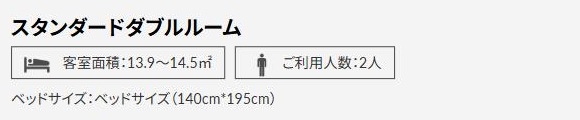
Floor area (客室面積), guest count (ご利用人数) and bed size (ベッドサイズ) sit in three separate boxes. The guest count reads “2人” and the bed reads “140cm*195cm”. Nothing in the line says whether 140 cm is comfortable for the two guests. The floor area is a range, 13.9 to 14.5 m², which is 150 to 156 ft².
The same hotel lists the chain’s single rooms too. The Economy Single and the Standard Single are each “120cm*195cm”. So on this page the step from one guest to two is 20 cm, or 8 inches, the same gap Nishikawa’s table puts between a semi-double and a double.
Super Hotel’s Anjo property words it differently. Its Double Room entry reads ベッドサイズ “140cm ×200cm”, 部屋の広さ “12㎡” (129 ft²) and 収容人数 “1~2名”. Where Dormy Inn lists 2, Super Hotel lists 1 to 2.
As of September 2026, from Super Hotel (in Japanese): Anjo gallery page.
4. One bed sold for one, and for two
Richmond Hotel’s Tokyo Shiba property lists a Single Room and a Double Room on one page. The Single is 16 m² (172 ft²) with a “140cm幅のダブルベッド”, capacity 1. The Double is 16 m² with the same “140cm幅のダブルベッド”, capacity 2.
That is one bed in one room size, sold under two names, with one more person in the count. On that page, “single” doesn’t mean a narrow bed and “double” doesn’t mean a wider one.
If you want a wider bed at that property, the Deluxe Double is listed at 25 m² (269 ft²) with a “180cm幅のキングサイズベッド”. That is 71 inches wide, or about 35.5 inches each. It is also 9 m² (97 ft²) more floor than the 140 cm rooms, so the upgrade is a larger room as well as a larger bed.
In the room-names article, 55 inches turned up at eleven of twelve properties under three different names.
5. The wall side
Width is only one of the ways a 140 cm bed can feel tight. In a small room, one long side of the bed may sit against the wall, and then one of you has a wall on one side and a person on the other. At home you can probably get out of either side. When the bed is against the wall and there are two of us, I climb over the other person.
On a 140 cm bed, you’d each have about 27.5 inches, and the wall-side person’s way out runs across the other’s half.
The check is in the room photos. Look at both long sides of the bed and see whether there’s floor on each. The room-names article has a diagram for it.
6. Choosing
I only open the dimension line when two of us are going, and then I read it alongside the room photos, the floor area and the reviews.
The bad booking in the room-names article, a cheap room that came back from a search for two, was a single-size bed.
Here is how I would sort it:
If a full would be fine for the two of you at home, 140 cm is close to the same bed.
If you would have booked a queen, look for 160 cm (63 inches) or wider. Nishikawa lists “2人” there, and at Richmond Tokyo Shiba the wider bed came with a larger room.
If the hotel lists a room called “single,” open its dimension line before you skip it. At Richmond Tokyo Shiba, it was a 140 cm bed.
If the hotel gives a guest count and no width, you don’t have the number. Ask, or pick a room that publishes one.
7. The short version
A Japanese double is 140 cm, which is 55 inches. That is one inch over a US full, and about 27.5 inches for each of two adults, against 27 on a full and 30 on a queen.
Hotels list guest count and bed width separately. Dormy Inn lists its 140 cm room for “2人” and Super Hotel Anjo lists its for “1~2名”. Nishikawa puts “2人” on the 160 cm queen.
The same 140 cm bed can be a single or a double. Richmond Tokyo Shiba lists it as both, at 16 m², with the capacity the only difference.
Two checks cost nothing. Read the width on the room’s own page, and look at the photos for floor on both long sides of the bed.
Cover photo: lic-10-single-bed-large by J o, CC BY-SA 3.0, via Wikimedia Commons. It shows a different property from the ones discussed here.
At home, “twin” is a size. It names one mattress, 38 by 75 inches (97 by 191 cm), the one you slept on in a dorm.
In Japan the word turns into a room type. A twin room (ツイン) is a room with two single beds, and the beds are whatever size that hotel installed. The word survives the trip and the measurement doesn’t.
If you came here worried that a twin room means two narrow cots, it usually doesn’t. The bigger risk runs the other way: you read “twin,” picture 38 inches, and plan a room around the wrong number.
As of September 2026, from the chains’ room pages linked in the table (in Japanese).
Of the six rooms, one has a 35-inch bed, the closest to the US twin’s 38. The other five are 43 to 48 inches (110 to 122 cm) per bed. Two beds in one room give 86 to 96 inches (220 to 244 cm) of sleeping surface, plus the gap between them.
Two things follow. A Japanese twin bed can sit ten inches wider than a US twin, which puts it within six inches of a US full’s 54. And a chain’s “Twin” and “Economy Twin” can differ by 12 inches a bed in one building, as Super Hotel shows. At Dormy Inn Ikebukuro, one grade up added ten centimeters, and the bigger bed came in the smaller room.
These are six rooms, not every hotel in Japan.
3. One page, in Japanese
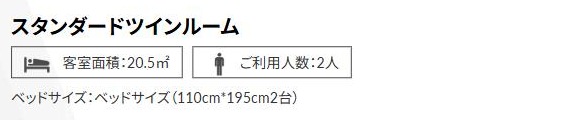
Here is the Dormy Inn Ikebukuro page for its Standard Twin.
Dormy Inn Ikebukuro, Standard Twin Room (in Japanese).
The label reads スタンダードツインルーム (Standard Twin Room), 客室面積 20.5㎡ (floor area), ご利用人数 2人 (two guests), and ベッドサイズ 110cm*195cm2台 (bed size, two beds). The number that settles it is the last one, 110 x 195 cm, times two, in a room for two. That is 43 inches wide for each bed.
So this twin is two beds that are each five inches wider than a US twin.
4. Double or twin for two
Choose by how you sleep, not by the price.
Double: one bed, both of you in it. On the chain pages, double beds run from about 55 to 71 inches (140 to 180 cm), covered with the other sizes in the decoder article. Check the width. A 55-inch bed is one inch over a US full.
Twin: two beds, each of you in your own. Each bed is likely wider than a US twin, as above, and you get a gap or a shared night stand between them.
If you are a couple who shares a bed at home, a twin is a downgrade in closeness and an upgrade in space. If you snore, travel with a colleague, or sleep badly next to anyone, a twin is the room built for it. Compare the price of both on your dates.
I only open the bed-width line when two of us are going. For one person it doesn’t matter. For two it does, most of all on a double.
There is no general yes or no for Japan on whether the two beds can be pushed together.
What you can do is ask the property, in writing, before you book, and ask in a way that is hard to misread: “Can the two beds in the twin room be joined?” Don’t assume a hotel that sells a “Hollywood twin” does it by default. The one chain page that lists that term gives only a width, 35 inches (90 cm) a bed (see the decoder article).
Even if the beds move, joined beds are two mattresses with a seam, not one 96-inch bed.
6. What to read on the booking page
The number and unit of beds. “Twin” should come with a count of two, and a width for each. Look for something like 122cm×2.
The width in centimeters. If the hotel gives a size name and no centimeters, you do not have the number. Convert: 90 cm is 35 inches, 110 is 43, 120 is 47, 122 is 48.
Capacity and floor area. The Dormy Inn room above is 20.5 m² (221 ft²) for two, and the other Dormy Inn rooms are 202 to 217 ft². Two 120 cm beds in a room under 220 ft² leave little floor.
The third-party site’s wording. An English booking site can translate a room into its own word. Japanese Hotel Rooms Decoded has one listing where the room name said “double” and the line below it said “twin.” Open the hotel’s own page and compare.
The short version
In Japan, twin is a room with two beds. At home it is a mattress size.
Across the six twin rooms in the table, each bed was 35 to 48 inches (90 to 122 cm) wide, against the US twin’s 38.
For two people, a double is one bed and a twin is two. Read the width either way.
Ask the property before you count on joining the beds.
Cover photo: lic-4-twin-beds by Aspiringshortlot, CC BY-SA 4.0, via Wikimedia Commons. It shows a different property from the ones discussed here.
1. The cheap room that came back from a search for two
Booking for two of us, I once ran the search and took a price that looked too good to walk past. A single, or a semi-double. I don’t remember which. The name didn’t carry enough information to be worth remembering. The bed was too tight for the two of us.
Twenty years in Japan, and I still got that booking wrong. If a search for two returns a room called a single, look twice.
A business hotel room with one bed.
A room that comes back from a search for two is not, on that evidence alone, a room built for two. One APA property sells its standard room at 118 ft² (11 m²) with a 55-inch (140 cm) bed for one guest, and the same 118 ft² with the same 55-inch bed for two. The guest count moves and the room doesn’t.
If your fix at home for a too-small room is the sofa bed, plan without it. Of twelve properties at five chains, exactly one listed a sofa bed, and it was in a room sold for three people.
2. One word, two bed widths in one building
The same word, twice, in one building
APA’s Keikyu Kamata property in Tokyo lists eight room types on one page. Here are four of them.
The word “single” does two jobs in one building. It means 43 inches and it means 55 inches, twelve inches apart, on one rate page. The deluxe single publishes the same width as the double, so book it thinking “single, so narrow,” and you get the double’s number.
The same width, different chains
Route Inn’s Ishinomaki property calls 55 inches (140 cm) a semi-double, and its double is 63 inches (160 cm). APA’s Keikyu Kamata property calls 55 inches a double. Across the twelve properties, rooms sold as a single ran 39 to 63 inches (100 to 160 cm). The bottom of that range is a US twin. The top is three inches over a US queen, in a room the chain calls a single.
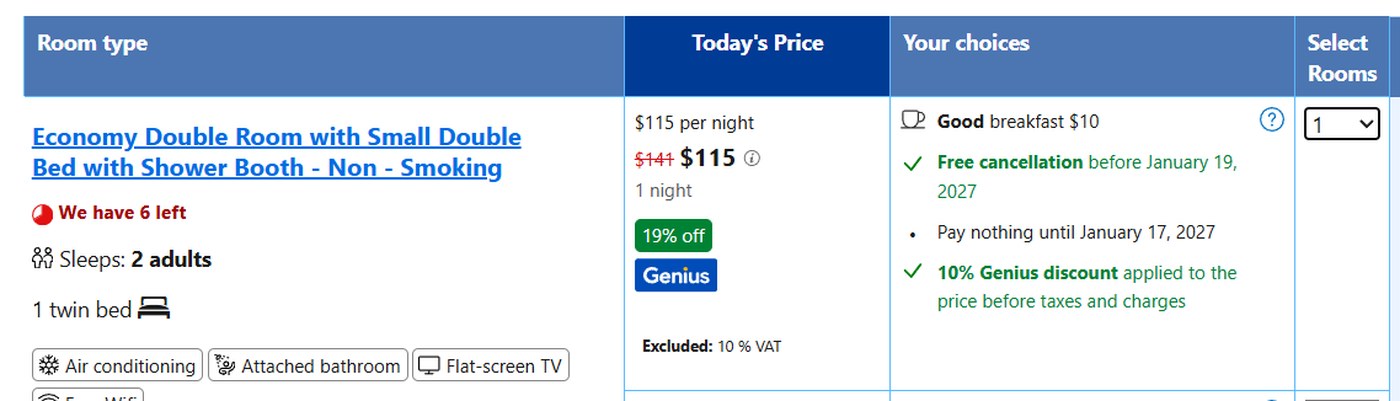
The English Booking.com listing for Sotetsu Fresa Inn Tokyo-Kyobashi named one room Economy Double Room with Small Double Bed. The line directly under that name said 1 twin bed.
Room name and bed line on one listing.
A double is around 54 inches at home and a twin is 38, so the listing offers both readings at once. The hotel’s own Japanese site calls the room a semi-double with a single bed 120 cm wide. That is 47 inches, and both English labels miss it, in opposite directions, by about the same amount.
So the semi-double is 47 inches here and 55 inches at the Route Inn property above. Same word, eight inches apart, and the booking site’s translation adds a third reading.
The same room, sold twice, under two names
On several of these pages, a single and a room for two are separate listings for the same room.
Richmond, Fukuyama
Moderate single
Sold to one person
Moderate double
Sold to two people
Both listings
195 ft² (18.1 m²)
60 in (152 cm) bed
The same room under two names.
At Richmond’s Fukuyama property, the high-grade single and the high-grade double are both 198 ft² (18.4 m²) with a 63-inch (160 cm) bed. At Richmond’s Hakata property, the single and the standard double are both 194 ft² (18 m²) with a 55-inch (140 cm) bed. At Route Inn’s Yokohama property, the single and the semi-double are both 129 ft² (12 m²) with a 55-inch bed. That is how a 63-inch bed ends up inside the single range.
As of August 2026, from the room pages (in Japanese): Richmond Fukuyama and Hakata, Route Inn Yokohama.
The room name and the bed name, one step apart
Toyoko Inn says that single rooms get a double-size bed and double rooms get a queen-size bed. The room name sits one rung below the bed name, and the chain publishes that as a feature. The chain gives no centimeters, so carry none of this article’s numbers over to Toyoko.
As of August 2026, from Toyoko Inn’s room page (in Japanese).
3. What the words mean in Japanese
Words that are slippery in Japanese too
Three kinds of word give me trouble even in Japanese.
Grade names (deluxe, superior, moderate, standard, economy). These belong to a chain, and they move between properties of the same chain. In Richmond’s pages, a “deluxe double” was 67 inches (170 cm) at the Hakata property and 71 inches (180 cm) at Fukuyama and Tokyo Shiba.
Hollywood twin. One Dormy Inn property lists it as two 35-inch (90 cm) beds. Read the bed line and look at the photo.
Wide-something, comfort-something. House coinages. Where the chains put a width on them, it’s the plain room’s width: Route Inn lists a single and a comfort single as separate types, both at 55 inches (140 cm).
Semi-double. It’s ordinary vocabulary to me, and it isn’t a word you’ll have met on a US booking page. You’d read it as “a bit smaller than a double, so snug for two but fine.” On the pages it ran 47 to 55 inches (120 to 140 cm), against a US full’s 54.
How many people is one for? It depends. Two Japanese builds probably manage it and two American builds probably don’t, but that is an inference from the widths, not a measurement.
Twin. The word survives the trip and the measurement changes underneath it. Beds in rooms called twin ran 35 to 48 inches (90 to 123 cm) each, against a US twin’s 38, so they’re often wider than the twins you’re picturing.
Queen. At all four Dormy Inn properties in the sample, the rooms called queen carried a 63-inch (160 cm) bed, three inches over a US queen’s 60.
4. The widths, next to the sizes you know
Two single beds pushed together.
The table covers twelve properties (four Dormy Inn, three Richmond, two Route Inn, two APA and one Super Hotel), ten of them in big cities. It is a snapshot of August 2026, not the whole country. Rooms sold for families get their own lines, and a room whose page gives a name and no width, as at Toyoko Inn, isn’t in the table.
The word on the page
What the pages published
The US size you’re comparing it to
Single (シングル)
39 to 63 in (100 to 160 cm)
Twin 38, full 54, queen 60
Semi-double (セミダブル)
47 to 55 in (120 to 140 cm)
Full, 54 in
Double (ダブル)
55 to 71 in (140 to 180 cm)
Full 54, queen 60, king 76
Twin (ツイン), per bed
35 to 48 in (90 to 123 cm) each
Twin, 38 in
Family twin (ファミリーツイン)
47 in and 55 in (120 and 140 cm) in one room, one property
Two different sizes side by side
Queen (クイーン)
63 in (160 cm), four properties at one chain
Queen, 60 in
Family double (ファミリーダブル)
Two 45-in (115 cm) beds pushed together, 91 in (230 cm) across, at one property
One width, 55 inches (140 cm), sits in all three of those ranges at once. Because the ranges overlap, the words can’t tell you whether two adults fit. The widest bed outside the family rooms was 71 inches (180 cm), five inches under a US king’s 76.
5. What 55 inches means with two of you in it
Fifty-five inches (140 cm) is the number you’ll meet most often once you start opening these pages. Eleven of the twelve properties had one somewhere in their lineup.
Whether it works for two adults depends on who you’re sharing with and your build. The firmer part is the numbers: an inch over a US full, five inches under a US queen, in a room that may be 118 ft² (11 m²).
In a narrow room, one long side of the bed can be against the wall. When it is, and there are two of you, the inside spot has a wall on one side and a person on the other. I climb over the other person.
Bed against the wall
Floor on both long sides
Check for floor on both long sides of the bed.
How many people a room will legally and practically sleep, including what happens when you put a third person or a child into the search box, is covered in Booking for Three, or With Kids.
6. Booking one grade up sometimes grows the bed and sometimes doesn’t
The obvious move, once you know the names don’t carry widths, is to book one grade up and assume the bed grows. Sometimes it does. At APA Keikyu Kamata, walking up the grades walked the bed up too, from 43 inches at the plain single to 63 at the deluxe double (110 to 160 cm). Those are the four rows in section 2. At Super Hotel’s Shimbashi property, three room grades all had the same 129 ft² (12 m²) and the same 55-inch (140 cm) bed. What a higher grade buys at the same hotel varies by hotel.
Floor area doesn’t predict the width either. At Dormy Inn’s Korakuen property, the single is 210 ft² (19.5 m²) with a 39-inch (100 cm) bed. The double at the same hotel is 155 to 192 ft² (14.4 to 17.8 m²) with a 55-inch (140 cm) bed. The larger room has the narrower bed.
As of August 2026, from the room pages (in Japanese): Super Hotel Shimbashi and Dormy Inn Korakuen.
Before you pay for the grade above, open both room types and put the two dimension lines side by side. If the width is identical, you’re buying floor space or a view, which may well be what you want. If the width jumps eight inches, or twelve, now you know what the money is for.
7. Bed length and firmness
Length. Most published lengths were 195 or 196 cm, which is 77 inches. A handful ran to 200 cm and two room types to 205 cm (79 and 81 inches). A US queen or king is usually 80 inches (203 cm), so most rooms are about three inches shorter. If anyone in your party is tall, read the length line on the specific room.
A slot by the door that powers the lights only while your key card is in it usually ties the room’s power to the card, so a phone left plugged in may not charge while you’re at dinner. Pull the card on your way out and see what stays lit.
Firmness. Japanese hotel mattresses feel firmer than what you’re used to at home. That’s my impression, not a measurement. If a soft mattress is a medical matter for you, it’s worth an email to the property.
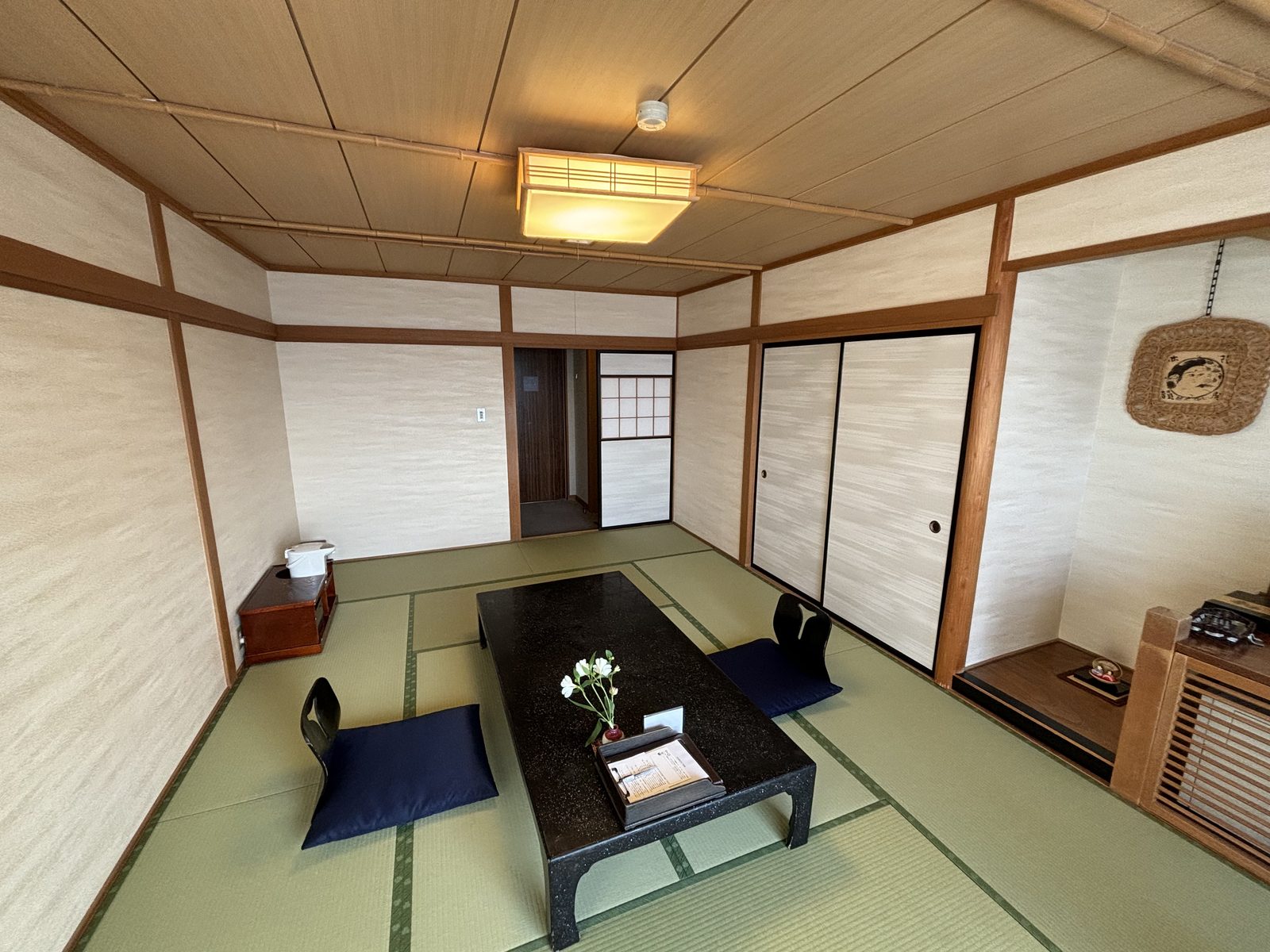
At a traditional inn, the bedding goes on the floor, on tatami. The Japanese word for that bedding is futon, and in the US the same word names a sofa frame that folds down flat. Different object, and firmer again. What else is in the room is in the pillar article.
8. What I do before I book
A compact business hotel room.
I only check the width when two of us are going. Booking for myself, I don’t open the dimension line at all. With two of you in one bed, it’s the whole game.
I look at four things: the room photos, the floor area, the bed dimension line and the reviews. The floor area won’t predict the width, as the Dormy Inn example in section 6 shows, and the photos are where you run the check in section 5. At the same price, I take the floor space over the wider bed. Yours may run the other way, particularly if width is what went wrong on a previous trip.
On the chain sites, the width sits in plain text on the property’s own pages, in no fixed format. Some pages give millimeters and some centimeters, some width by length and some the width alone. If a page gives a size name and no centimeters, you don’t have the number.
For a night when two of you share one bed, in order:
Open the property’s own room page, not just the booking site summary.
Find the bed width in centimeters. If it isn’t published, ask the property or pick a room that publishes it.
Convert it. 140 cm is 55 inches, an inch over a US full. 152 cm is 60 inches, a queen. 160 cm is 63 inches, three over a queen. 180 cm is 71 inches, five under a king.
Read the length too if anyone is tall.
Look at the room photos for floor on both long sides of the bed.
If you’re considering the grade above, open both pages and compare the two dimension lines before you pay the difference.
The short version
If you read nothing else on this page.
1
The room name does not carry a bed width. If the centimeters aren’t on the property’s own page, you don’t have the number.
2
One word can mean two widths inside one building. At one Tokyo property, “single” meant 43 inches and 55 inches on the same rate page.
3
One grade up doesn’t reliably buy a wider bed. Neither does a bigger room. Open both room pages and compare the two dimension lines before you pay the difference.
4
Fifty-five inches (140 cm) is the number you’ll meet most, and it matters most when two of you share one bed. If a search for two returns a single, look twice, check the photos for floor on both long sides, and plan without a sofa bed.
The numbers are printed on the property’s own Japanese-language page.
1. Decide it one night at a time, not one trip at a time
I’ve stayed at three or four Japanese inns. At many of them the inn decided when dinner was, and while I was downstairs eating, my bedding was laid out on the floor of the room I’d been sitting in an hour earlier. That is what an inn sells, and it is worth buying. It is also why an inn makes a poor base for touring. The evening belongs to the building.
On this trip, is your lodging a destination, or is it a place to sleep?
If it’s the destination, you’re going to be at the inn: soaking, then a long dinner you didn’t have to plan. If it’s a place to sleep, you’re out from 8 a.m. to 9 p.m., you want the station close and the shower hot, and you’d rather spend the money on the day. A two-week trip has both kinds of nights.
2. What “onsen” actually means
The bath: two questions, not one
Two separate things get collapsed into the English word “onsen,” and then nothing on a booking page lines up.
How big is the bath?Daiyokujō (大浴場) means a large communal bath: a shared, gender-separated bathing room with a washing area and soaking tubs. That’s a statement about the plumbing.
What is the water?Onsen (温泉) is a statement about the water. It comes up out of the ground and meets the Hot Springs Act’s definition, based on temperature or mineral content. Heated tap water doesn’t qualify, however big the tub is.
Also a big shared bath. Several business hotel chains advertise one. Some describe the water as a treated or artificial hot spring rather than a natural one.
Small or single tub
Still a hot spring
A two-person onsen tub at a small inn.
Your normal bathroom
Bath size and water type are separate questions.
A hotel advertising a daiyokujō may not offer a hot spring, and a genuine hot-spring inn can have a bath only two guests fill. If a booking site confirms only one, find the property’s own Japanese-language page. The shared bath is also a real hurdle: you bathe naked, among strangers of your own gender, after washing at a station first. If that’s a hard no, look for a room with its own bath or a reservable private one. Ryokan, Hour by Hour walks through the sequence, towel and all.
Three words that don’t mean what they look like
Futon. At home, a fold-down sofa frame. In Japan, bedding: a firm pad and quilt laid on the tatami at night and folded into the closet by day.
Business hotel. No equivalent at home: a domestic class of small, usually cheap rooms near a station. Section 6 covers it.
Twin, double, semi-double. The same word means different widths at different chains. Across twelve properties at five Japanese chains, one chain sold a 63-inch bed (160 cm) as a “double” and a 55-inch one (140 cm) as a “semi-double.” All five chains published measurements, so trust those over the label.
3. Three questions pick the category. Price only sorts inside it.
1. What role does this night play? A destination night is a choice between styles of inn. A sleep night is a choice between a business hotel and an international chain, decided by location and bed size.
2. What do you need the bathing to be? Private, spring-fed, large? Any combination is bookable, and you ask for each one separately.
3. How much floor do you need? Two adults with two large checked bags have a much harder constraint than two with carry-ons. Section 5 covers it.
Run these three before a review score breaks a tie.
4. The three kinds, side by side
Ryokan (traditional inn)
Business hotel
International chain
Role
The destination
A place to sleep
A place to sleep, with a hotel bar
Location
Hot-spring towns, often a bus or taxi from the station
At or near a train station
City centers
Meals
Dinner and breakfast often in the rate, at set times
Usually a hot buffet
Western-style breakfast, typically paid extra
Bathing
Communal, private, room bath, or a mix. Check each
Compact unit bath. Some add a communal bath
Western bathroom
Room size
Varies widely
Often 129 to 215 ft² (12 to 20 m²)
Usually the largest
Bed width
Futon on the floor (Section 2)
Singles ran 39 to 63 in (100 to 160 cm) and doubles 55 to 71 in (140 to 180 cm). Read the centimeters (Section 6)
Read the centimeters
Booking friction
Highest: fixed check-in, set meals, early cancellation charges
Low
Low, points bookings possible
Best for
One or two nights where the inn is the point
Efficient city nights
Travelers on points
5. How much floor you actually need
Japanese listings give room size in square meters, which can be hard to picture. Convert it first.
Listed
In ft²
9 m²
~97 ft²
12 m²
~129 ft²
15 m²
~161 ft²
20 m²
~215 ft²
25 m²
~269 ft²
30 m²
~323 ft²
97 ft²
9 m²
129 ft²
12 m²
269 ft²
25 m²
Bed, 55 × 77 in Checked bag, lid open
One scale: the bed stays the same size.Two beds and a desk leave a strip of floor.
Two rooms can list the same figure and be nothing alike, depending on where the bed sits. So use the square footage to sort listings, and when two rooms are close, let the floor plan photo decide.
The suitcase test
My benchmark: to open one large checked suitcase (the 29-inch class) and work out of it comfortably, you want at least 269 ft² (25 m²), and 323 ft² (30 m²) or more for two.
What I do when the room is under that line. I open the bag flat on the floor. Business hotel rooms usually have a luggage rack, but it tends to be small, so with two of us and two bags, one goes on the rack and the other on the floor. In a genuinely small room I’ll often open the bag in the entry passage, the short stretch of floor between the door and the bathroom module.
6. What each one costs you
Ryokan
The schedule belongs to the inn. At the inns I’ve stayed at, check-in was generally from 3 p.m. onward, and dinner was either a choice among roughly three start times beginning around 6 p.m. in half-hour steps, or a time assigned at booking.
“Inn” covers two products: large hotel-style inns with more facilities and a bar but a busier feel, and small traditional inns where the food and the quiet are the whole point. Dinner is often seafood-forward, so say so at booking if someone in your party doesn’t eat fish. Some inns sell a room-only rate, but at a traditional inn that strips out much of what you came for.
Business hotel
The pitch is a small, low-priced room within a short walk of a train station, run by big Japanese chains you’ve almost certainly never heard of.
Open the door and the bathroom is right there: a unit bath, a prefabricated module with toilet, sink and tub-shower in one small space. Past that is the bed. In a room around 215 ft² (20 m²), the walk from the door to the bed is roughly six or seven steps. There is a desk, and it’s big enough to open a laptop on.
Bed size is where the booking goes wrong.
Japan
“Double”
55 × 77 in
US
Full
54 × 75 in
US
Queen
60 × 80 in
A 55 in (140 cm) bed next to a US full and a queen.
Within a hotel, widths often followed room grade, not the chain. At one Tokyo property, the plain single had a 43-inch bed (110 cm), the deluxe single and the double both had 55 inches (140 cm), and the deluxe double had 63 inches (160 cm), all off the same rate page. Others reached 67 or 71 inches (170 or 180 cm) at the top of their range, wider than a US queen’s 60. But at two of the twelve, a higher grade bought floor space and left the bed alone, so open both room pages and compare the centimeters before you pay the difference.
Lengths ran mostly 77 to 79 inches (195 to 200 cm), and one property listed 81 inches (205 cm). Check the length if anyone in your party is tall. The size words property by property get their own article: Japanese Hotel Rooms Decoded.
A business hotel splits its amenities into two piles. A hair dryer, electric kettle, yukata, slippers and refrigerator are typically in the room, and a trouser press turns up commonly. The consumable toiletries are not. They’re typically laid out on a counter near the front desk, and you take what you need on your way up: face wash, toner, a razor, a comb, hair ties, a toothbrush set and the like. Walk into the room first and you’ll find an empty bathroom counter and conclude the hotel provides nothing. So grab yours before you ever see the room.
Breakfast is the other expectation that breaks. There’s no real equivalent of the American continental breakfast at a Japanese business hotel. It’s usually a full hot buffet, Japanese and Western on the same line, and rice, miso soup and nattō (fermented soybeans) turn up almost everywhere.
International chain
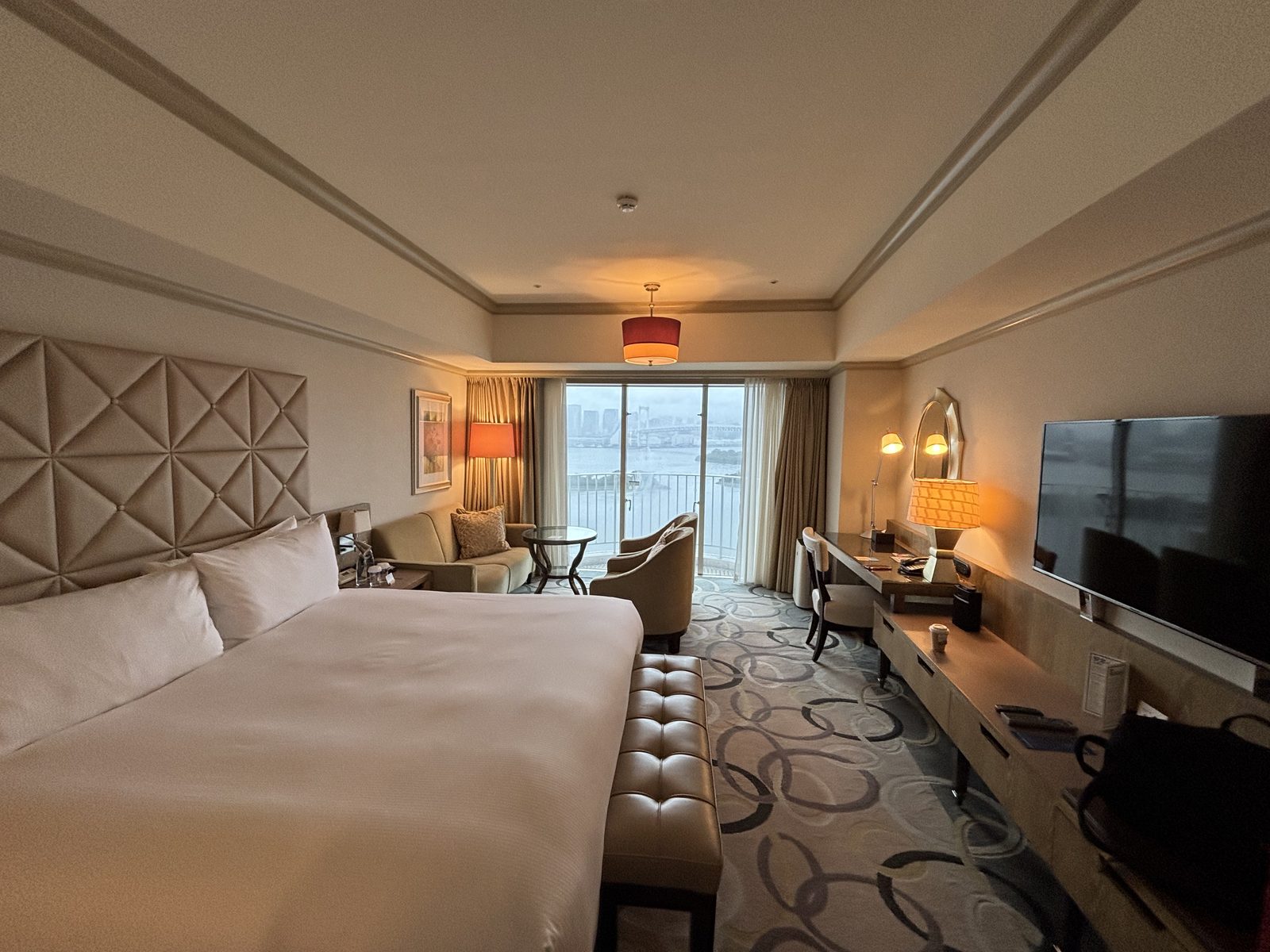
The reasons to book one are specific: points to burn, a Western bathroom with a tub you can lie down in, or a lounge and a concierge who works in English at 11 p.m. The bed widths above come from domestic chains, so compare the centimeters on both pages before you pay a brand premium for width.
A club lounge in an international chain.An international-brand room.
The trade-off is that you’re paying for square footage and brand familiarity. That’s a night roughly the same in Osaka as in Chicago, fine for a sleep night and a waste of a destination night.
7. Which one, for five kinds of trip
“We have 10 days and we want to see a lot”
City nights at business hotels near the stations you’re actually using, plus one destination night. Some hot-spring areas need a bus connection or two after the train, so check the last leg on the property’s own access page.
“It’s our anniversary and we want the memorable night”
This is the destination night, and it’s worth spending on. Unless the room’s bath is open-air or spring-fed, I go down to the big bath anyway, so an ordinary in-room tub isn’t worth a premium to me. If the shared bath is a hard no for you, a room bath earns its price whatever kind it is.
The big bath tends to be crowded right before dinner and right after it. Private baths work two ways: you reserve a slot (at one inn I stayed at, the reservation was made at the front desk), or a same-day system hands you a tag or key when the bath is free.
“One night or two at the inn?”
The standard advice that one night at a ryokan is a waste doesn’t survive three questions.
How big is the bath, and what kind? With no spring water, a small bath, or only one kind of bath, one night may be plenty.
How hard is it to reach? The harder the access, the more a second night buys back.
Do you want to eat that dinner twice? It’s a long, expensive multi-course meal, and two nights means two of them.
“We don’t have time for a ryokan at all”
There’s a third option: stay at a business hotel and visit a hot spring for the day. Some bathing facilities, and some inns, admit non-staying visitors for a daytime soak.
Buy a bath towel before you go, because towels are generally sold rather than lent and what’s on sale is usually small and thin. Check the facility’s own page for whether day visitors are accepted and during which hours. Don’t count on high-end inns, which often don’t accept day visitors. Which channel to book through is its own subject: Two Prices for One Room.
“There are three of us”
At home you’d default to a king plus a sofa bed.
One bed and a separate sofa.
The real trap is narrower. Japanese booking sites ask you to classify a child, and one of the options quietly removes their bed. Pick it and the site returns rooms built for two. Classify the child as needing bedding, even if you intend to co-sleep, and settle the arrangement with the property. The headcount box and the fire code are covered in Booking for Three, or With Kids, and per-person pricing in Why Japanese Hotels Price Per Person.
8. The room with no bed in it, and three other mistakes
The room with no bed in it
You check into a traditional-style room in the afternoon. There’s a low table and floor cushions, and nothing you’d recognize as a bed.
A tatami room in the afternoon, no Western bed.
Nothing is wrong. The futon is usually folded away in the room’s closet, and in many inns it gets laid out while you’re at dinner. If you specifically need a Western bed, for a bad back or because floor sleeping is a hard no, filter for it at booking time and confirm with the property.
At some properties guests lay out their own bedding, so an empty room at 10 p.m. is not a mistake.
Reading “large communal bath” as “hot spring”
This is the most expensive misread on this page. Confirm the size and the water separately.
Booking the inn as a base
Leaving at 9 a.m., touring all day and returning at 8 p.m. means you’ve paid a large premium for a room you slept in.
Leaving the destination night until last
Popular inns fill months out, and the inn is the least flexible piece of the itinerary. Lock it first and route the rest of the trip around it.
The cancellation clock starts earlier than you’d expect too. Six inns’ cancellation pages typically begin charging six or seven days out, and one begins at fourteen days. Toyoko Inn lists a fee for individual guests only from noon on the day of check-in. Richmond’s Morioka property says no fee if you cancel by 6 p.m. on the day. Dormy Inn lists 50 percent the day before for one to five guests, as Japanese Hotel Cancellation Policies Explained shows. The inn wants to know a week out. These hotels don’t want to know until the day or the day before.
Two of the six inns didn’t charge until three days before, so open the cancellation table before you pay.
Mark each night as a destination night or a sleep night. For a sleep night, find a business hotel or chain within a short walk of the station you’ll use, and check the bed in centimeters, width and length. For a destination night, do this in order:
Decide the bath on all three axes separately: private or shared, spring water or not, large or small.
Confirm each one on the property’s own Japanese-language page.
Confirm the check-in window and the dinner start times before you build that day’s travel.
Read the cancellation table and note the date charges begin.
Book it first, then build the surrounding days around it.
The short version
If you read nothing else on this page.
1
Decide it one night at a time. No room in the itinerary for an inn? A station-adjacent business hotel plus one afternoon at a day-use bath.
2
“Large communal bath” and “hot spring” are different claims. Confirm the size and the water separately.
3
The room name does not tell you the bed size. Rooms sold as singles ran 39 to 63 inches. Read the centimeters, and the length too.
4
Book the inn first, and read its cancellation table before you do. Inns typically charge from six or seven days out, and the hotels above charge from the day or the day before.
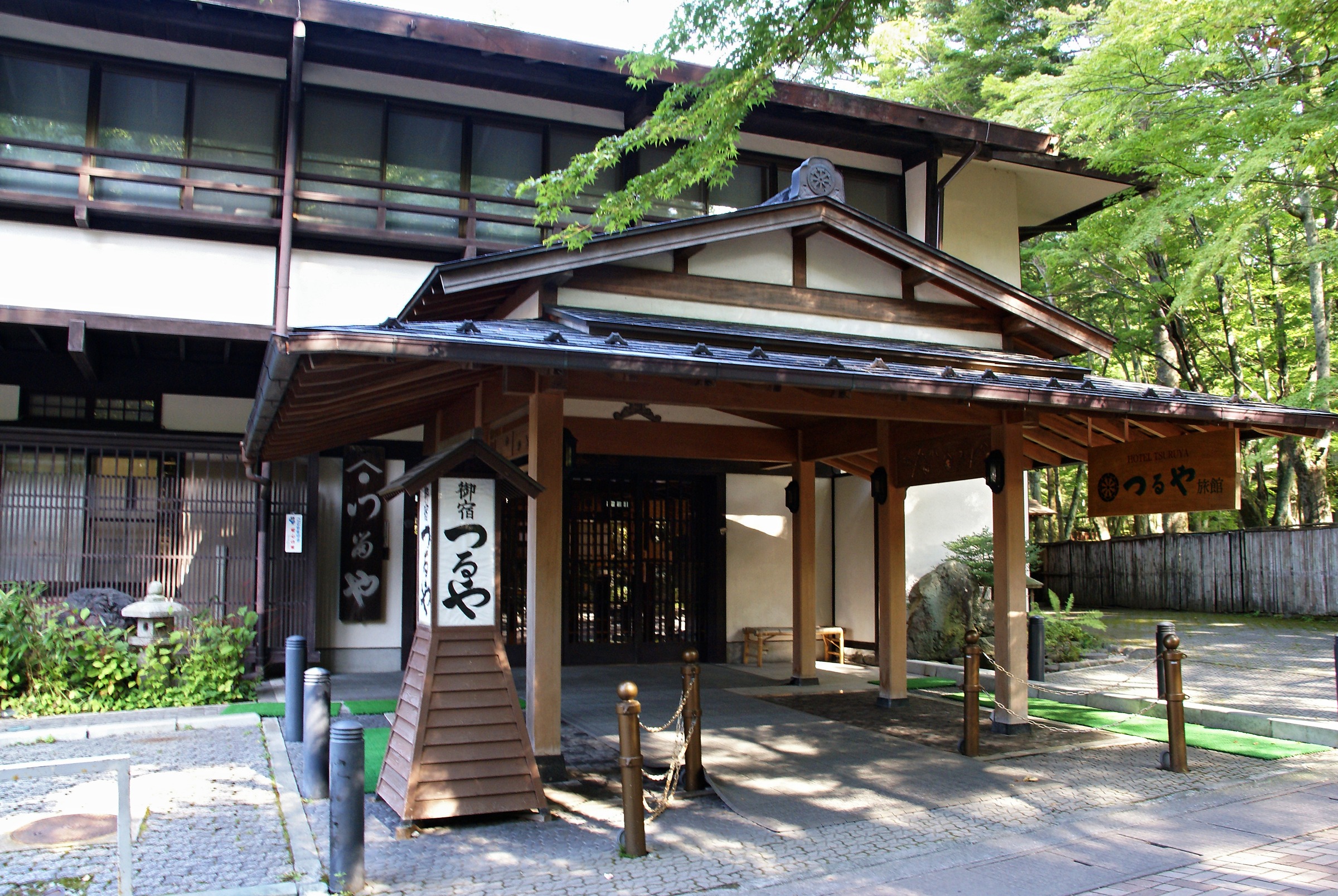
Cover photo: lic-9-ryokan-entrance by 663highland, CC BY 2.5, via Wikimedia Commons. It shows a different property from the ones discussed here.