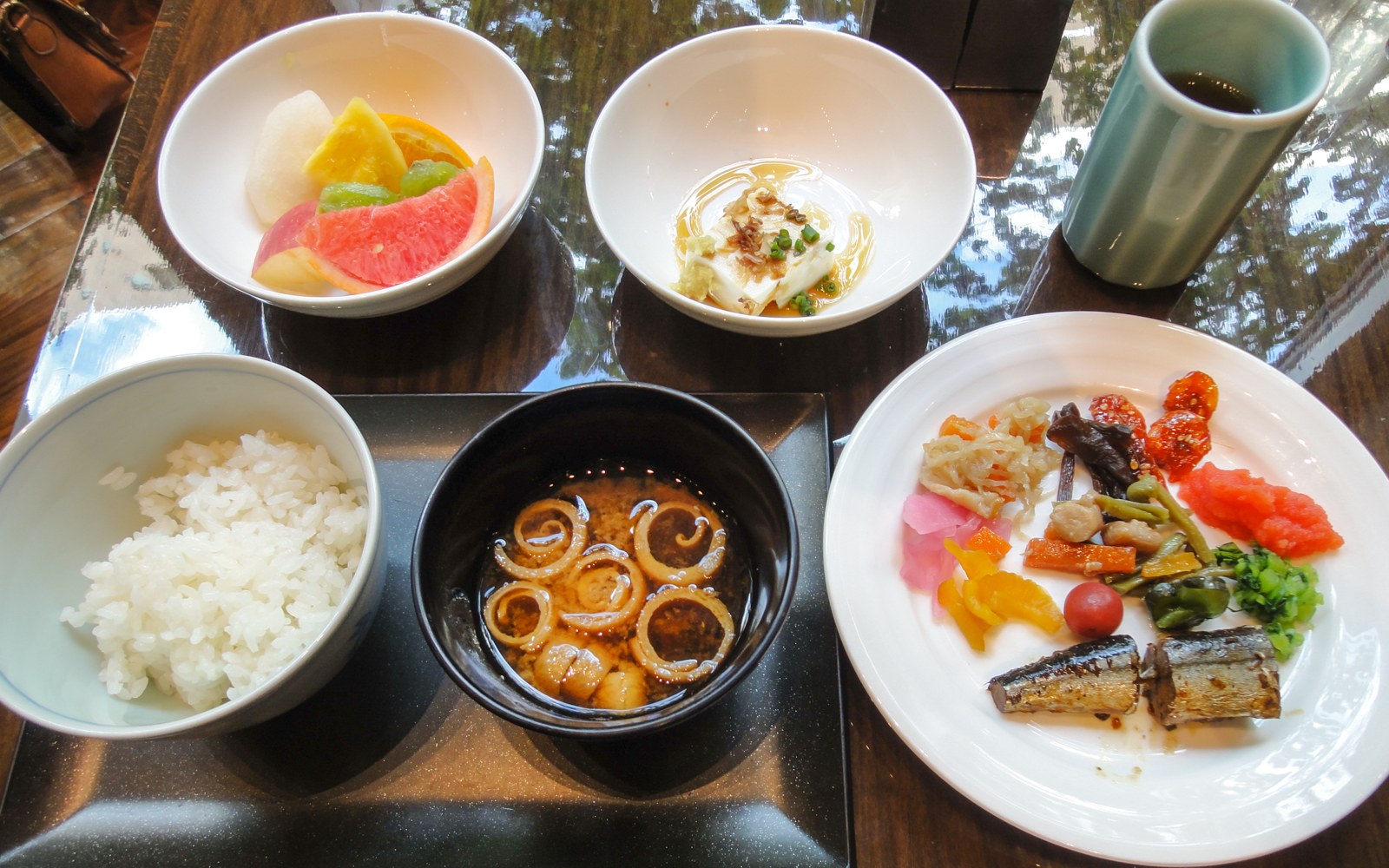
At home, hotel breakfast follows a pattern you can predict. The cheap places set out coffee, a waffle iron and a basket of muffins, and a nicer hotel charges extra for a sit-down meal. It is natural to expect Japan to run the same way, with the business hotel handing you a muffin and the city hotel selling the real thing.
The budget end doesn’t work like that. Toyoko Inn and Hotel Route Inn say breakfast is free, and so do two Super Hotel pages. What they offer is a buffet, rice balls or sandwiches. The paid breakfasts below start near $9 and climb past $40, and every figure is per person, so a two-person room doubles it.
Prices below are converted at about ¥158 to the dollar (Trading Economics), so check the day’s rate.
Three chains that say free
Toyoko Inn’s English site says “Start the day right with healthy and locally-sourced original menus, all provided free of charge.” Its breakfast page names three styles: a “classic buffet-style breakfast,” “Stuffed Rice Ball Style” and “Assorted Sandwich Style,” and lists a daily selection of soups. Guests may carry the food up to their rooms, and children sharing a bed eat at no additional charge.
As of October 2026, from Toyoko Inn: English home page and breakfast page.
Super Hotel’s Shiba and Shinbashi pages both describe a free breakfast buffet with organic vegetable salad and baked bread. It runs 6:30 to 9:00 at Shiba. At Shinbashi it runs 6:30 to 9:00 Monday to Saturday and 6:30 to 9:30 on Sundays and holidays. The chain’s home page carries the line “オーガニックな健康朝食。無料でも妥協しません,” an organic, healthy breakfast that doesn’t compromise even though it’s free. Those are two hotels and a slogan, so check the page of the one you book.
As of October 2026, from Super Hotel (in Japanese): Shiba, Shinbashi and the home page.
Hotel Route Inn says guests get a free buffet breakfast with 30 or more items on the menu. The free offer has conditions. The chain says it applies at Hotel Route Inn, Court included, while Hotel Route Inn Grand, Route Inn Grantia and Arc Hotel get it free with a booking made on the official site. That is one of the plan differences between booking channels, which the booking sites comparison lays out.
As of October 2026, from Hotel Route Inn: breakfast page (in Japanese).
What the paid buffets charge
Prices are per adult. Dormy Inn, Mets, Henn na and the Imperial label theirs as tax included, and the two Richmond hotels give no tax note. Children’s prices are listed separately, for example ¥1,200 for ages 3 through elementary school at Dormy Inn Ikebukuro and ¥1,000 for elementary-school children at Richmond Kinshicho.
| Hotel page | Adult price | Hours | Style |
|---|---|---|---|
| Dormy Inn Niigata (in Japanese) | ¥2,000 ($12.70) | 6:15 to 9:30 | Japanese and Western buffet |
| Dormy Inn Ikebukuro (in Japanese) | ¥2,500 ($15.80) | 6:30 to 10:00 | Japanese and Western buffet |
| Keisei Richmond Hotel Tokyo Kinshicho (in Japanese) | ¥2,000 ($12.70) | 6:30 to 10:00 | Buffet |
| Richmond Hotel Premier Kyoto Ekimae (in Japanese) | ¥3,500 ($22) | 6:30 to 11:00 | Buffet with Kyoto dishes |
| JR East Hotel Mets Shibuya (in Japanese) | ¥1,980 ($12.50) | 6:30 to 10:30 | Japanese and Western buffet |
| Henn na Hotel Komatsu Ekimae (in Japanese, February 2, 2025 notice) | ¥1,400 booked by the day before, ¥1,500 same day ($9 to $9.50) | 6:30 to 10:00 | Set meals, Japanese or Western |
| Imperial Hotel Tokyo, Imperial Viking Sal | ¥6,800 ($43) | 7:00 weekdays, 6:30 weekends, to 10:00 | Buffet |
Where a last order is listed, it falls 30 minutes before the closing time in the table. The Imperial adds that its prices “are inclusive of consumption tax and service charge,” so nothing more goes on top. Its Tokyo Nadaman restaurant sells a Japanese breakfast at ¥5,800 ($37).
Outside the Imperial, the paid prices cluster around ¥2,000, so five mornings for two comes to ¥20,000, about $127. Nothing in the table opens before 6:15, so an early train means a breakfast you’ve paid for or been given and can’t eat.
Mostly buffets, and some set meals
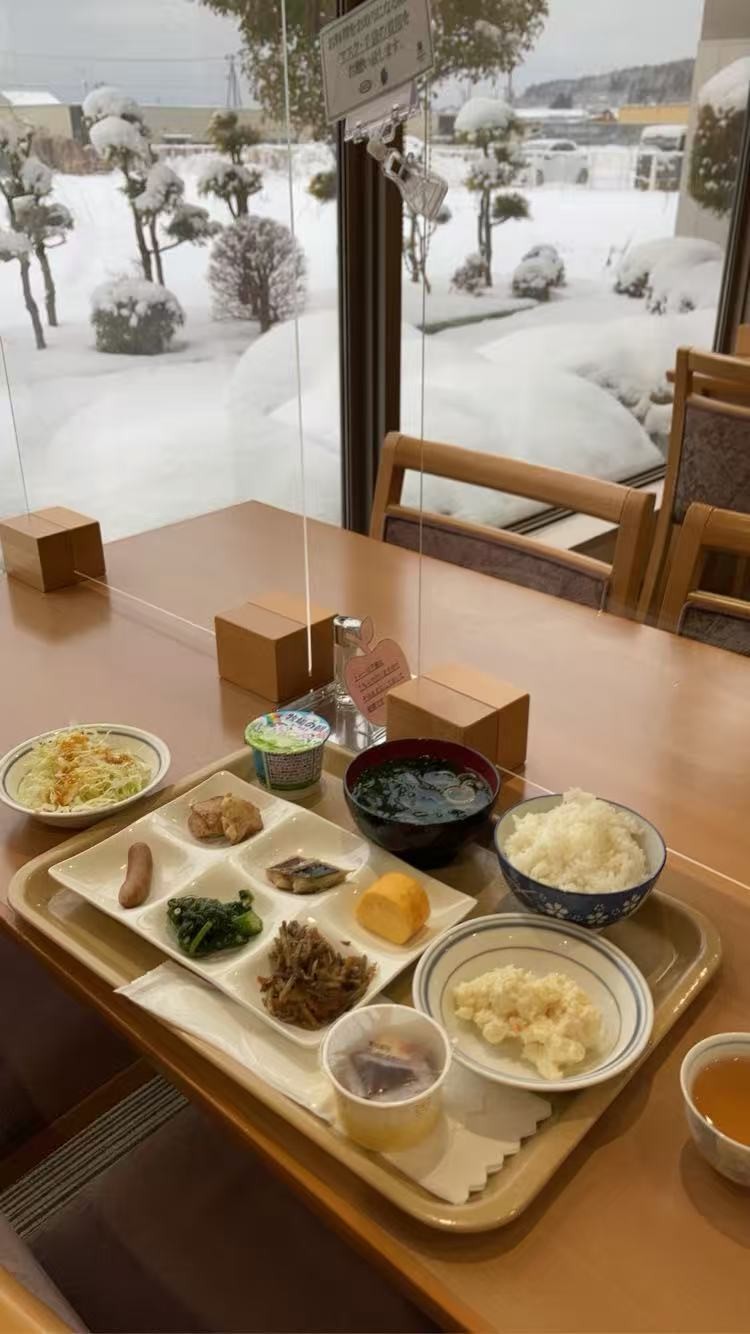
Most are buffets. The exception is the Henn na Hotel, which lists two set breakfasts. The Japanese one is grilled fish, miso soup, pickles, two side dishes, salad, a raw egg and nori. The Western one is a hamburger steak with a roll, a boiled egg and salad, and a choice of coffee, apple juice or orange juice. The Imperial runs both styles, with the buffet above and a set Japanese breakfast at Nadaman where you choose grilled fish or chilled roast beef.
Most of the buffets put Japanese and Western food side by side. The Mets FAQ says guests pick Japanese or Western by mood that day, and Dormy Inn calls theirs 和洋バイキング, a Japanese and Western buffet. Rice, miso soup and nattō are usually part of the Japanese side, and Super Hotel’s English site lists all three. There is no real equivalent of the American continental breakfast as a tier of its own. The lightest version is Toyoko Inn’s rice ball style.
As of October 2026, from Super Hotel: English breakfast page.
Reading the booking page
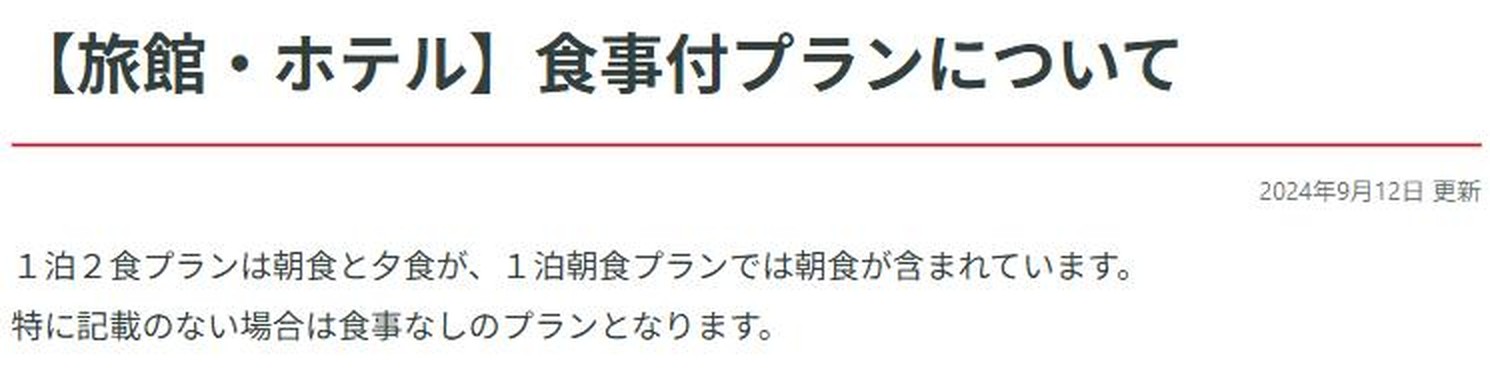
Three labels cover most of what you’ll see. 朝食付き or 1泊朝食 means breakfast is in the price. 素泊まり (sudomari) or 食事なし means room only, which JTB defines as lodging without meals, at a lower rate. 1泊2食 is the ryokan-style bundle of dinner and breakfast. On JTB’s site, a plan with no meal mentioned is a no-meal plan.
As of October 2026, from JTB (in Japanese): FAQ on meal plans and room-only page.
That is JTB’s wording, and other sites lay it out differently. Booking.com’s FAQ says “Each room or accommodation you can book has its own breakfast policy. If breakfast is included, you’ll see it listed on the property page when you compare different options to book.” Two rooms in the same hotel can carry different breakfast terms, so read the line on the plan you pick and not the one on the hotel.
You don’t always have to decide at booking. At Dormy Inn, guests on a no-breakfast plan can sign up at check-in and pay the breakfast price separately, with the price set by each hotel. A different hotel, the Henn na above, lists ¥1,500 for same-day sign-up against ¥1,400 booked by the day before.
As of October 2026, from Booking.com: FAQ. From Dormy Inn: FAQ (in Japanese).
Breakfast prices are per person, the same logic as in the per-person pricing article.
If you have an allergy, ask before you book
The Dormy Inn FAQ answers the allergy question directly: “当ホテルのお食事はバイキング形式でのご提供となるため、アレルギーに特化した個別メニューの作成や、特定食材を個別に除去したお料理の提供は行っておりません.” In English, because the meals are a buffet, the hotel does not make separate allergy menus or remove a specific ingredient from a dish. Dormy Inn Ikebukuro adds that the kitchen uses the same equipment and oil for nine allergens it names: egg, wheat, shrimp, dairy, crab, buckwheat, peanuts, walnuts and cashews.
Compare that list with the FDA’s nine: “milk, eggs, fish, Crustacean shellfish, tree nuts, peanuts, wheat, soybeans, and sesame.” Dormy’s notice names buckwheat, which is not on the FDA’s list. It does not name fish, soybeans or sesame, and for tree nuts it names only walnuts and cashews. That does not mean those foods are absent. The notice is not a map of your allergy, so ask the hotel directly if yours isn’t on it.
Dietary rules have the same problem. The tourism office’s vegetarian guide says to “say no meats, seafoods, or animal products including dashi or stocks” and warns of “hidden ingredients such as meat or bonito flakes.” It also says the sauce packed with ready-to-eat nattō is “often dashi (fish stock),” which matters if you plan to pick nattō up at a convenience store instead. For a strict allergy or diet, a room-only plan and packaged food may be the safer route. Japan’s Consumer Affairs Agency says mandatory allergen labeling applies to packaged processed foods, and it lists restaurant and prepared food in a separate section.
As of October 2026, from Dormy Inn: Ikebukuro breakfast page (in Japanese). From the FDA: food allergies page. From the Japan National Tourism Organization: vegetarian guide. From the Consumer Affairs Agency: allergy labeling page (in Japanese).
The convenience store alternative
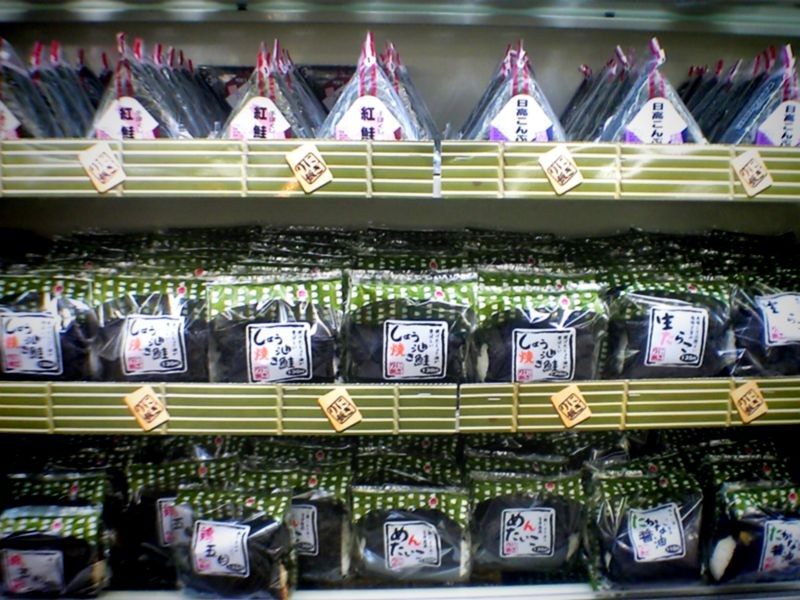

A 7-Eleven hand-rolled tuna mayo onigiri is ¥182 before tax (¥196.56 with tax). A hot Seven Café coffee in the R size is ¥130 (¥140.40 with tax). Together that is ¥337, about $2.10, and it is the floor: one rice ball and a coffee. A second hand-rolled onigiri adds ¥182 to ¥198 before tax at the standard price.
For two people at the floor, that’s ¥674 ($4.30) against ¥5,000 ($32) at ¥2,500 a head, a gap of about $27 a morning.
As of October 2026, from 7-Eleven Japan (in Japanese): tuna mayo onigiri, Seven Café and the September 24, 2026 price release.
When breakfast earns its price
If the hotel says it’s free, eat it. Check the start time first. A free breakfast you can’t reach before a 6 a.m. train gets you nothing.
If it costs ¥1,400 to ¥2,000 ($9 to $13), you’re paying for a full buffet and for not having to hunt for food, against roughly $2 at the convenience store floor. That is a fair purchase if you value the time. At ¥2,500 and up, the buffet costs more than seven times the floor. On a company business trip I add breakfast. On my own trips I skip it when it costs extra and buy something at a convenience store.
If you’re unsure, ask whether the hotel lets you add breakfast on arrival, which Dormy Inn’s FAQ says it does for no-breakfast bookings. With an allergy or a strict diet, get the answer from the hotel before you add it.
The short version
- Toyoko Inn and Hotel Route Inn say breakfast is free, as do two Super Hotel pages, and Route Inn’s Grand, Grantia and Arc hotels make it free with an official-site booking.
- The paid buffets in the table run ¥1,400 to ¥3,500 per person ($9 to $22), and the Imperial Hotel Tokyo charges ¥5,800 to ¥6,800 ($37 to $43) with service charge included.
- 朝食付き is breakfast in the price and 素泊まり is room only. Dormy Inn says its buffet can’t make allergy menus or remove an ingredient, so ask the hotel before you book.
- One onigiri and a coffee at 7-Eleven is about $2.10, so a paid buffet buys variety and time.
Cover photo: a Japanese-style breakfast at Hotel Niwa Tokyo by J o, CC BY-SA 4.0, via Wikimedia Commons, cropped.
