At home, thanking a hotel employee means cash. A few dollars for the person who carries the bag, something left for housekeeping, a bit extra when someone fixes a problem. It is easy to land in Japan with that reflex loaded and spend the first night looking for the right moment to use it.
At some Japanese hotels there is no such moment, because the thanks is a percentage on your bill. Two Tokyo hotels’ own terms say they decline tips on top of it. At traditional inns the envelope of cash does exist, with its own name and its own etiquette. The tourism office treats it as optional, and Hoshino Resorts says it doesn’t accept it.
What the tourism office says
The Japan National Tourism Organization says “it’s not common to tip for services such as those provided in bars, cafes, restaurants, taxis, and hotels.”
JNTO mentions a custom called kokorozuke, “coming from the heart.” It says a private guide or interpreter accustomed to overseas practices may accept a tip, but that tipping “is not expected and should be done discreetly, even in these cases.” It adds that a gratuity is customarily put in an envelope, sold at convenience stores, stationery stores and 100 yen stores. None of this is about hotels or ryokan, and the hotel gives no amount.
As of October 2026, from JNTO: tipping page.
Don’t add a tip to a service charge
At Okura Tokyo, the room charge carries a line reading “Service Charge (①×15%),” and the 10% consumption tax is figured on the room charge plus that service charge. Food and drink get their own 15%. Then the hotel says: “Since a 15% service charge is added to your bill in addition to taxes required by law, it is our policy to decline tips and other gratuities.”

On a ¥30,000 base room charge, 15% service makes ¥34,500 and 10% tax on that makes ¥37,950, about 26.5% more. At roughly ¥158 to the dollar, that is about $240 for a room that looked like $190.
The Imperial Hotel Tokyo’s terms have a matching rule in its house regulations, under Settlement of Accounts: “Individual tipping is not accepted in lieu of the standard 10% Service Charge added to bills in addition to government taxes.” Its Addendum Table No. 1 for lodging lists “Service Charges (1×15%).” The hotel gives both numbers and does not say which applies to a room. A guide’s general “10 to 15%” can’t tell you which one you will be charged, so read the hotel’s own page.
As of October 2026, from the Okura Tokyo: accommodation terms. From the Imperial Hotel Tokyo: terms page. Dollar figures calculated at about ¥158 to the dollar from Trading Economics.
How the price label reads
On a Japanese booking page the label decides what you will pay at the desk. JTB’s FAQ on displayed rates describes two labels. One is “税込・サービス料込,” meaning consumption tax and service charge are in the displayed price. The other is “税込・サービス料無,” meaning tax is in and the lodging says “サービス料はいただきません,” roughly “we do not take a service charge.” The same FAQ says bathing tax and accommodation tax are not in the displayed rate.
Two ryokan pages use the first label. Takinoya’s listing on the Japan Ryokan & Hotel Association’s English site says “The standard charge above is including the consumption tax and the service charge.” Houshi Ryokan’s FAQ says its displayed rates are “消費税込み・サービス料込み,” tax and service charge included, and that bathing tax is separate at ¥150 per adult, about $0.95.
As of October 2026, from JTB: FAQ on displayed rates (in Japanese). From the Japan Ryokan & Hotel Association: Takinoya listing. From Houshi Ryokan: FAQ (in Japanese).
| Page | Service charge | Tips |
|---|---|---|
| Okura Tokyo, accommodation terms | Added, 15% on room and on food and drink | “Our policy to decline tips” |
| Imperial Hotel Tokyo, terms | Added, 15% in the billing table, 10% in the house regulations | “Individual tipping is not accepted” |
| Hoshino Resorts, FAQ and regulations | Not stated on those pages | Not accepted, staff not permitted to accept gratuities |
| Takinoya, ryokan listing | Included in the listed rate, no percentage | Not mentioned |
| Houshi Ryokan, FAQ (in Japanese) | Included in the displayed rate, no percentage | Not mentioned |
Sotetsu Hotels’ English column calls the standard hotel charge “around 10 to 15 percent of the basic rate.”
At the three or four inns I’ve stayed at, no service charge or tip appeared as a separate line on the bill.
Sotetsu calls the service charge “the equivalent of a ‘tip’ in the West,” introduced instead of one. A hotel-business consultancy’s note says the opposite: “サービス料=チップ” is a common misconception, and the charge is really “接客・清掃・設備維持のための運営費,” operating costs for service, cleaning and upkeep.
As of October 2026, from Sotetsu Hotels: column. From a hotel-business consultancy: note (in Japanese).
What you may still pay at the desk is tax. Tokyo’s accommodation tax is per person per night: free under ¥10,000, ¥100 from ¥10,000 to ¥14,999 (about $0.63) and ¥200 from ¥15,000 (about $1.27). From April 1, 2027, Tokyo moves to a 3% rate on room rates above ¥13,000. At the inns I’ve stayed at, I paid bathing or accommodation tax at check-in at some and at check-out at others. The ryokan hour-by-hour article covers that desk payment and who you actually meet during a stay.
As of October 2026, from the Okura Tokyo terms linked above and LoyaltyLobby.
The envelope at the ryokan
Kokorozuke (心づけ) is the one custom here with real history behind it. You Times, a travel media site, says it is wrapped in a small envelope and usually handed over when you are shown to your room. It also says: “断られても失礼ではなく、施設の規則だと考えてかまいません,” roughly “if it is refused, that is not rude, and you can take it as the facility’s rule.”
As of October 2026, from You Times (in Japanese): kokorozuke article.
How many inns decline depends on who you ask. A hotel-industry column from Omotenashi HR says: “ただし現在は、心付けを辞退するポリシーを設けている旅館が大半を占めています,” roughly “today, however, most ryokan have a policy of declining kokorozuke.” The sentence cites no count. Hoshino Resorts, which runs ryokan under its KAI brand, answers the question “Are tips required at hotels?” in its FAQ with “Tipping is not accepted at Hoshino Resorts in Japan. We appreciate your understanding.” Its hotel regulations say “The Hotel staff are not permitted to accept gratuities.” In the English-language forum thread quoted in the ryokan article, regulars say they always tip at inns, and one reply says some inns don’t accept it as a rule.
As of October 2026, from Omotenashi HR: column (in Japanese). From Hoshino Resorts: KAI brand, FAQ and hotel regulations.
Two Japanese columns treat kokorozuke as thanks for a special favor, such as caring for babies or small children, allergy handling, special pick-ups, room upgrades, older guests or anniversary requests, not a routine. Both put the guideline near a tenth of the stay’s cost, and Diamond adds that no amount is fixed and that skipping it does not lower your service. Neither says whether the tenth applies to the whole party’s bill or to one guest’s rate. On a ¥40,000 bill for the room, a tenth is ¥4,000, about $25. Many Japanese plans are priced per person, which changes what “the bill” means, as the per-person pricing article explains.
As of October 2026, from Diamond Online and All About (both in Japanese). The ¥4,000 is calculated.
If you decide to give one, put it in an envelope, as is customary. Whether a particular inn takes it, only that inn’s own pages or staff can say.
Bell staff, housekeeping and room service
Bell staff: the three hotels above all decline tips. The Imperial’s FAQ says “We shall be pleased to take care of your luggage at the Bell Captain’s Desk,” and the hotel lists no fee for it.
Room service: the Imperial says “Prices are inclusive of consumption tax and service charge.”
Housekeeping: none of the hotels cited asks for a tip.
Budget chains: Dormy Inn’s Japanese FAQ has no tipping or service-charge entry. For business hotels in general, the tourism office’s line that tipping is not common in hotels is the rule to go by.
As of October 2026, from the Imperial Hotel Tokyo: FAQ and room service page. From Dormy Inn: FAQ index (in Japanese).
Thanks that doesn’t involve cash
If someone was kind to you and you want it to count, the Japanese media pages point to the same few things. You Times suggests telling the front desk the staff member’s name at checkout, leaving a note, and writing specifics in the review on your booking site. The Omotenashi HR column lists spoken thanks at checkout and online reviews that name staff members. At the inns I’ve stayed at, I never handed over kokorozuke, and when I want to thank staff I say it out loud.
The short version
- No tipping is expected at Japanese hotels or ryokan. Okura Tokyo, the Imperial and Hoshino Resorts each say they decline or don’t accept tips.
- Service charges appear as a percentage on the bill or already inside the rate: 15% at Okura Tokyo, and both 10% and 15% on the Imperial’s page.
- Kokorozuke at a ryokan is optional, usually given in an envelope when you are shown to your room, and some inns refuse it.
- Read the price label for “サービス料込,” and budget for bathing or accommodation tax at the desk, which is a tax and not a tip.
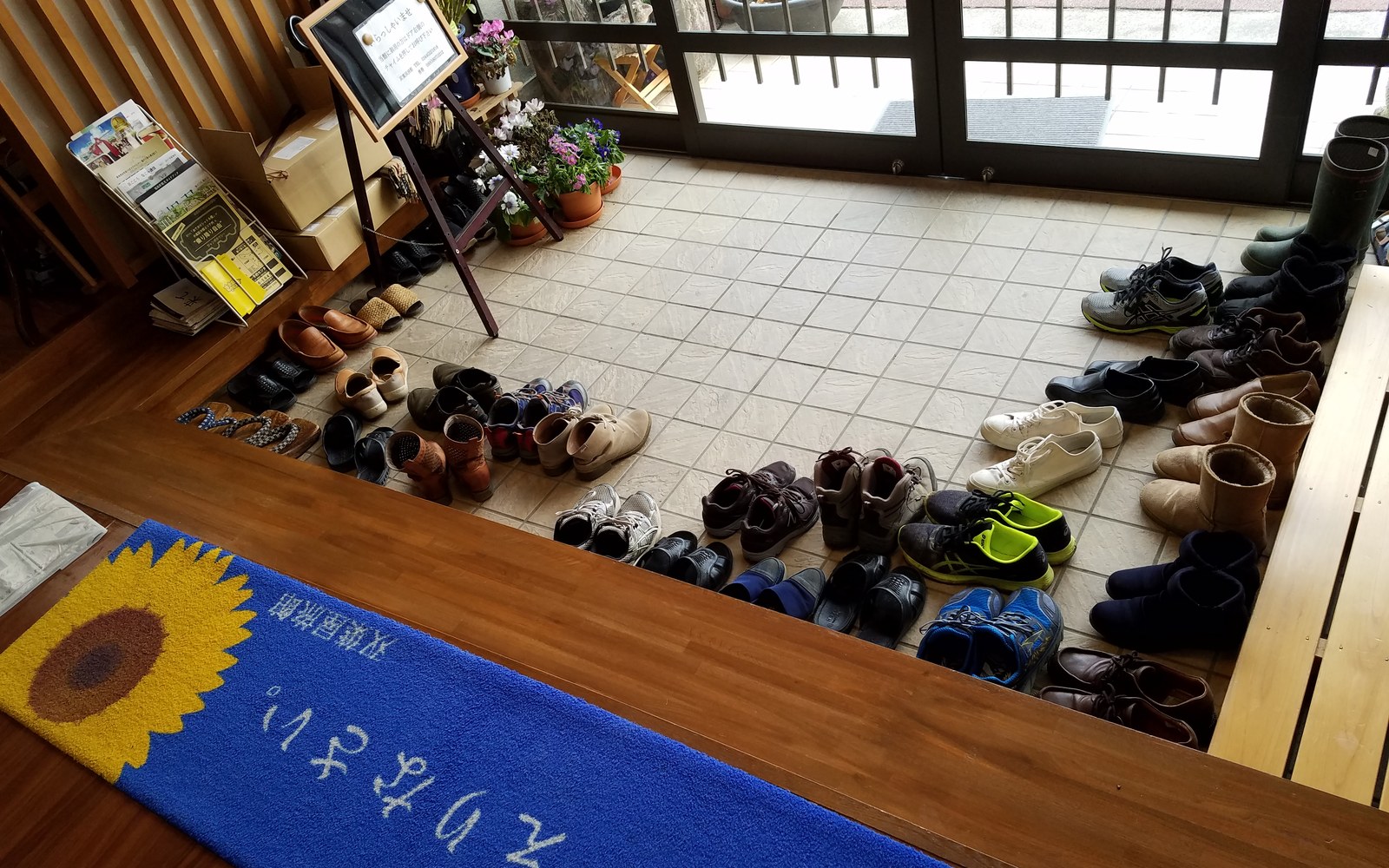
Cover photo: the entrance of a ryokan in Minamisoma, Japan, by Hajime NAKANO, CC BY 2.0, via Wikimedia Commons, cropped.
.jpg)