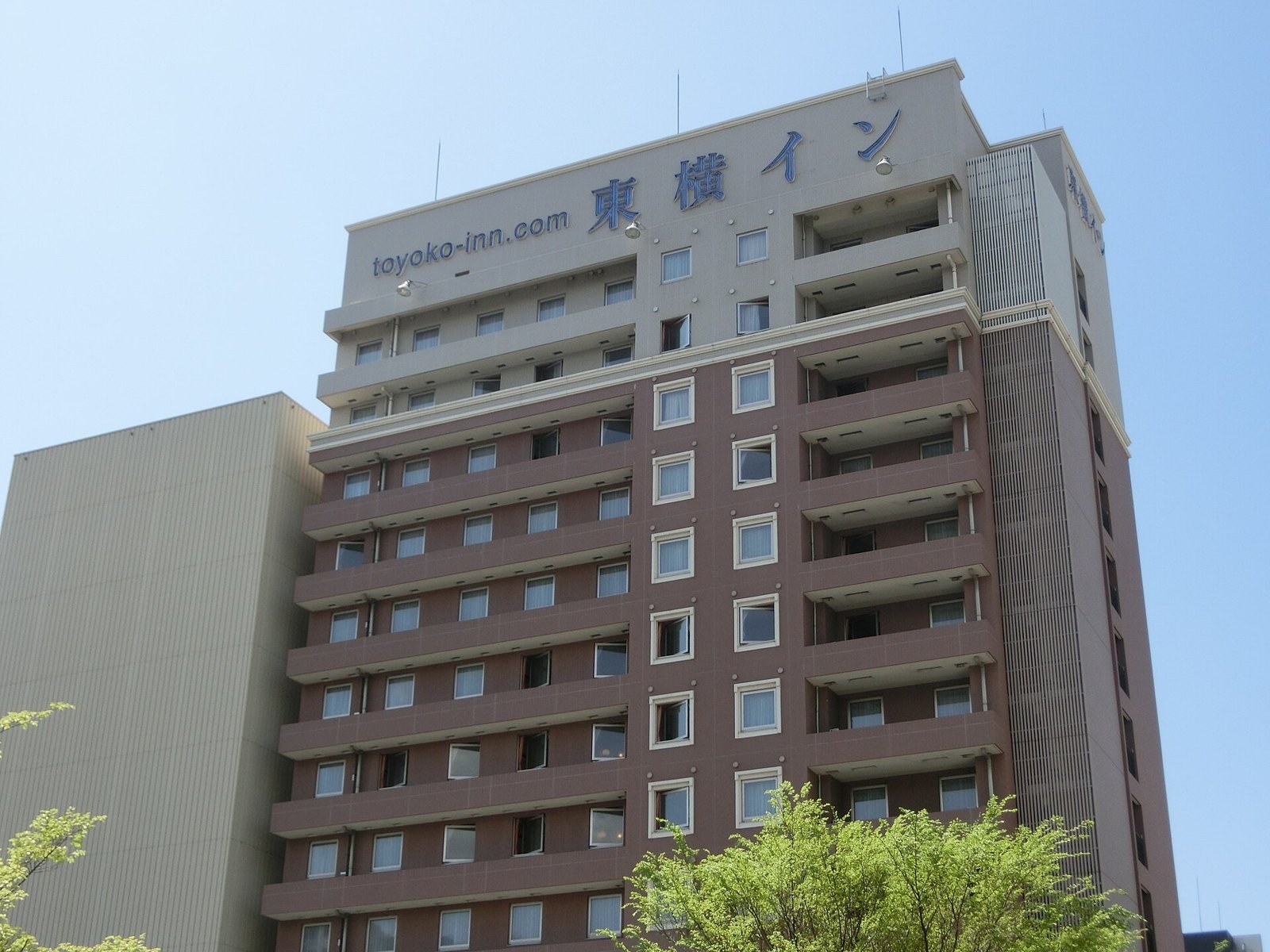
In English, a business hotel sounds like a place with a conference room and a business center, the kind you book near an airport for a sales meeting. In Japan the phrase points at something plainer. It is a small Western-style room near a train station, sold to a traveler who is in town for work and mostly needs somewhere to sleep.
Chains differ on breakfast, baths and laundry, while their rooms look much alike. The laundry part has its own article, Laundry at Japanese Hotels: Coin Machines, Prices and How to Find Them.
Nobody licenses the term
Japan’s lodging license has one category for hotels and ryokan together, 旅館・ホテル営業. The Tokyo Metropolitan Government defines it as a business that takes payment for lodging and is neither of the other two: 「宿泊料または室料を受けて、人を宿泊させる営業で簡易宿所営業及び下宿営業以外の施設」. The other two are 簡易宿所営業, shared rooms such as capsule hotels, and 下宿営業, stays counted in months. Hotels and ryokan held separate licenses until an amendment merged them on June 15, 2018. A business hotel, a resort hotel and a ryokan can all hold the same one.
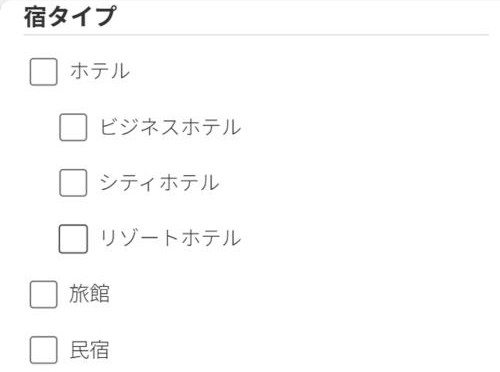
The clearest definition of the term sits in the Japan Tourism Agency’s accommodation survey, which sorts hotels into three types by who they mainly serve. The business hotel is 「ホテルのうち主に出張ビジネスマンを対象とするもの」, a hotel aimed mainly at people traveling on business. The resort hotel is built at a holiday or spa area for tourists, and the city hotel is an urban hotel that is neither of the other two. Rakuten Travel’s Tokyo page filters lodging with the same words, ホテル, ビジネスホテル, シティホテル and リゾートホテル, next to 旅館 and 民宿.
That tells you who a hotel was built for. It doesn’t tell you what the hotel has.
As of October 2026, from the Tokyo Metropolitan Government (in Japanese): license types. From the Japan Tourism Agency (in Japanese): the accommodation survey page and its filing instructions. From a law firm (in Japanese): the 2018 merger. From Rakuten Travel (in Japanese): the Tokyo lodging page.
A bed, a desk and a unit bath
The Japan National Tourism Organization (JNTO) calls a business hotel “a type of western hotel,” usually “located adjacent to or nearby train stations,” with rooms “much more compact than standard western hotels” and “very basic amenities”. It says most don’t sleep more than two people, though some offer triple rooms, and that the small rooms may not suit anyone with large suitcases.
Two listings show the scale. Super Hotel Shinbashi’s Standard Room is 12 m² (129 ft²) with a 140 by 200 cm (55 by 79 in) bed, for 1 to 2 guests. Richmond Hotel Tokyo Suidobashi sells 18 m² (194 ft²) rooms with a 150 by 200 cm (59 by 79 in) bed, one as a single for one guest and one as a double for two. For a US frame, the hotel software company Mews puts economy rooms at 160 to 230 ft² and midscale rooms at 230 to 350 ft². The Tokyo station-area comparison sets five standard rooms side by side, and the APA Hotel article covers one chain’s rooms.
For a price, the booking-sites article on this site priced one business hotel room, the 137 ft² (12.7 m²) EXPRESS Single at Sotetsu Fresa Inn Tokyo-Kyobashi, for one adult on November 18, 2026. Booking.com showed ¥24,513 (about $155), a figure that left out 10% consumption tax and carried a 10% discount. Jalan’s cheapest plan and the hotel’s own standard rate, both with tax included, showed ¥31,500 (about $199). Each is a single reading of a screen, and the Booking.com figure had moved by the following week. Dollar figures here use about ¥158 to the dollar (Trading Economics, October 2026), so check the day’s rate.
As of October 2026, from JNTO: accommodation page. From Super Hotel (in Japanese): Shinbashi rooms. From Richmond Hotels (in Japanese): Suidobashi rooms. From Mews. From Sotetsu Hotels: the Tokyo-Kyobashi rooms page. The prices are the screen readings in the booking-sites article.
The usual layout puts the unit bath, a one-piece module with tub, sink and toilet, just inside the door and the bed past it. There is a desk, and it is big enough to open a laptop on. Toyoko Inn says its in-room desks “provide an ideal workspace for any tasks.”
The floor is what’s left. I open my suitcase on the floor, and in a small room I often do it in the entry passage by the bath. The Richmond pair above also shows where the room name misleads, because the single and the double have the same bed.
As of October 2026, from Toyoko Inn: English room page.
Deeper: The Unit Bath in a Japanese Business Hotel, How Big Is a 12 sqm Japanese Hotel Room?, How Big Is an 18 sqm Japanese Hotel Room? and Japanese Hotel Rooms Decoded and, for the prices, Two Prices for One Room: How Japanese Booking Sites Build the Number They Show You
What is already in the room
Toyoko Inn’s English site lists the standard kit for its rooms:
- A light and a USB power supply next to the bed, plus free Wi-Fi and wired internet
- A TV, an empty refrigerator and a kettle
- A hair dryer on the wall near the desk, reusable slippers and a deodorant spray
- A humidifier in winter
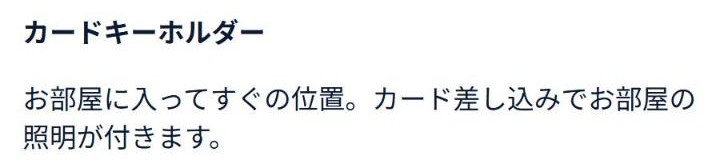
The key card does more than open the door. At Toyoko Inn the card holder is “placed at the entrance of your room” and the English site says “Insert card to control.” The Japanese site spells it out: inserting the card turns on the room lights (「カード差し込みでお部屋の照明が付きます」). I put the key card in and the power comes on. Whether it stays on after I take the card out depends on the hotel, so if you plan to charge a phone while you’re out, check.
As of October 2026, from Toyoko Inn: English room page and, in Japanese, the Japanese room page.
The toiletries are in the lobby
In my experience, most places want the key card to get into the lobby after 10 p.m. or midnight, so take it with you when you go out. The lobby is also where the toiletries are. Toyoko Inn says “Help yourself to the free amenities at the lobby or in your room,” and Super Hotel Shinbashi’s says you choose them in the front lobby (「フロントロビーでお選びいただけます」). I take mine at check-in before going up, so I don’t find out in the room that they were downstairs.
The building covers what a bigger hotel would put in the room. Toyoko Inn’s trouser presses stand in the corridor on each floor, Super Hotel Shinbashi’s by the elevators and Tokyu Stay Suidobashi’s in the room. Toyoko Inn’s lobby has a water cooler, an ice maker and vending machines.
The packages differ from chain to chain.
| Chain page | Breakfast | Laundry | One thing it adds |
|---|---|---|---|
| Toyoko Inn | Free (per the home page banner) | Coin-operated washers and dryers | Water cooler, ice maker and vending machines in the lobby |
| Super Hotel Shinbashi | Free, 6:30 to 9:00 (to 9:30 Sundays and holidays) | Coin laundry | A choice of 8 pillow types |
| Route Inn Ishinomaki | Free, 30 or more items | Coin laundry and dryers | Large bath open 15:00 to 2:00 and 5:00 to 10:00 |
| Dormy Inn | Paid, ¥2,500 ($15.80) at Ikebukuro | Washer free, dryer ¥100 ($0.63) per 20 minutes | Hot-spring bath on the top floor at Ikebukuro, late-night ramen |
| Tokyu Stay Suidobashi | Paid | Washer-dryer in all four room types listed | Mini kitchen in two of the four room types |
Dollar figures use the same ¥158 to the dollar.
As of October 2026, from Toyoko Inn: home page, room page and booking terms. From Super Hotel (in Japanese): Shinbashi page. From Route Inn (in Japanese): Ishinomaki page. From Dormy Inn (in Japanese): services, FAQ, the Ikebukuro page and its breakfast page. From Tokyu Stay (in Japanese): the Suidobashi hotel page and room page.
A big bath is where the chains split most. Dormy Inn Ikebukuro describes a gender-separated hot-spring bath on the top floor (「男女別天然温泉大浴場」). Route Inn Ishinomaki’s bath closes from 2:00 to 5:00 a.m. and again from 10:00 until 15:00. Super Hotel’s English site says room types and large public baths “differ depending on the store.” A 大浴場 is a large shared bath, and that doesn’t make the water a hot spring. Where to Stay in Japan separates the two.
Luggage follows the same pattern. Super Hotel Shinbashi says the front desk holds bags on the day of the stay only (「ご宿泊日当日に限り」), and Dormy Inn’s FAQ limits storage before check-in and after check-out to items the hotel has agreed to in advance. Check-in is 15:00 at the four chains here that list it, so an early arrival is a luggage question first. Dormy Inn’s check-out is 11:00 as a rule.
As of October 2026, from Dormy Inn (in Japanese): the Ikebukuro page and FAQ. From Route Inn (in Japanese): the Ishinomaki page. From Super Hotel: the English home page and, in Japanese, the Shinbashi page.
Deeper: Hotel Breakfast in Japan, Arriving Before Check-In in Japan and Do You Tip at Japanese Hotels and Ryokan?
One or two people who sleep and leave
A business hotel suits a trip where the room is the place you sleep. You are out from morning to evening, you want a station close and a hot shower, and you would rather spend on the day than on the room. Where to Stay in Japan calls that a sleep night, as opposed to a night that is the destination. I stay in business hotels both on my own and with someone else.
It stops working in a few predictable ways:
- Three or more guests. JNTO says most business hotels don’t sleep more than two. Booking for Three, or With Kids covers what the booking page does with a third guest.
- Two large suitcases. One bag opens on the floor and the second stays closed. How Much Luggage Fits in a Japanese Hotel Room? works through the floor space.
- A long soak. The in-room tub is part of the unit bath. I shower in it and basically don’t soak. If you want a soak, look for a hotel that has a 大浴場.
- A stay that is the point of the trip. That is a ryokan or a resort, and What Actually Happens During a Ryokan Stay shows what you’d be paying for instead.
How to spot one on a booking page
On the Japanese booking sites the word is a filter. Rakuten Travel lists ビジネスホテル twice, once under popular filters and once under lodging type. Jalan’s Tokyo page links to a business hotel page under 宿種別, the lodging category. On a chain’s own site the word tends to sit in the page title, not in the description of the hotel. Toyoko Inn’s English home page is titled “Hotel and Business Hotel Reservations at Toyoko Inn,” and Route Inn’s Japanese home page title ends 「ホテル・ビジネスホテルの宿泊予約」. Route Inn’s own description of its main brand speaks instead of 「ビジネスユースのお客様」, guests who use the hotel for business.
As of October 2026, from Rakuten Travel (in Japanese): Tokyo page. From Jalan (in Japanese): Tokyo page and business hotel page. From Toyoko Inn: English home page. From Route Inn (in Japanese): home page.
Where the word is missing, the listing gives the hotel away:
- A small floor area and a short guest count. Standard rooms of 12 to 18 m² (129 to 194 ft²) listed for 1 or 1 to 2 guests, as above.
- ユニットバス in the room description. That is the unit bath.
- A station in the name. Examples are Super Hotel Anjo Station Front, APA Hotel Keikyu Kamata Ekimae and Henn na Hotel Komatsu Ekimae, all in Japanese. 駅前, ekimae, means in front of the station.
Then I read the lines that decide the stay. Before I press the book button I check the cancellation deadline, the total with tax and service charge, and the bed width and room size. For a room under 20 m² I always look at the bath type, and I look for the smoking line every time. Breakfast is its own line, since 朝食付き means it is in the price and 素泊まり means room only.
Deeper: Japanese Hotel Cancellation Policies Explained and Why Japanese Hotels Price Per Person
The short version
- Read the floor area, the guest count and the bed width on the hotel’s own page, because the label and the room name don’t give them.
- Take the toiletries at check-in, and look up breakfast, bath and laundry for the chain you’ve picked.
- Book something else if you are three, carrying two big bags, or the night is the point of the trip.
Cover photo: Toyoko Inn Chibaminato-ekimae by Abasaa, public domain, via Wikimedia Commons.
